



Steel Industry Spray Nozzles Manufacturer
Engineered spray nozzle systems for continuous casting, descaling, cooling and dust suppression.
Industry Overview
The steel industry relies on spray nozzle technology throughout
every production stage. Modern steel mills face critical
challenges including reducing water consumption, improving product
quality, meeting environmental standards, and minimizing
production downtime.
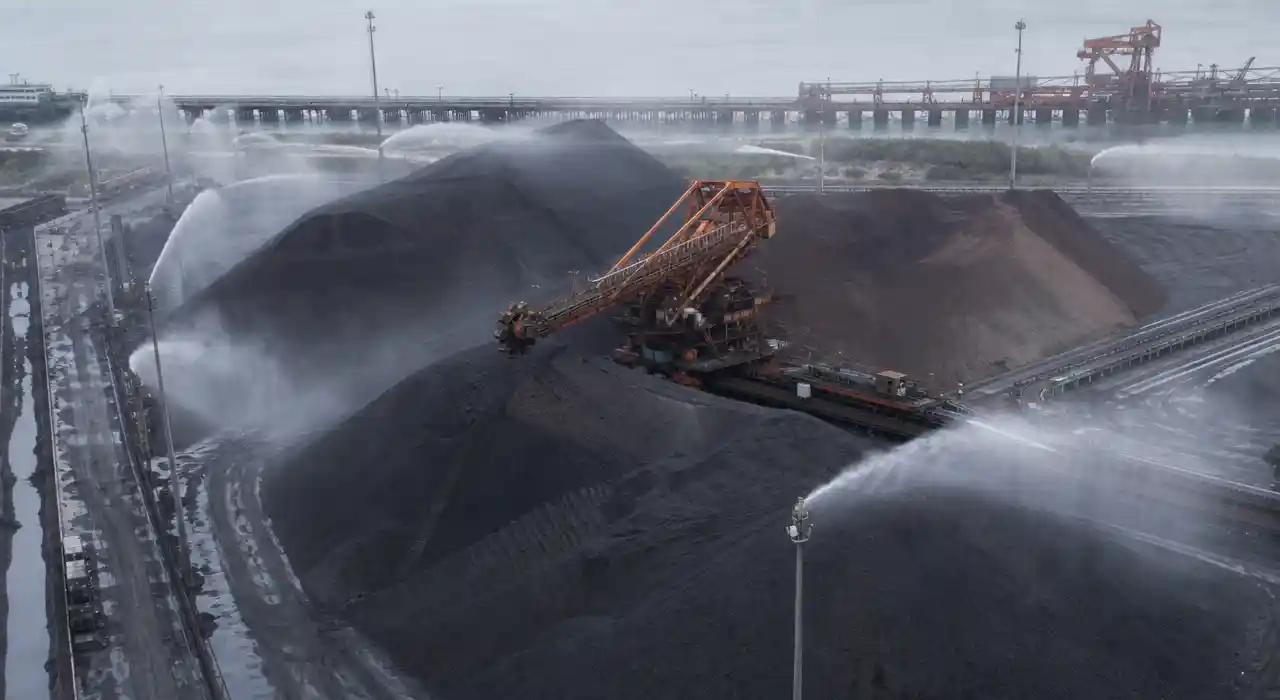
Spray nozzles are essential in raw material handling for dust
suppression during ore and coal storage, ironmaking for blast
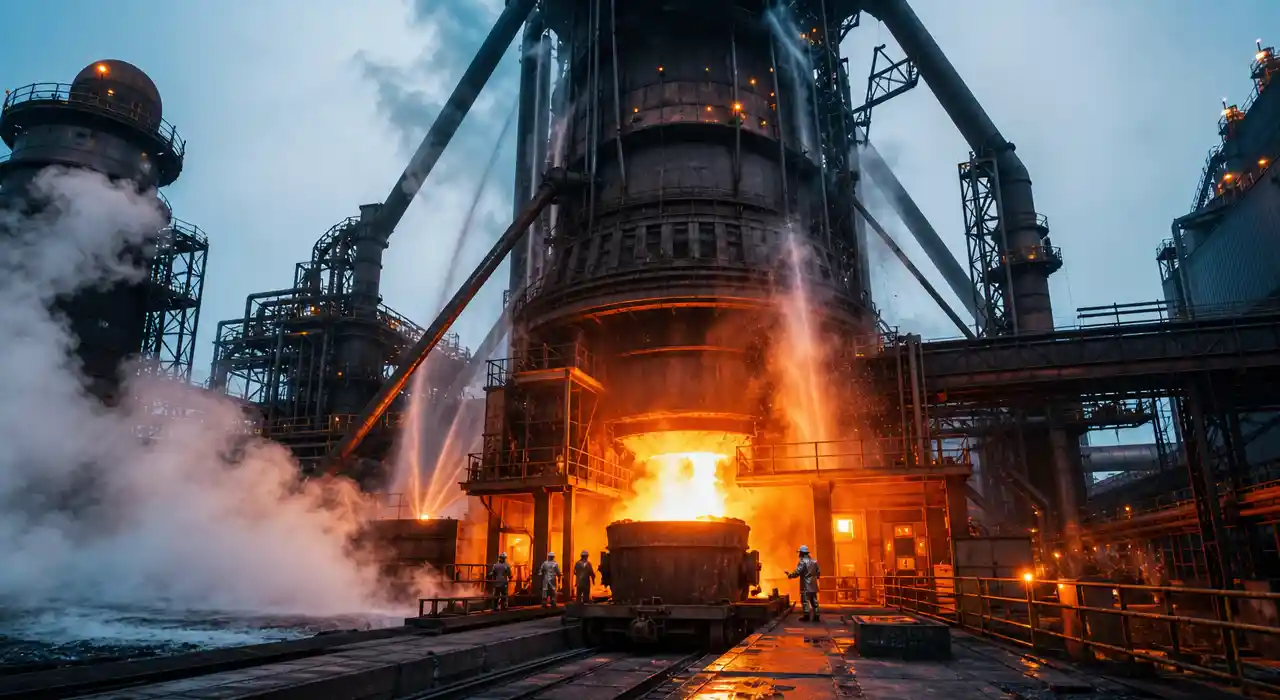
furnace gas cooling and slag granulation, steelmaking for ladle
cooling and fume control, continuous casting for secondary cooling
zone temperature control, hot rolling for high-pressure descaling
and roll cooling, cold rolling for emulsion spray and surface
preparation, and finishing operations for coating preparation and
final product cooling.
Steel Production Process
Raw Material
Dust Suppression Systems
Ironmaking
Gas Cooling & Slag Granulation
Steelmaking
Equipment Cooling & Fume Control
Continuous Casting
Secondary Cooling
Hot Rolling
Descaling & Roll Cooling
Finishing
Emulsion & Surface Preparation
Steel Manufacturing Challenges & Solutions
Maintaining Stable Casting Quality
ChallengeUneven cooling in continuous casting secondary zones causes temperature gradients leading to internal cracks, surface defects, and potential breakouts. Non-uniform spray distribution and clogged nozzles create hot spots that compromise steel quality.
SolutionOur secondary cooling nozzles provide uniform spray distribution across the entire strand width with overlapping full cone patterns, self-cleaning spiral designs that resist scale particle clogging, silicon carbide construction for 10-20x wear life in abrasive water systems, and large orifice sizes of 3-8mm preventing particle lodging while maintaining proper droplet size for heat transfer.
View Cooling Solutions →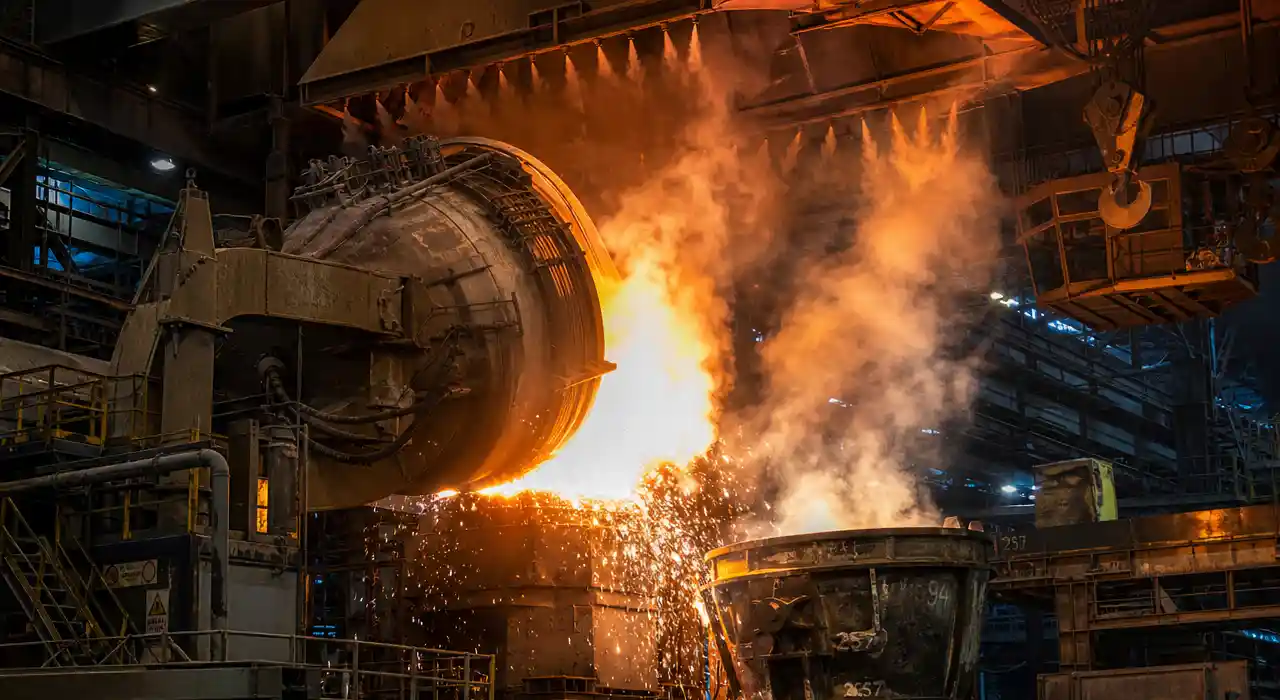
Achieving Complete Mill Scale Removal
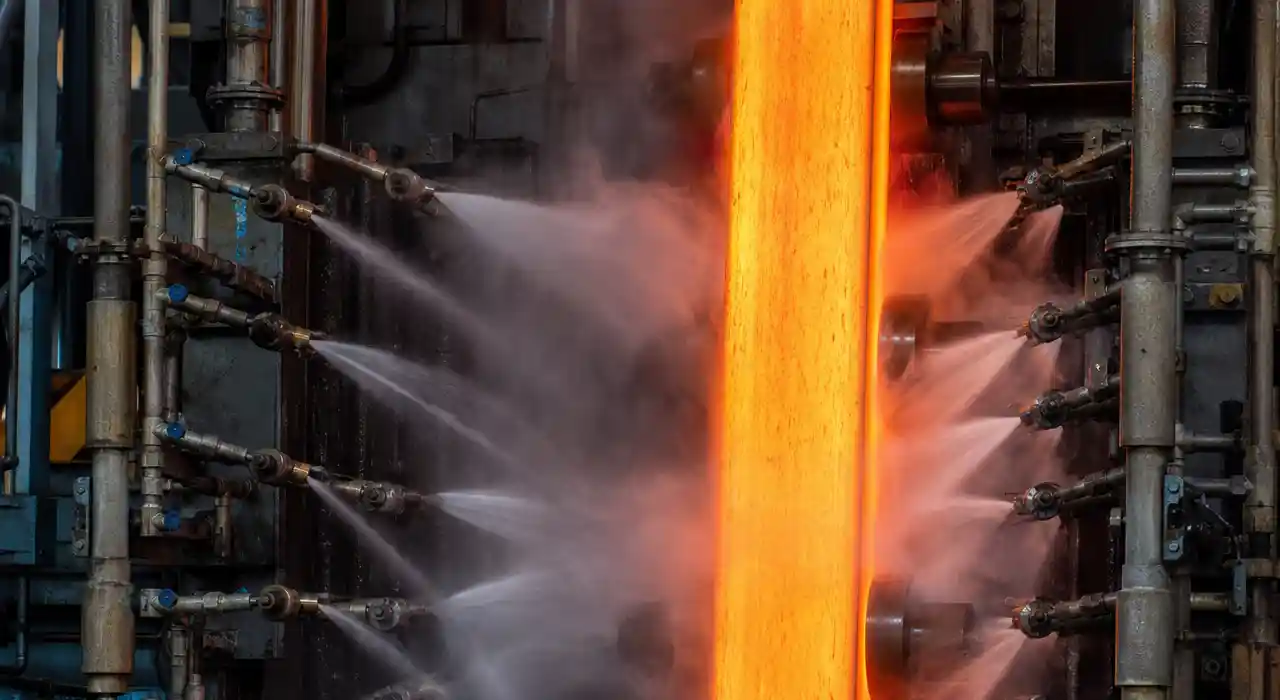
ChallengeIncomplete descaling leaves residual iron oxide scale on steel surfaces that embeds during rolling, creating surface defects including pits, slivers, and impressions that downgrade product quality. Standard nozzles wear rapidly at 200-350 bar pressure, losing impact force within weeks.
SolutionOur high-pressure descaling nozzles deliver concentrated impact force through narrow angle flat fan patterns of 0-25°, tungsten carbide orifices providing 50-100x wear life versus stainless steel, ceramic inserts for extreme pressure applications up to 350 bar, and quick-release mounting systems enabling tool-free replacement in under 5 minutes during production gaps.
Controlling Airborne Dust Emissions
ChallengeSteel mill operations generate massive dust quantities from ore handling, coal storage, cutting operations, and finished product yards. Fine particulate matter below 10 microns remains airborne despite coarse water spray, creating health risks and environmental compliance issues.
SolutionOur dust suppression systems use fine mist atomization with 50-150 micron droplets matching dust particle size for effective capture, ultrasonic atomizing nozzles producing 1-10 micron fog for respirable PM2.5 control, wide-angle spiral nozzles providing broad area coverage with self-cleaning action, and strategic placement intercepting dust plumes directly at generation points.
View Dust Suppression Solutions →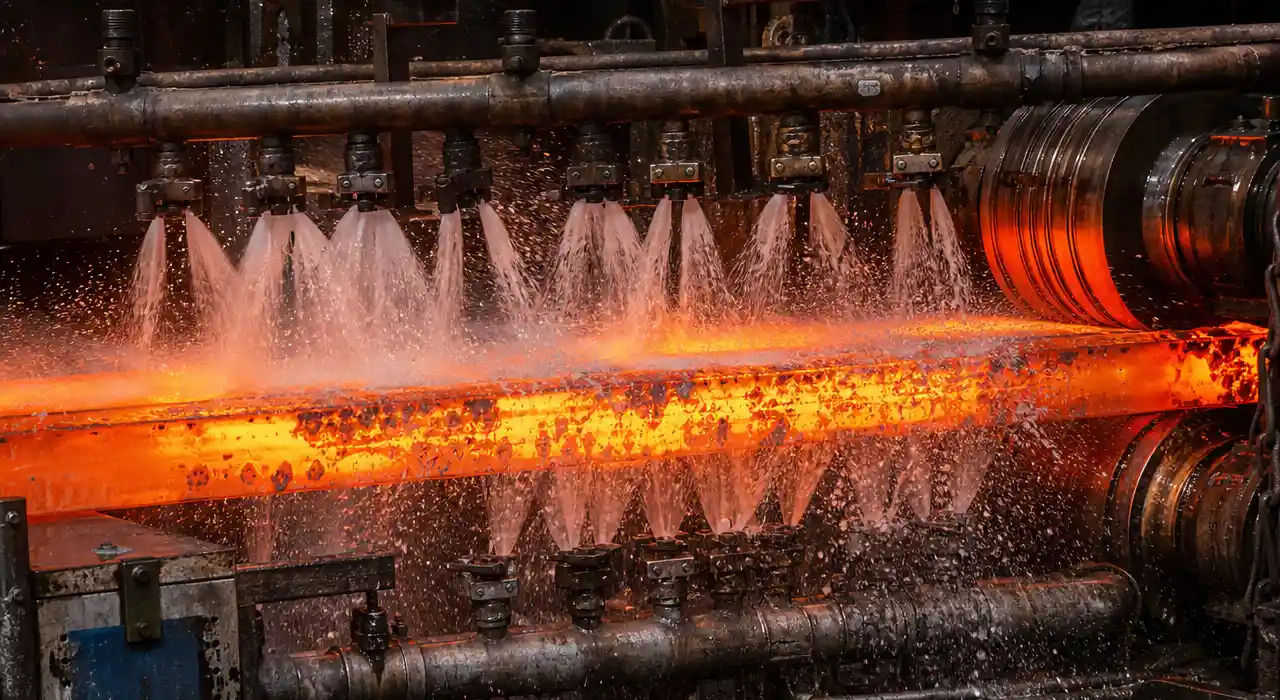
Reducing Water Consumption
ChallengeSteel mills consume 3-10 m³ of water per ton of steel produced. Rising water costs and environmental regulations pressure mills to reduce consumption without sacrificing product quality or equipment protection.
SolutionOur optimized spray systems reduce water consumption by 20-40% through wide-angle nozzles providing broader coverage with fewer nozzles required, precision flow control with zone-based pressure regulation eliminating over-spraying, computational fluid dynamics modeling optimizing nozzle placement and flow rates, and closed-loop recycling systems capturing and recirculating secondary cooling water. Typical payback periods range from 6-18 months.
View Cooling Solutions →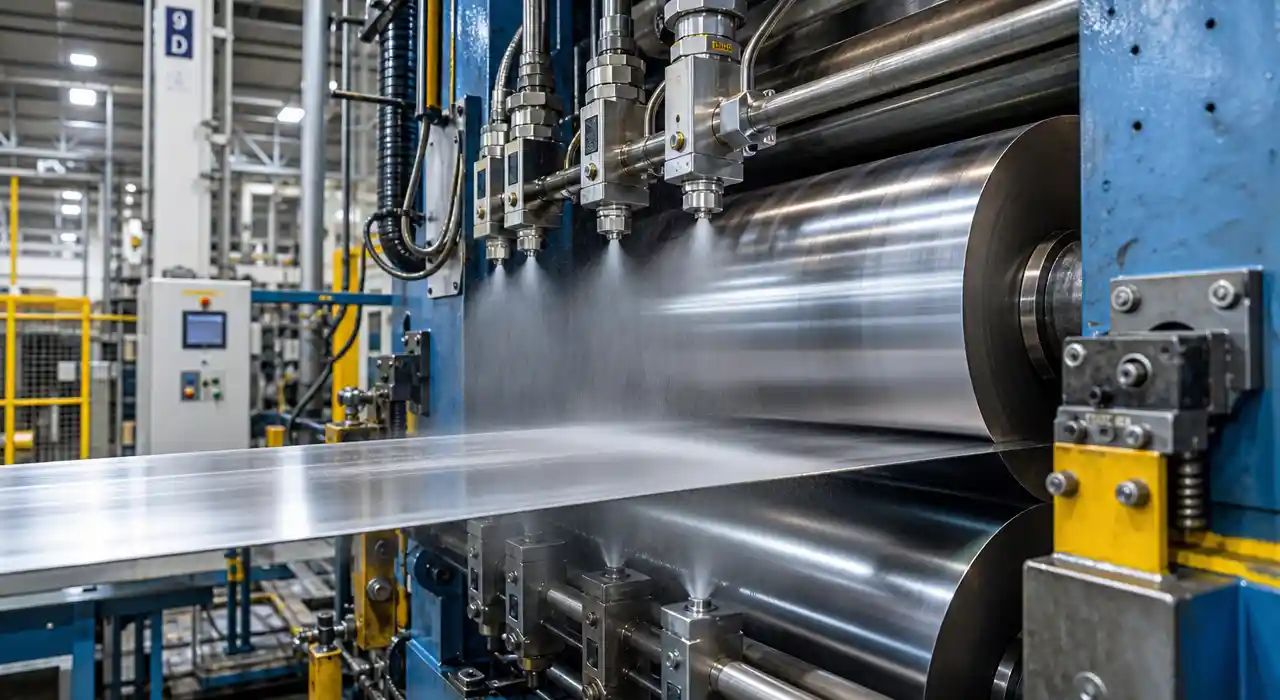
Extending Nozzle Service Life
ChallengeStandard stainless steel nozzles wear out in 1-4 weeks due to abrasive mill scale particles and thermal shock from extreme temperature cycling. Frequent replacement requires production interruptions and increases maintenance costs.
SolutionOur wear-resistant nozzle materials include silicon carbide with hardness of HRC 68-72 providing 10-20x life versus 316 stainless steel, tungsten carbide orifices delivering 50-100x life for high-pressure descaling, ceramic inserts for extreme hardness in the most critical applications, and quick-release mounting enabling replacement during planned production gaps without extended downtime.
Steel Mill Application Example
Continuous Casting Secondary Cooling Optimization
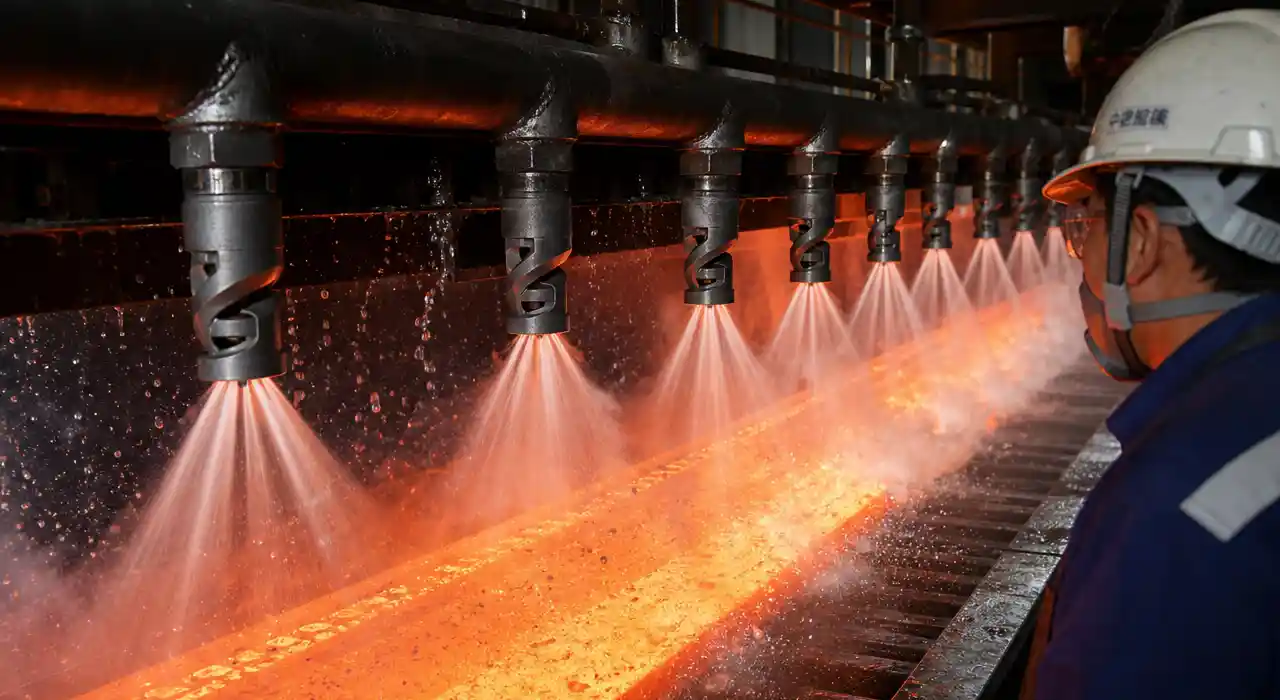
Problem: A slab caster experienced frequent nozzle clogging from mill scale particles in recirculated cooling water, causing non-uniform cooling and surface defects. Standard 316 stainless steel nozzles required replacement every 2-3 weeks, creating maintenance burden and quality inconsistency.
Solution: Replaced existing nozzles with silicon carbide spiral nozzles featuring self-cleaning internal geometry and large 6mm orifices. Implemented optimized spray overlap pattern reducing total nozzle count by 25% while improving distribution uniformity. Added 60-mesh filtration before spray headers.
Results:
- 10-15x longer nozzle service life compared to standard materials
- 25-35% water consumption reduction through optimized coverage patterns
- 50-70% improvement on steel surface defect rate
- 70-85% reduction of daily maintenance labor
Why Choose Us for Steel Mill Spray Systems
Industry Experience
Steel Plants
Customization
Engineering Support
Recommended Nozzle Solutions
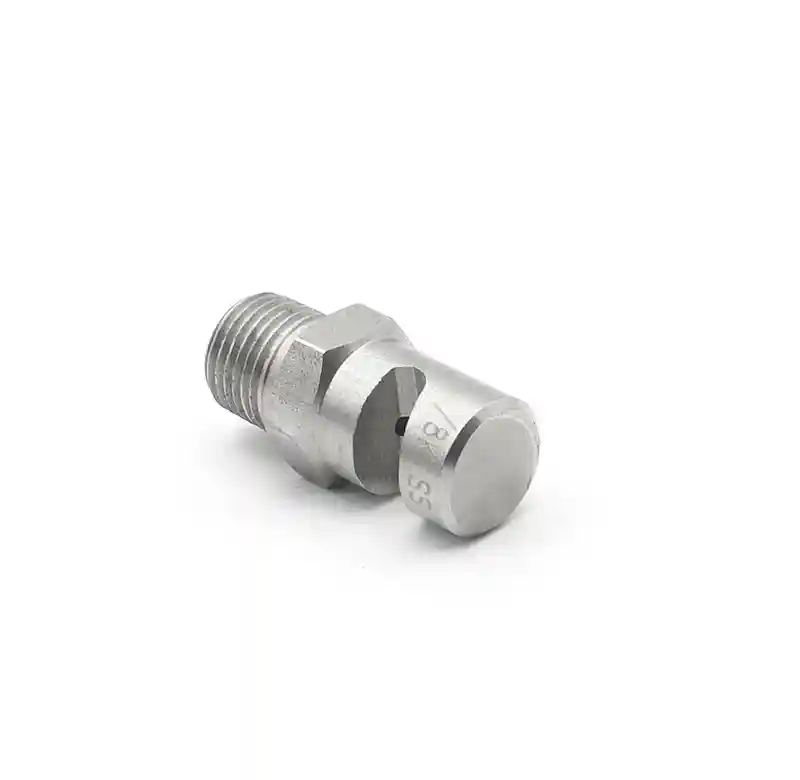
BB Series Full Cone Spray Nozzle
Application: Continuous casting cooling, general equipment cooling
Material: Silicon Carbide / 316SS
View Details →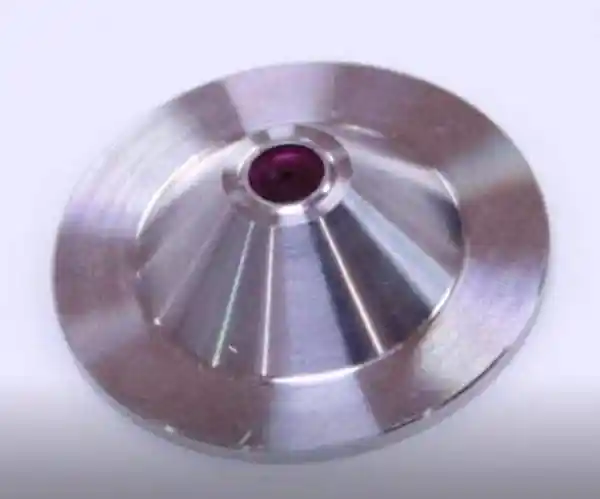
Silicon Carbide Spiral Nozzle
Application: High-wear casting zones, abrasive water systems
Material: Silicon Carbide
View Details →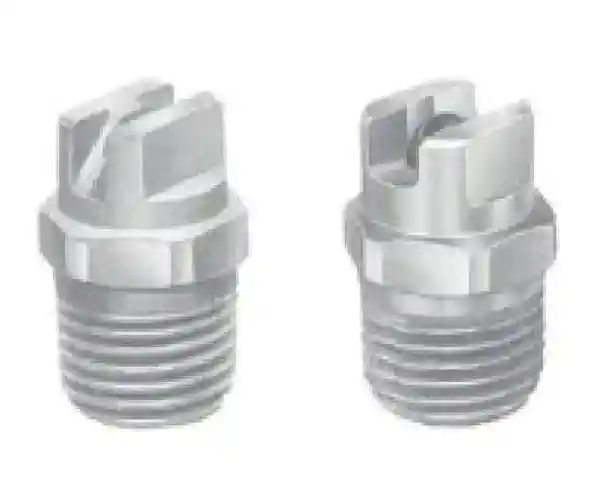
MEG-275 High Pressure Wash Nozzle
Application: Descaling systems up to 275 bar
Material: Tungsten carbide insert
View Details →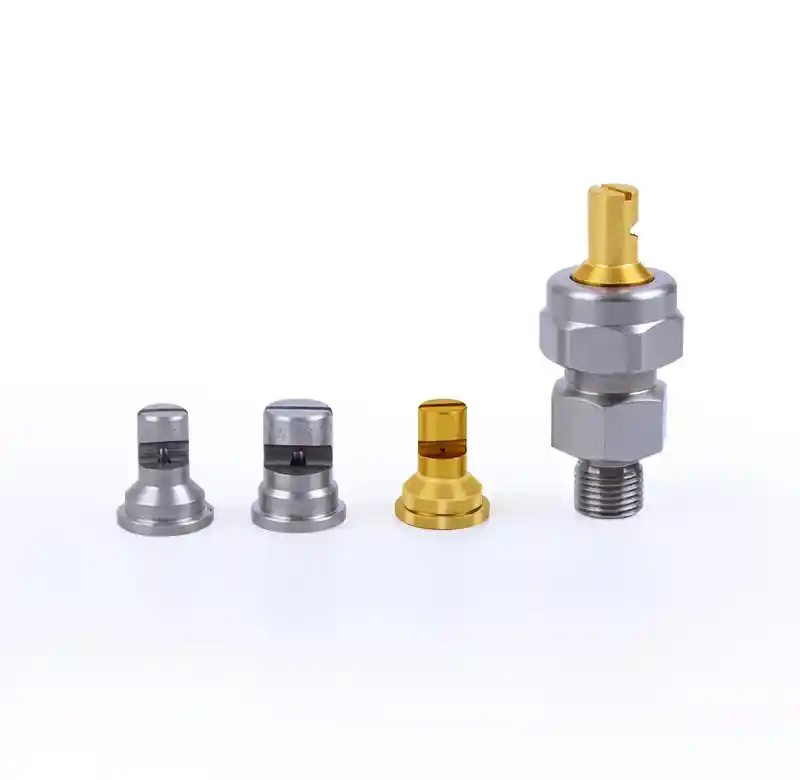
CC Flat Fan Spray Nozzle
Application: Descaling, surface preparation
Material: 316 Stainless Steel
View Details →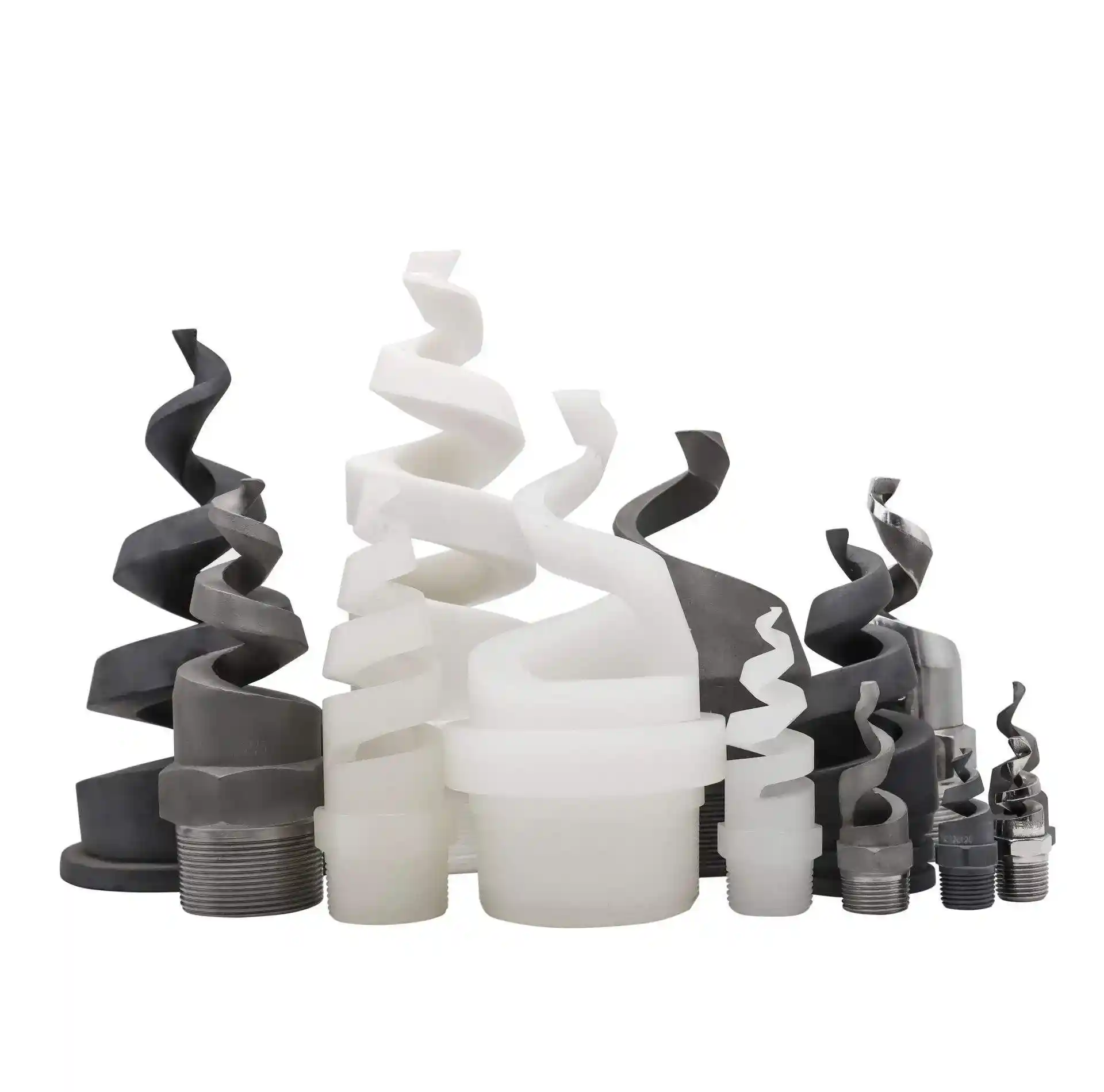
SPJT-SS-120 Spiral Nozzle
Application: Large area dust suppression
Material: 316 Stainless Steel
View Details →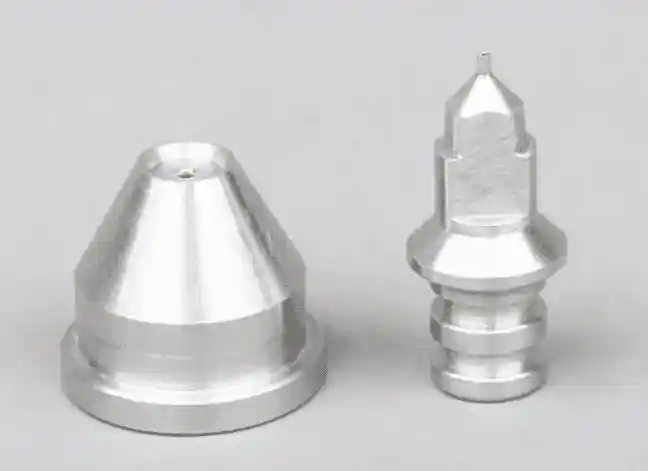
ADG Ultrasonic Atomizing Nozzle
Application: Fine dust PM2.5 suppression
Material: PVDF + Stainless Steel
View Details →Frequently Asked Questions
Steel plants use specialized nozzles across multiple production stages. Continuous casting requires full cone and spiral nozzles for secondary cooling zones controlling steel solidification. Hot rolling mills use high-pressure flat fan nozzles at 150-350 bar for descaling scale removal. Roll cooling systems employ wide-angle fan nozzles delivering high water flow to work rolls and backup rolls. Dust suppression areas use fine mist and ultrasonic atomizing nozzles to capture airborne particulate matter. Cold rolling operations require air atomizing nozzles for oil-water emulsion application. Each application demands specific spray patterns, pressure ratings, and wear-resistant materials matched to operating conditions.
Steel mill environments with temperatures up to 1200°C ambient and abrasive scale particles require specialized materials. Silicon carbide nozzles with hardness of HRC 68-72 provide 10-20x longer service life than standard stainless steel in continuous casting and cooling applications. Tungsten carbide orifice inserts deliver 50-100x wear resistance for high-pressure descaling nozzles operating at 200-350 bar. Full ceramic nozzles offer extreme temperature and wear resistance for the most demanding positions. Standard 316 stainless steel remains suitable for moderate-wear applications like dust suppression and general equipment cooling. Material selection depends on water quality, operating pressure, ambient temperature, and required service life. Quick-release mounting systems enable fast material-specific nozzle changes during scheduled maintenance.
Yes, we specialize in custom nozzle design and manufacturing for steel mill applications. Our engineering team works directly with steel mills to understand specific requirements including operating conditions, space constraints, connection specifications, and performance targets. We provide custom services including nozzle design optimization using computational fluid dynamics analysis, special materials processing for unique environmental conditions, custom spray patterns and flow rates not available in standard products, modified connections and mounting configurations, complete spray system design including manifolds and controls, and OEM partnerships for steel equipment manufacturers. Our precision CNC machining capabilities enable production of custom nozzles with tight tolerances. We also offer retrofit solutions replacing existing competitor nozzles with drop-in replacements offering improved performance and extended service life.
Yes, we provide direct replacement nozzles for most steel mill spray systems regardless of original manufacturer. Our engineering team conducts on-site spray audits evaluating current system performance, measuring existing nozzle specifications including thread sizes and spray patterns, analyzing water
Yes, we provide direct replacement nozzles for most steel mill spray systems regardless of original manufacturer. Our engineering team conducts on-site spray audits evaluating current system performance, measuring existing nozzle specifications including thread sizes and spray patterns, analyzing water quality and operating conditions, and identifying opportunities for performance improvements. We offer drop-in replacements maintaining existing connections and mounting while upgrading to superior materials like silicon carbide or tungsten carbide for extended life. For systems requiring comprehensive upgrades, we provide complete retrofit packages including optimized nozzle selection, updated manifold layouts, flow calculations and pressure analysis, installation drawings and specifications, and on-site commissioning support. Most retrofit projects achieve payback within 6-18 months through reduced water consumption, extended nozzle life, improved product quality, and decreased maintenance requirements.
Steel mills typically achieve 20-40% water reduction through systematic optimization. First, conduct spray system audits analyzing current consumption patterns, identifying over-spraying areas, and measuring actual cooling or descaling requirements. Replace standard nozzles with optimized wide-angle designs providing broader coverage to reduce total nozzle quantity by 20-30%. Implement zone-based pressure control adjusting flow rates to minimum effective levels for each cooling zone or application. Use computational fluid dynamics modeling to optimize nozzle placement eliminating gaps and overlaps. Install closed-loop water recycling systems capturing secondary cooling water, filtering scale particles, cooling in towers, and recirculating to spray headers. Add flow meters and automated control systems adjusting water delivery based on production parameters including casting speed, steel grade, and ambient temperature. Typical payback periods range from 6-18 months through reduced water costs, treatment expenses, and discharge fees.
Steel mill spray nozzles require preventive maintenance to maintain performance and avoid unexpected failures. Inspect nozzles weekly for visible wear, damage, or clogging particularly in high-wear descaling and casting applications. Measure orifice diameters monthly using pin gauges or digital calipers replacing nozzles when orifices enlarge by more than 10% which significantly reduces spray impact and uniformity. Clean upstream filters or strainers according to pressure drop monitoring typically weekly in scale-heavy water systems. Flush spray headers and manifolds during planned production outages removing accumulated scale and sediment. Monitor spray patterns visually or with cameras detecting clogging or wear before quality issues occur. Maintain spare nozzle inventory for critical applications enabling immediate replacement during production. Document nozzle installation dates and replacement frequency identifying problem areas requiring material upgrades or system improvements. Quick-release mounting systems reduce maintenance time from 20-30 minutes to under 5 minutes per nozzle enabling replacement during brief production gaps. We provide maintenance training, spare parts programs, and remote support assisting steel mill maintenance teams.