



Ein Skigebiet gründen: Schneebereitungsausrüstung für Europa
Als ein französischer Resortbetreiber 200 Schneekanonen auf 40 Hektar ohne gründliche technische Analyse installierte, überstiegen die Energiekosten der ersten Saison 180.000 EUR – das Dreifache des vorgesehenen Budgets. Die Ausrüstung funktionierte. Die Schneequalität war akzeptabel. Doch die falsche Mischung aus Fächergewehren und Lanzen, kombiniert mit unterdimensionierter Wasserinfrastruktur, verwandelte eine eigentlich profitable Investition in eine dreijährige finanzielle Erholung.
Die Schneebereitungsinfrastruktur ist nach den Liften der zweitgrößte Investitionsaufwand im europäischen Skigebietsbau. Wenn Sie die Ausrüstung falsch auswählen, sind Sie für ein Jahrzehnt oder länger an hohe Betriebskosten, begrenzte Schneebedeckung und Wettbewerbsbenachteiligung gebunden.
Dieser Leitfaden behandelt Ausrüstungsauswahl, Investitionskosten, Energieeffizienz, Klimatauglichkeit und ROI-Berechnung für Resortbetreiber, die Schneeanlagen auf europäischen Märkten planen.
- 1. Was ist Schneebereitungsgeräte?
- 2. Fächerpistolen vs. Schneelanzen: Leistungsvergleich
- 3. Aufschlüsselung der Investitionskosten
- 3.1. Kosten nach Resort-Skala
- 3.2. Ausrüstungskosten Komponenten
- 4. Energieeffizienz und Betriebskosten
- 4.1. Energieverbrauch nach Technologie
- 4.2. Beispiel für Betriebskosten (40 Hektar großes Resort)
- 5. Klimatauglichkeit und Wetterabhängigkeit
- 5.1. Feuchtkugel-Temperaturschwelle
- 5.2. Klimainnovation
- 6. ROI-Berechnungsrahmen
- 6.1. Einnahmen
- 6.2. Beispiel für Rückzahlungsberechnung
- 7. Entscheidungsrahmen für die Auswahl von Geräten
- 8. FAQ
- 8.1. Was ist die Mindestgröße des Resorts, bei der Schneeherstellung finanziell sinnvoll ist?
- 8.2. Wie viel Wasser verbraucht ein 40 Hektar großes Resort pro Saison?
- 8.3. Kann Snowmaking tagsüber betrieben werden?
- 8.4. Welche Wartungskosten sollte ich einplanen?
- 8.5. Wie beeinflusst die Beschneutung die Wasserverfügbarkeit für andere Zwecke?
- 9. Fazit
Was ist Schneebereitungsgeräte?
Schneebereitungsanlagen wandeln unter Druck stehendes Wasser und Druckluft durch kontrollierte Atomisierung und Keimbildung in künstlichen Schnee um. Moderne Systeme arbeiten in zwei Kategorien: Lüfterkanonen (Großvolumen, automatisiert, am Boden montiert) und Schneelanzen (kompakt, energieeffizient, am Mast montiert).
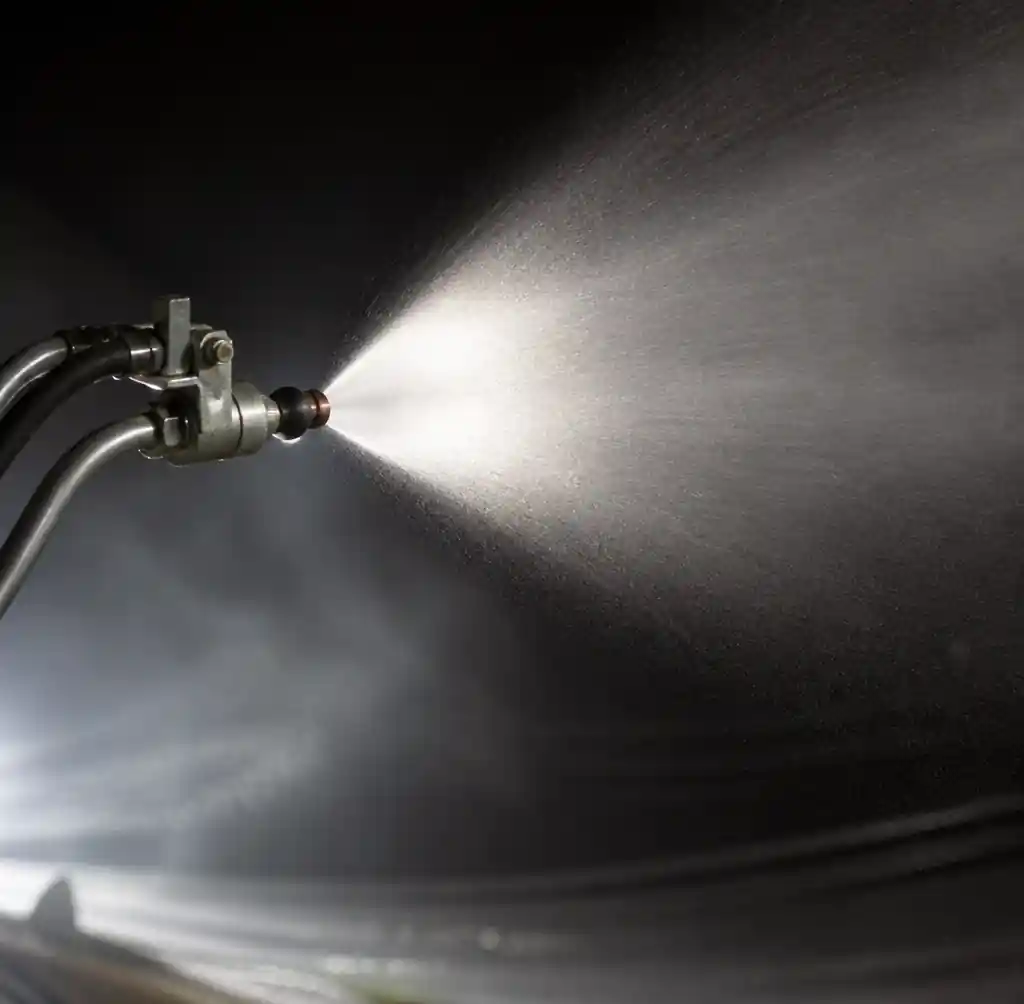
! 1-Schnee-machen-Düse-Atomisierung-Nahaufnahme Schneeherstellungsdüse erzeugt feine Wassertropfen während des Schneeherstellungsbetriebs
Beide Technologien funktionieren nach demselben physikalischen Prinzip: Wenn Wassertropfen kleiner als 50 Mikrometer in Luft unter dem Gefrierpunkt zerstäubt werden, findet eine Eisnukleation statt und während des Abstiegs des Tröpfchens bilden sich Schneekristalle. Die wichtigste Leistungsschwelle ist Nass-Bulb-Temperatur – das kombinierte Maß für Lufttemperatur und Luftfeuchtigkeit. Effektive Schneeherstellung erfordert typischerweise Nassbulbtemperaturen von -2,5°C (27,5°F), obwohl neuere, von der EU geförderte Innovationen diese Grenze weiter verschieben.
Europäische Resorts unterliegen strengeren Energie- und Wasservorschriften als nordamerikanische Betriebe, was die Effizienz von Geräten und die Klimaanpassung zu entscheidenden Auswahlkriterien macht.
Fächerpistolen vs. Schneelanzen: Leistungsvergleich
| Parameter | Fächerpistolen | Schneelanzen |
|---|---|---|
| Schneeausgang | 30-60 m³/Stunde | 5-15 m³/Stunde |
| Energieverbrauch (ESR) | 0,7–1,2 kWh/m³ | 0,3–0,5 kWh/m³ |
| Wasserdurchflussrate | 200-600 LPM | 80-200 LPM |
| Druckluftbedarf | Low (interner Kompressor) | High (zentrales Luftsystem) |
| Abdeckungsbereich | 800–1.500 m² | 300–600 m² |
| Automatisierung | Vollautomatisiert | Manuell oder halbautomatisiert |
| Investitionskosten pro Einheit | 15.000–35.000 EUR | EUR 2.500–8.000 |
| Installation | Bodenmontiert, mobil | Mastmontiert, fest |
| Beste Anwendung | Offene Hänge, Hochaufwärtszonen | Schmale Wege, Geländeparks, steile Abschnitte |
| Lärmpegel | High (Ventilatorbetrieb) | Low |
Fanguns dominieren die Abdeckung der Hauptpiste wegen hoher Leistung und Automatisierung. Moderne Modelle wie der Titan 4.0 von TechnoAlpin erreichen Energie-Schnee-Verhältnisse (ESR) von bis zu 0,7 kWh/m³ – eine Verbesserung von 50 % gegenüber Geräten aus dem Jahr 2000, die 1,45 kWh/m³ verbrauchten. Ventilatorkanonen benötigen jedoch eine erhebliche elektrische Infrastruktur (5–20 kW pro Einheit) und erzeugen Betriebslärm, die die Platzierung in Wohngebieten einschränkt.
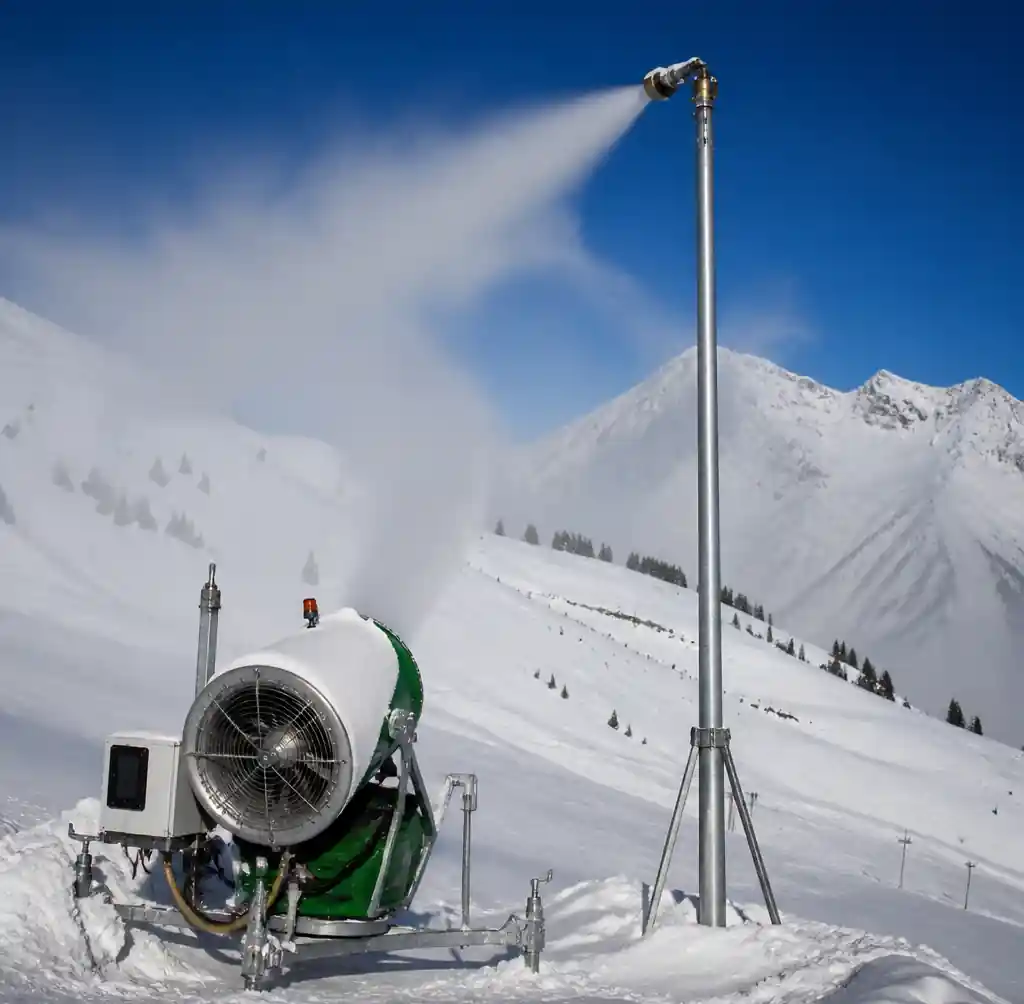
! 2-Fächer-Gewehr-vs-Schnee-Lance-Vergleich Direkter Vergleich von Lüfterkanonen- und Schneelanzen-Schneemachgeräten auf der Skipiste
Schneelanzen bieten eine überlegene Energieeffizienz (ESR ab 0,3 kWh/m³) und funktionieren gut in beengtem Gelände, erfordern jedoch zentralisierte Druckluftsysteme mit Kapazitäten von 15–25 m³/min pro 10-Lance-Cluster. Der Kompromiss: geringere Investitionskosten pro Einheit, höhere Kosten für die Luftkompressionsinfrastruktur und geringere Automatisierung im Vergleich zu Lüfterwaffen.
Aufschlüsselung der Investitionskosten
Investitionen in Schneeherstellung skalieren mit der Geländeabdeckung, der Wasser-/Strominfrastruktur und der Ausrüstungsmischung. Europäische Projekte lassen sich typischerweise in drei Kostenstufen unterteilen, abhängig von der Größe des Resorts und der Geländekomplexität.
Kosten nach Resort-Skala
| Resort-Kategorie | Hektar bedeckt | Gesamtinvestition | Kosten pro Hektar |
|---|---|---|---|
| Kleines Resort | 10-20 ha | EUR 600.000–1.200.000 | EUR 60.000–80.000 |
| Mittelgroßes Resort | 30–60 ha | EUR 2.000.000–5.500.000 | 50.000–90.000 EUR |
| Großes Resort | 80–150 ha | EUR 6.000.000–18.000.000 | 75.000–120.000 EUR |
Der große Spann pro Hektar spiegelt die Komplexität der Infrastruktur wider. Resorts mit vorhandenen Wasserreservoirs und elektrischer Kapazität bleiben eher am unteren Ende. Greenfield-Projekte, die Pumpstationen und Stromnetzausrüstungen erfordern, können höhere Kosten verursachen.
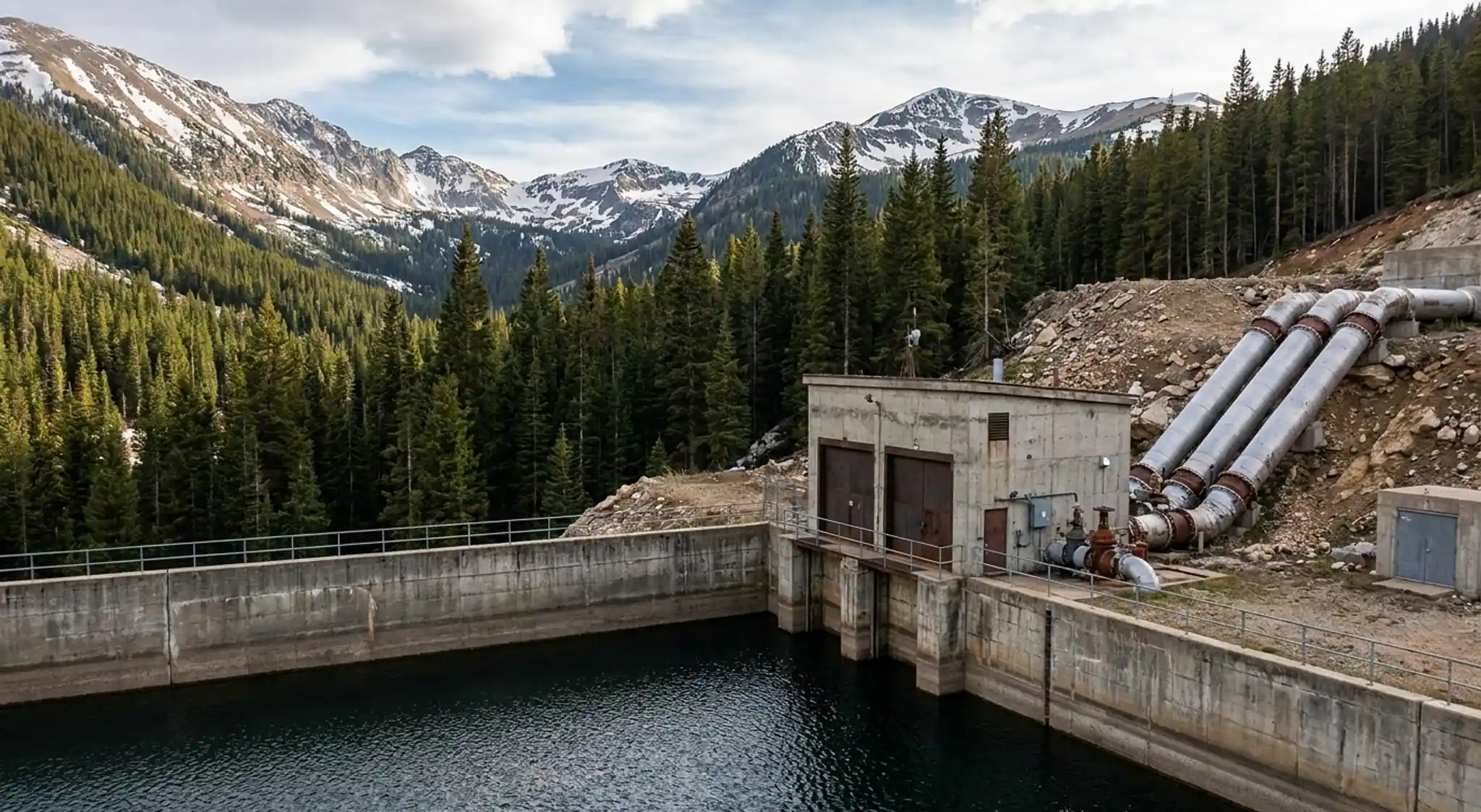
! 3-Schneebereitungs-Infrastruktur-Reservoir-Pumpstation Infrastruktur für Beschneiungswasserreservoir und Pumpstation im europäischen Skigebiet
Ausrüstungskosten Komponenten
Schneepistolen und Lanzen (35-45 % des Budgets):
- Lüfterwaffen: EUR 15.000–35.000 pro Stück
- Schneelanzen: EUR 2.500–8.000 pro Einheit
- Typische Dichte: 4–6 Geschütze pro Hektar (Fächergeschütze), 8–12 Lanzen pro Hektar
Wasserinfrastruktur (25–35 % des Budgets):
- Pumpstationen: EUR 80.000–300.000, abhängig vom Höhenunterschied
- Leitungsnetz: 60–120 EUR pro Laufmeter (vergraben, isoliert)
- Wasserbedarf: 4.000 m³ pro Hektar saisonale Gesamtsumme
Druckluftsystem (10–20 % des Budgets, lanzenintensive Systeme):
- Zentralverdichterstation: 150.000–500.000 EUR
- Luftverteilungsleitungen: 40–80 EUR pro laufender Meter
Elektrische Infrastruktur (15–25 % des Budgets):
- Transformator-Upgrades: 100.000–400.000 EUR
- Kabelnetz: 25–60 EUR pro Linearmeter
Automatisierung und Steuerung (5-10 % des Budgets):
- Wetterstationen: 8.000–15.000 EUR pro Einheit
- Steuersoftware: 30.000–80.000 EUR
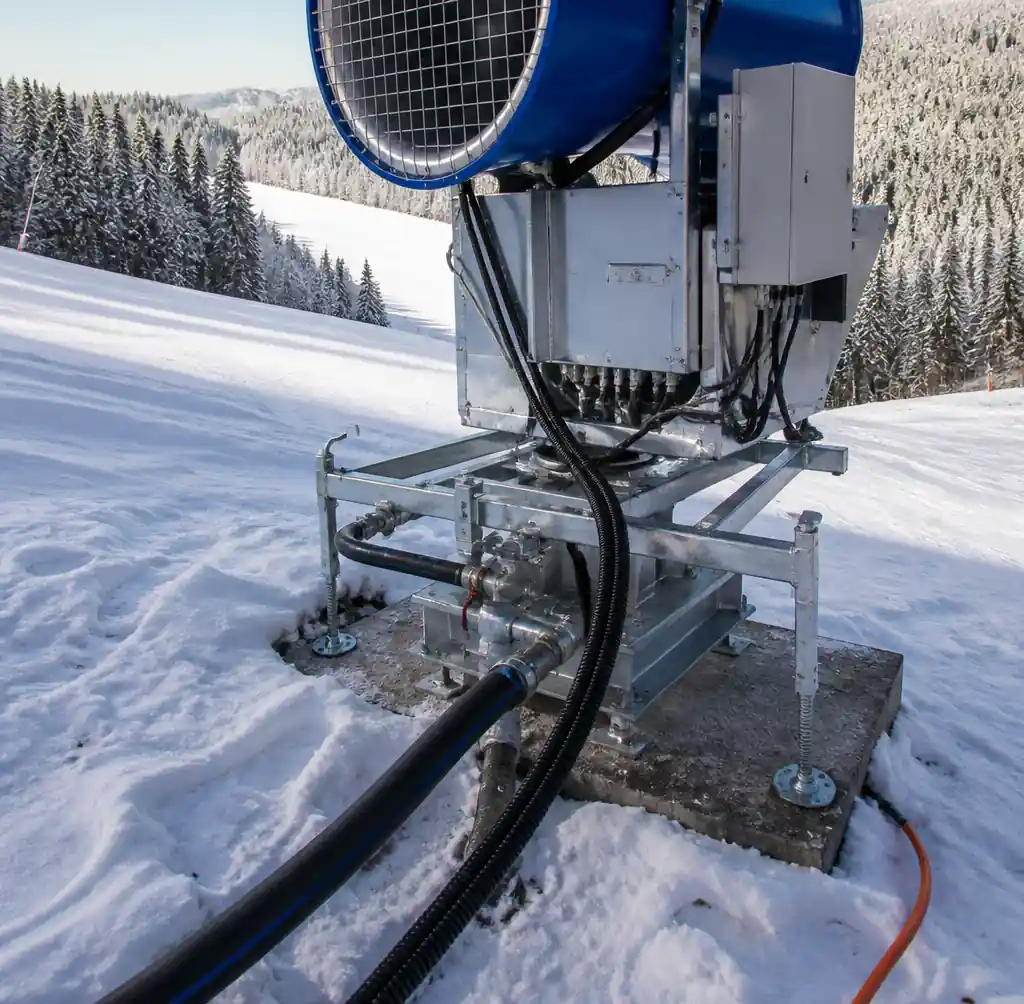
! 4-Schneepistolen-Installation-Elektrik-Verbindungen Schneepistolen-Elektro- und Wasseranschlüsse zeigen die Installationsinfrastruktur
Energieeffizienz und Betriebskosten
Energie macht 40–60 % der Schneebereitungskosten in europäischen Resorts aus. Die fortschrittlichen Energiebepreisungen und CO₂-Regulierungen der EU machen Effizienzsteigerungen direkt bankfähig.
Energieverbrauch nach Technologie
Lüfterpistolensysteme: Moderne automatisierte Lüfterpistolen verbrauchen 0,7–1,2 kWh pro Kubikmeter produzierten Schnee (ESR). Ein 40 Hektar großes Resort, das pro Saison 160.000 m³ Schnee produziert, verbraucht allein durch den Betrieb der Lüfterpistole etwa 112.000–192.000 kWh – ohne Wasserpumpen.
Schneelanzensysteme: Fortschrittliche energieeffiziente Lanzen erreichen einen ESR von nur 0,3 kWh/m³ – was eine erhebliche Energiereduzierung gegenüber konventionellen Geräten darstellt. Bei derselben Leistung von 160.000 m³ sinkt der Energieverbrauch auf 48.000 kWh.
Wasserpumpen: Der Höhengewinn erhöht die Energie der Pumpe. Die Lieferung von 4.000 m³ Wasser pro Hektar bis zu 300 vertikalen Metern erfordert je nach Pumpeneffizienz etwa 40.000–60.000 kWh pro Saison und 10 Hektar.
Beispiel für Betriebskosten (40 Hektar großes Resort)
Annahmen: 160.000 m³ saisonale Schneeproduktion, 300 m Höhenunterschied, Stromkosten von 0,20 EUR/kWh.
Fächerpistolen-dominantes System (80 % Fächerwaffen, 20 % Lanzen):
- Schneeerzeugungsenergie: 144.000 kWh → 28.800 EUR
- Wasserpumpen: 240.000 kWh → 48.000 EUR
- Druckluft: 20.000 kWh → 4.000 EUR
- Gesamtenergiekosten: 80.800 EUR pro Saison
Lanzenoptimiertes System (40 % Lüfterwaffen, 60 % energieeffiziente Lanzen):
- Schneeerzeugungsenergie: 64.000 kWh → 12.800 EUR
- Wasserpumpen: 240.000 kWh → 48.000 EUR
- Druckluft: 60.000 kWh → 12.000 EUR
- Gesamtenergiekosten: 72.800 EUR pro Saison
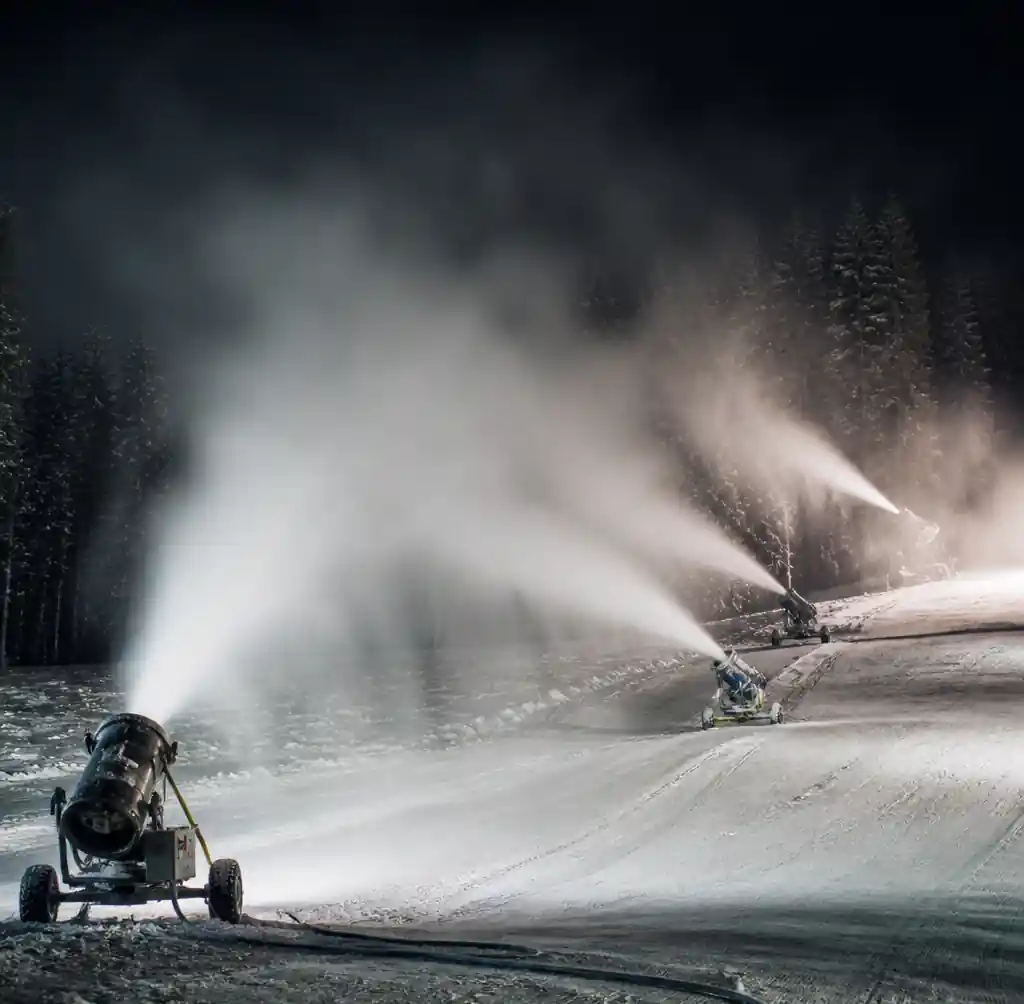
! 5 Nächte Schneemach-Operationen-Mehrfachwaffen Mehrere Schneekanonen laufen nachts auf der Skibierpiste mit beleuchteten Schneewolken
Das lanzenoptimierte System spart 8.000 EUR pro Saison an Energiekosten – 80.000 EUR über einen 10-jährigen Gerätelebenszyklus. Lanze-Systeme haben jedoch höhere Anfangskosten für die Druckluftinfrastruktur (200.000–400.000 EUR), was die Rückzahlung auf 5–7 Jahre verlängert.
Klimatauglichkeit und Wetterabhängigkeit
Die europäische Schneeherstellung arbeitet unter engeren Temperaturfenstern als nordamerikanische Resorts, bedingt durch maritime Klimaeinflüsse in den Alpenregionen. Die Feuchtkugeltemperatur – nicht die Lufttemperatur – bestimmt die Verfügbarkeit der Schneeherstellung.
Feuchtkugel-Temperaturschwelle
Effektive Schneeherstellung erfordert Nasskugeltemperatur ≤ -2,5°C (27,5°F). Bei höheren Feuchtkugeltemperaturen verlangsamt sich die Verdunstung der Tröpfchen und die Eisnukleation wird inkonsistent, was zu feuchtem, schwerem Schnee führt, der sich schlecht verdichtet.
Die Lufttemperatur allein täuscht: 0°C Luft bei 40 % Luftfeuchtigkeit hat eine Feuchtkugeltemperatur von -2,8°C (geeignet für Schneebereitung), während -1°C Luft bei 90% Luftfeuchtigkeit eine Nasskugel von -1,3°C (schlechte Beschneebedingungen) hat.
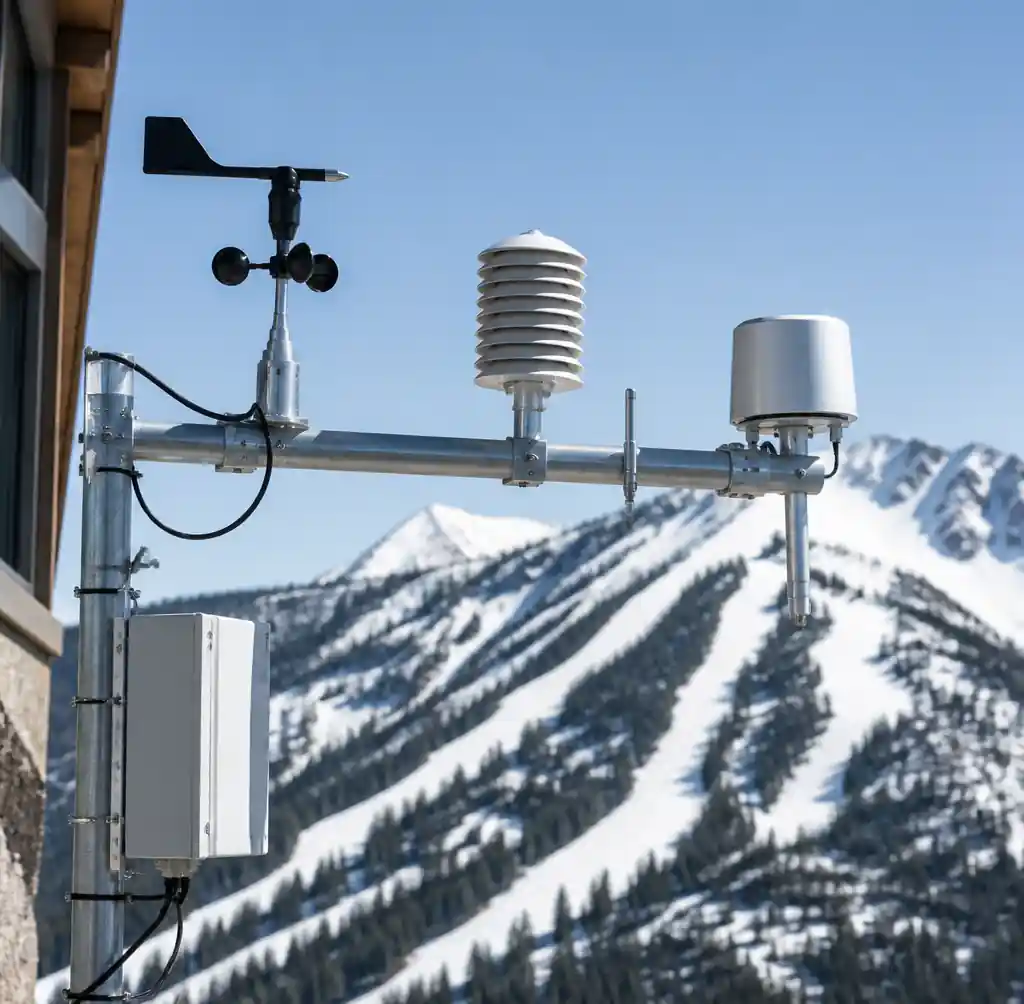
! 6-Alpine-Ski-Resort-Wetterstation Wetterüberwachungsstationen im Skigebiet für die Automatisierung der Schneeherstellung
Maritim beeinflusste Alpenresorts (französische Nordalpen, österreichische Tieferlagen, Schweizer Jura) haben weniger Feuchtknollen-Lebenszeiten als kontinentale Stätten (italienische Dolomiten, österreichische Tiroler Hochzonen). Dies wirkt sich auf die saisonale Schneeproduktionskapazität und die Auslastungsraten der Ausrüstung aus.
Klimainnovation
Europäische Forschungsinitiativen entwickeln eine Schneebereitungstechnologie über dem Gefrierpunkt unter Verwendung fortschrittlicher Nukleationsmethoden und Ultrahochdruck-Atomisierung. Diese Innovationen zielen darauf ab, die Fenster für die Schneeherstellung bei marginalen Klimabedingungen zu verlängern und potenziell 30–50 Stunden produktive Produktionszeit pro Saison in maritim beeinflussten Regionen zu erhöhen.
Die Schneebereitungsdüsen von YuechenPrecision Technology integrieren eine mehrstufige Atomisierung, die für europäische Klimabedingungen entwickelt ist und Tropfengrößen von 20–40 Mikrometern erreicht, um die Keimbildungseffizienz bei grenzwertigen Temperaturen zu verbessern.
ROI-Berechnungsrahmen
Der ROI der Schneeherstellung hängt von schrittweisen Skifahrerbesuchen, längerer Saisondauer und geringerem Wetterrisiko ab. Europäische Skigebiete streben typischerweise 6–10 Jahre Rückzahlung auf Schneeherstellungskapital an.
Einnahmen
Saisonverlängerung: Zuverlässiger Schnee in der Frühsaison öffnet Skigebiete 2-4 Wochen früher. Mittelgroße Resorts mit 15 zusätzlichen Betriebstagen generieren erhebliche zusätzliche Einnahmen aus Liftkarten, Lektionen und Unterkünften.
Wachstum der Skifahrer-Besuch: Skigebiete mit garantiertem Marktanteil an Schneeabschluss in Grundtiefe. Branchendaten zeigen 15–25 % Anstieg der Skifahrerbesucher in den ersten drei Saisons nach der Installation bei zuvor unterausgestatteten Resorts.
Risikoreduzierung: Wetterunabhängige Abläufe stabilisieren den Cashflow.
Beispiel für Rückzahlungsberechnung
Investition: 3.200.000 EUR (40 Hektar, Fangun-dominantes System) Jährliche Betriebskosten: 120.000 EUR (Energie, Arbeitskräfte, Wartung) Erhöhter Jahresumsatz: 450.000 EUR Jahresleistung: 330.000 EUR Einfache Rückzahlung: 9,7 Jahre
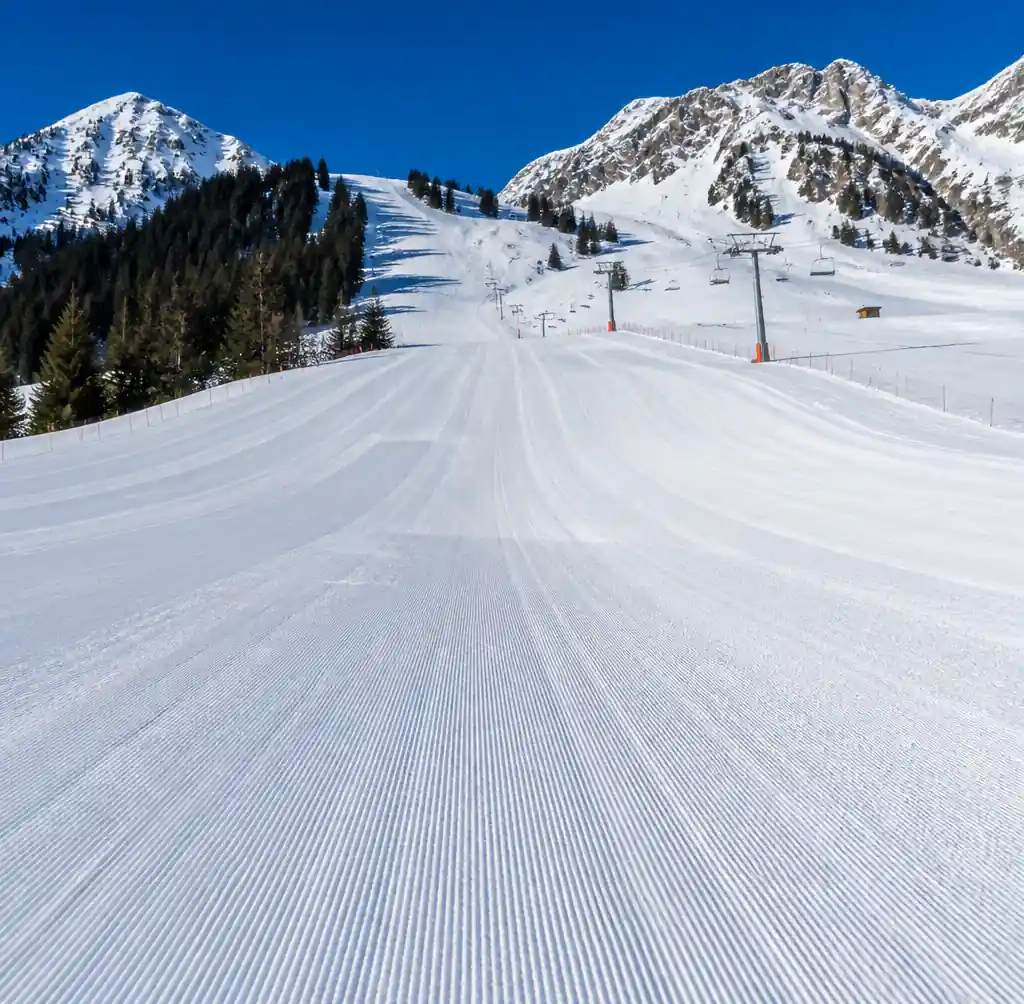
! 7-schneebedeckte-Ski-Piste-künstlich-Schnee-Basis Skipiste mit künstlicher Schneebasis, die durch ein Beschneiungssystem geschaffen wurde
Einige EU-Regionen bieten Subventionen für energieeffiziente Schneebereitungsanlagen an, wodurch die effektiven Investitionskosten um 15–30 % gesenkt und die Rückzahlung auf 6–8 Jahre verkürzt wird.
Entscheidungsrahmen für die Auswahl von Geräten
Sie müssen vier Variablen abwägen: Geländemerkmale, Klimaprofil, Investitionsbudget und Energiekostenprognosen.
Geländebasierte Auswahl: Weit offene Hänge mit gleichmäßiger Steigung sind → Ventilatorkanonen dominieren (70–80 % der Abdeckung). Schmale Wege, steile Abschnitte, Geländeparks → Schneelanzencluster. Gemischtes Gelände → Hybridsystem mit Lüfterwaffen an der Hauptleitung und Lanzen in technischen Zonen.
Klimabasierte Auswahl: Resorts mit ≥300 nassbulbfähigen Stunden pro Saison → Standardausrüstung funktionieren. Resorts mit 200–300 Stunden (maritime alpine Standorte) → energieeffiziente Lanzen priorisieren, um die Produktion in begrenzten Fenstern zu maximieren.
Budgetorientierte Auswahl: Kapitalbeschränkung: Lanzenlastige Systeme senken die Ausrüstungskosten, erfordern aber Investitionen in Druckluftinfrastruktur. Höhere anfängliche Kostenverträglichkeit für Elektro: Lüfterwaffensysteme bieten eine geringere Komplexität und eine vollständige Automatisierung. Langfristige Energiekostenbedenken: Energieeffiziente Lanzen liefern überlegene Betriebswirtschaftlichkeit mit einer Rückzahlungsfrist von 5–7 Jahren.
Regulatorische Überlegung: EU-Lärmvorschriften beschränken die Platzierung von Lüfterwaffen in der Nähe von Wohngebieten. Überprüfen Sie lokale Verordnungen; Einige Gemeinden beschränken die Öffnungszeiten der Beschneiung oder verbieten Lüfterwaffen innerhalb von 300 m um Wohnhäuser. Schneelanzen halten sich an strengere Lärmgrenzen.
Für technische Spezifikationen zu Atomisierungsanlagen und Zubehör, die mit europäischen Schneebereitungssystemen kompatibel sind, bietet YuechenPrecision Technology anwendungstechnische Unterstützung für Resort-Installationen im Maßstab.
FAQ
Was ist die Mindestgröße des Resorts, bei der Schneeherstellung finanziell sinnvoll ist?
Snowmaking wird auf 10–15 Hektar skiierbarem Gelände mit mindestens 80 Betriebstagen pro Saison möglich. Unterhalb dieses Maßstabs treiben die Fixinfrastrukturkosten pro Hektar über 100.000 EUR und verlängern die Rückzahlungsfrist über 12 bis 15 Jahre. Kleinere Resorts sollten eine stufenweise Installation beginnend mit stark frequentierten Hängen in Betracht ziehen.
Wie viel Wasser verbraucht ein 40 Hektar großes Resort pro Saison?
Ungefähr 160.000 Kubikmeter (4.000 m³ pro Hektar). Der tatsächliche Verbrauch variiert je nach Schneetiefe, Geländeneigung und Verdunstungsverlusten während der Produktion (7–35 % je nach Luftfeuchtigkeit). Resorts benötigen eine Reservoirkapazität für 100–120 % der saisonalen Nachfrage.
Kann Snowmaking tagsüber betrieben werden?
Ja, aber die Effizienz sinkt deutlich. Tageslufttemperaturen und Sonnenstrahlung erhöhen die Feuchtblommentemperaturen während der meisten Tagesstunden über die -2,5°C-Schwelle. Europäische Skigebiete betreiben 80–90 % der Schneebereitung während der Nachtschichten (22 Uhr bis 8 Uhr), wenn die Temperaturen sinken. Einige Hochgebirgsstandorte (über 2.200 m) erzielen an kalten Tagen eine begrenzte Tagesproduktion.
Welche Wartungskosten sollte ich einplanen?
Plane jährlich 3–5 % der Investitionskosten ein. Dies umfasst den Austausch der Düsen (alle 2–3 Jahre), Pumpenüberholungen (alle 5 Jahre), Wartung des Kompressors, elektrische Reparaturen und Aktualisierungen des Steuerungssystems. Lance-Systeme haben aufgrund des einfacheren mechanischen Designs geringere Wartungskosten als Lüfterwaffen. Wasserqualität ist wichtig – eine richtige Filtration reduziert den Verschleiß der Düsen und die Wartungshäufigkeit.
Wie beeinflusst die Beschneutung die Wasserverfügbarkeit für andere Zwecke?
Die meisten europäischen Skigebiete verwenden spezielle Stause, die während der Frühlingsschneeschmelze und Sommerregen gefüllt werden, um Konflikte mit kommunalem oder landwirtschaftlichem Wasser zu vermeiden. Der Bau eines Stauses erfordert jedoch Umweltgenehmigungen zur Bewertung der Auswirkungen des Einzugsgebietens. Einige Regionen schränken die Schneewassergewinnung während der von Dürre ausgerufenen Sommern ein. Berücksichtigen Sie 12–18 Monate für die Genehmigung in den Planungszeiten.
Fazit
Die Auswahl der Schneebereitungsausrüstung bestimmt sowohl Ihren Anfangskapitalbedarf als auch die Betriebskosten eines Jahrzehnts. Lüfterpistolen liefern eine hochvolumige Automatisierung, die für offene Hänge geeignet ist, verbrauchen jedoch 0,7–1,2 kWh pro Kubikmeter Schnee. Schneelanzen bieten eine überlegene Energieeffizienz und erfüllen strengere Lärmvorschriften, erfordern jedoch Investitionen in die Druckluftinfrastruktur. Europäische Resorts investieren typischerweise 50.000–120.000 EUR pro Hektar, abhängig vom Gelände und der vorhandenen Infrastruktur.
Klimaanalyse ist wichtig: Die Temperaturverträglichkeit von Nassbällen bestimmt die Nutzung von Geräten. Maritime alpine Standorte mit begrenzten Schneebereitungsfenstern profitieren am meisten von energieeffizienter Lanzentechnologie, die die Produktion während kalter Zeiten maximiert. Continental-Standorte mit erweiterten Öffnungszeiten können für Automatisierung mit Lüfterwaffensystemen optimieren.
Für Resortbetreiber, die Schneebereitungsanlagen planen, wenden Sie sich an YuechenPrecision Technology für die Auswahl der Düsen, die Atomisierungstechnik und die auf Ihre Höhe, Ihr Klima und Ihr Gelände zugeschnittene Energieeffizienzanalyse.