



Druck, Durchfluss und Sprühwinkel: Die drei kritischen Variablen, die die Reinigungseffizienz bestimmen
Wenn es um industrielle Reinigung, Oberflächenvorbereitung oder sogar die Hochdruckreinigung Ihrer Einfahrt geht, kann das Verständnis der Funktionsweise von Sprühdüsen den Unterschied zwischen einer gut erledigten Arbeit und verschwendeter Zeit, Wasser und Energie ausmachen. Drei grundlegende Variablen steuern die Reinigungsleistung: Druck, Durchflussrate und Sprühwinkel. Beherrschen Sie diese, und Sie optimieren die Reinigungseffizienz, während Sie Kosten und Umweltbelastung senken.
- 1. 1. Verständnis der Grundlagen der Sprühdüsenleistung
- 1.1. Warum diese Variablen wichtig sind
- 2. 2. Druck: Die treibende Kraft hinter Reinigungskraft
- 2.1. Wie Druck die Reinigung beeinflusst
- 2.2. Druckbereiche für verschiedene Anwendungen
- 2.3. Das Druckparadoxon
- 3. 3. Durchflussrate: Das Volumen ist wichtiger, als du denkst
- 3.1. Die Rolle der Durchflussrate bei der Reinigung
- 3.2. Verständnis der Druck-Fluss-Beziehung
- 3.3. Optimierung der Durchflussrate
- 4. 4. Sprühwinkel: Abwägungen zwischen Abdeckung und Intensität
- 4.1. Wie der Sprühwinkel funktioniert
- 4.2. Die Beziehung zwischen Berichterstattung und Intensität
- 4.3. Den richtigen Sprühwinkel auswählen
- 4.4. Entfernung zählt
- 5. 5. Das Zusammenspiel: Wie diese Variablen zusammenarbeiten
- 5.1. Die Reinigungskraftformel
- 5.2. Praktische Interaktionsbeispiele
- 5.3. Balanceakt: Finde deinen Sweet Spot
- 6. 6. Optimierung für verschiedene Reinigungsanwendungen
- 6.1. Industrielle Reinigung von Maschinen
- 6.2. Oberflächenvorbereitung für die Beschichtung
- 6.3. Lebensmittelverarbeitung und Sanitäranlagen
- 6.4. Fahrzeug- und Flottenwäsche
- 6.5. Beton- und Mauerwerkreinigung
- 7. 7. Häufige Fehler, die die Reinigungseffizienz verringern
- 7.1. Fehler 1: Übermäßigen Druck anwenden
- 7.2. Fehler 2: Ignorieren von Düsenverschleiß
- 7.3. Fehler 3: Falscher Sprühwinkel für den Job
- 7.4. Fehler 4: Falsche Arbeitsdistanz
- 7.5. Fehler 5: Unzureichende Überlappung
- 8. 8. Messung und Überwachung der Düsenleistung
- 8.1. Wichtige Leistungsindikatoren
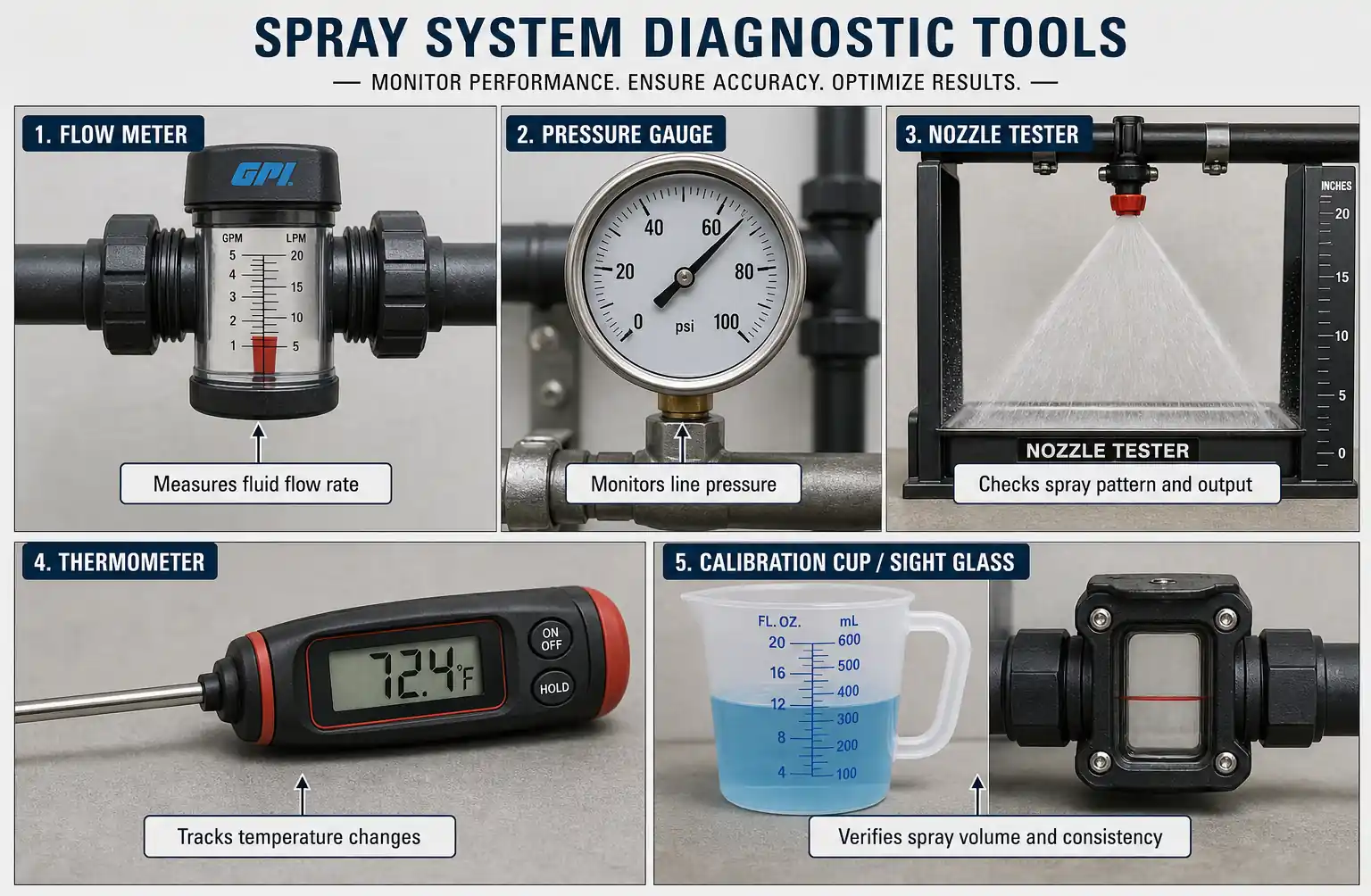
- 8.2. Diagnostische Werkzeuge
- 8.3. Wartungsplan
- 9. 9. Zukünftige Trends in der Sprühdüsentechnologie
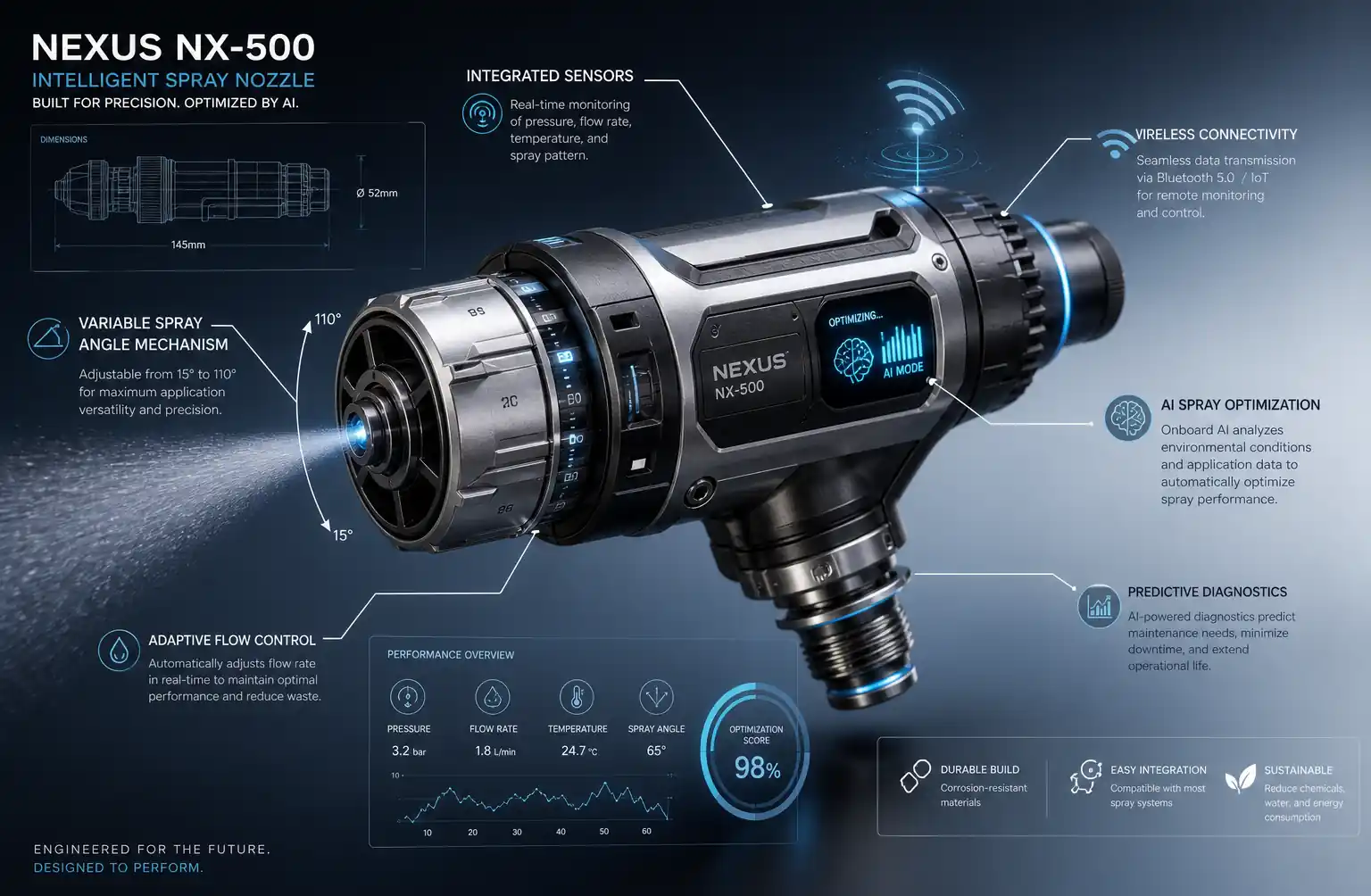
- 9.1. Intelligente Düsen mit Sensoren
- 9.2. Variable Sprühwinkeldüsen
- 9.3. Fortgeschrittene Materialien
- 9.4. Wasserspartechnologien
- 9.5. KI-optimierte Reinigungssysteme
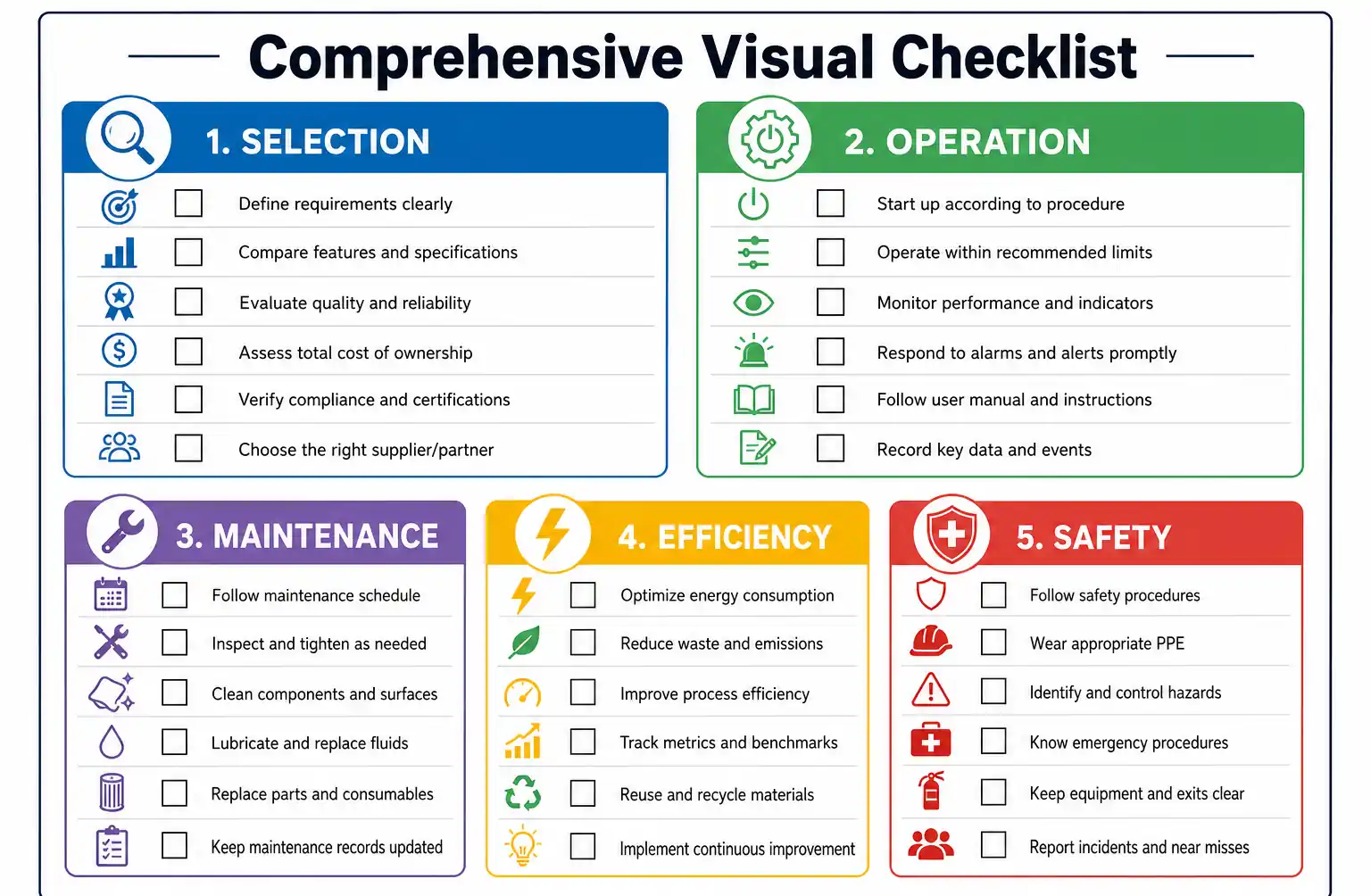
- 10. 10. Praktische Tipps zur Maximierung der Reinigungseffizienz
- 10.1. Auswahltipps
- 10.2. Operation-Tipps
- 10.3. Wartungstipps
- 10.4. Effizienztipps
- 10.5. Sicherheitstipps
- 11. Fazit
1. Verständnis der Grundlagen der Sprühdüsenleistung
Bevor man sich jeder Variablen nähert, ist es wichtig zu verstehen, was "Reinigungseffizienz" eigentlich bedeutet. Reinigungseffizienz bedeutet die Fähigkeit, Schadstoffe, Schmutz, Beschichtungen oder Ablagerungen von einer Oberfläche mit möglichst wenigen Ressourcen – Wasser, Energie, Zeit und chemische Mittel – zu entfernen.
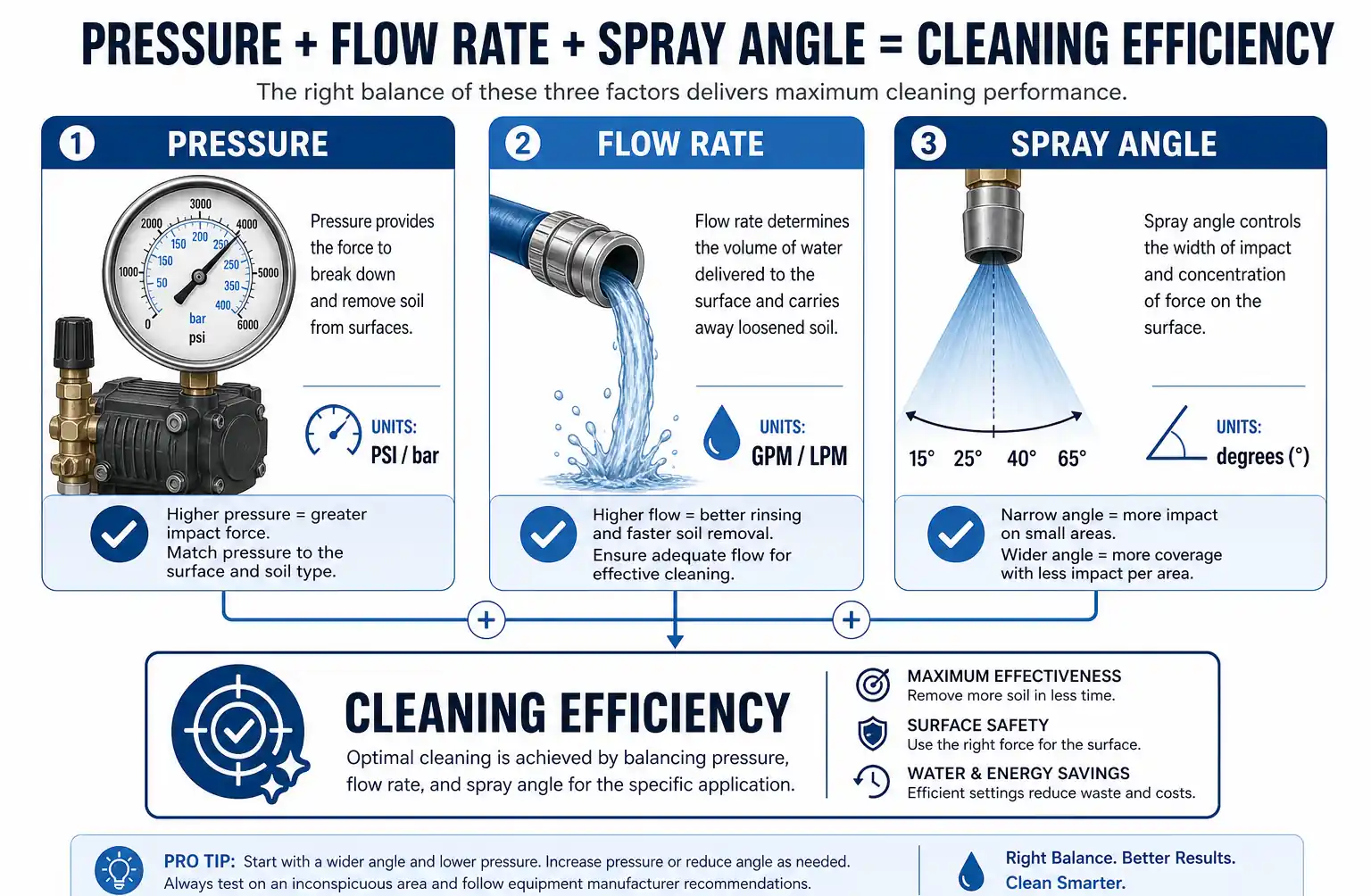
! Sprühdüse-Drei-Variablen-Diagramm
Drei Hauptvariablen steuern diese Effizienz:
- Druck (PSI/bar): Die Kraft, mit der Wasser oder Reinigungslösung die Düse verlässt
- Durchflussrate (GPM/LPM): Das Volumen der pro Zeiteinheit gelieferten Flüssigkeit
- Sprühwinkel (Grad): Die Breite des Sprühmusters, wenn es die Düse verlässt
Jede Variable beeinflusst die Reinigungsleistung unterschiedlich, und das Verständnis ihrer individuellen und kombinierten Effekte ist entscheidend, um die richtige Düse für Ihre Anwendung auszuwählen.
Warum diese Variablen wichtig sind
In industriellen Umgebungen kann eine falsche Düsenwahl dazu führen:
- Erhöhter Wasserverbrauch (in manchen Fällen bis zu 40 % Abfall)
- Höhere Energiekosten durch den Betrieb von Pumpen bei suboptimalen Drücken
- Längere Reinigungszyklen, die die Produktivität verringern
- Unvollständige Reinigung, die Nacharbeit erfordert
- Übermäßiger Verschleiß an Ausrüstung und Oberflächen
2. Druck: Die treibende Kraft hinter Reinigungskraft
Druck ist oft die erste Variable, an die Menschen denken, wenn sie über Reinigungsleistung nachdenken. Höherer Druck bedeutet in der Regel mehr Aufprallkraft, was hilft, die Bindung zwischen Schadstoffen und Oberflächen zu brechen.
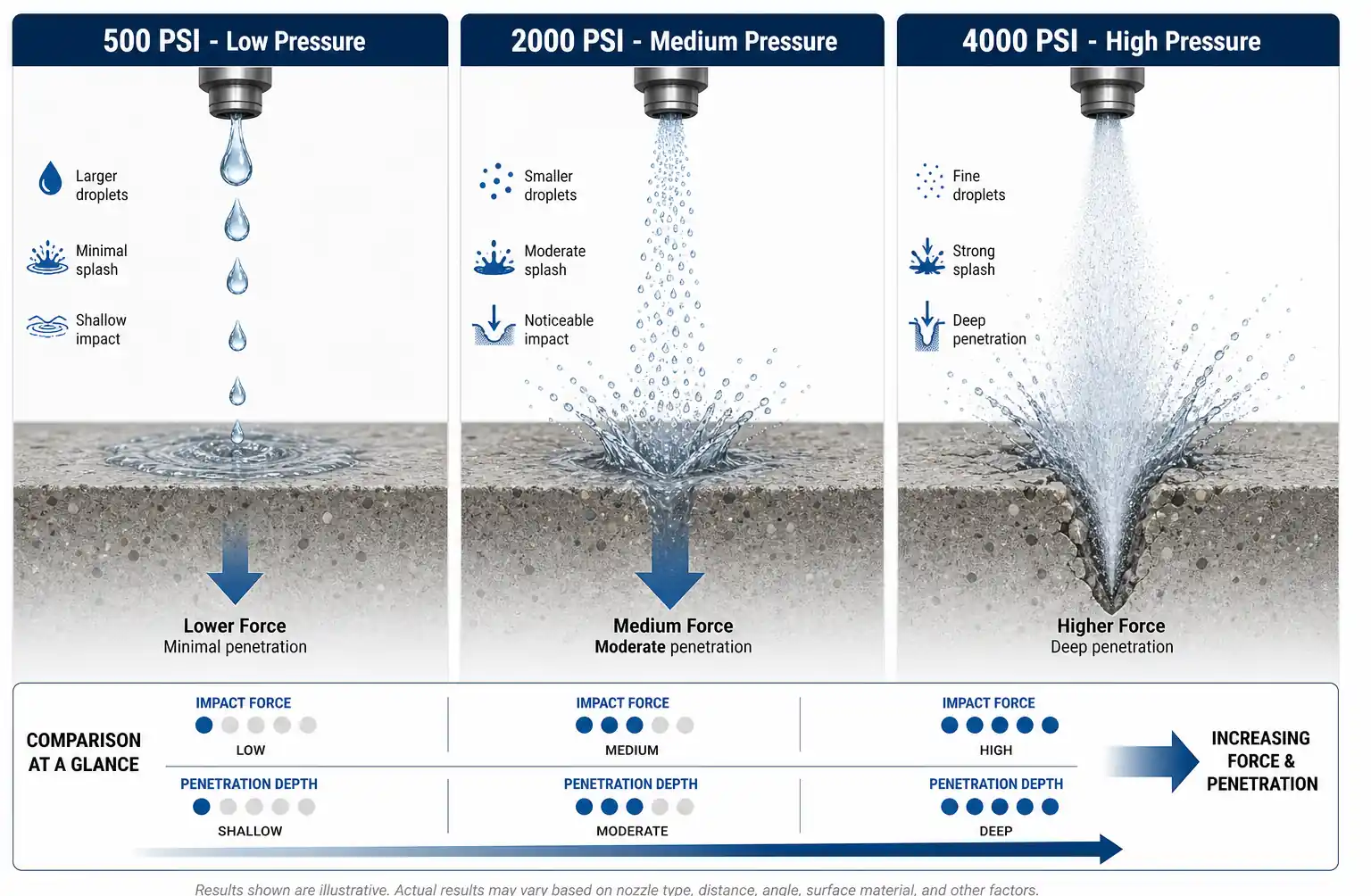
! Druck-Aufprall-Kraft-Vergleich
Wie Druck die Reinigung beeinflusst
Der Druck bestimmt die Aufprallkraft der Wassertropfen, die auf die Oberfläche treffen. Diese Aufprallkraft löst tatsächlich Schmutz, Schmutz und Beschichtungen. Die Beziehung folgt diesem Prinzip:
Aufprallkraft = Druck × Durchflussrate × Wirkungsgrad
Höherer Druck erzeugt:
- Kleinere Tröpfchengrößen mit größerer Durchschlagskraft
- Erhöhte kinetische Energie beim Aufprall
- Bessere Fähigkeit, hartnäckige Verunreinigungen zu durchbrechen
- Effektivere Entfernung von verklebten Materialien
Druckbereiche für verschiedene Anwendungen
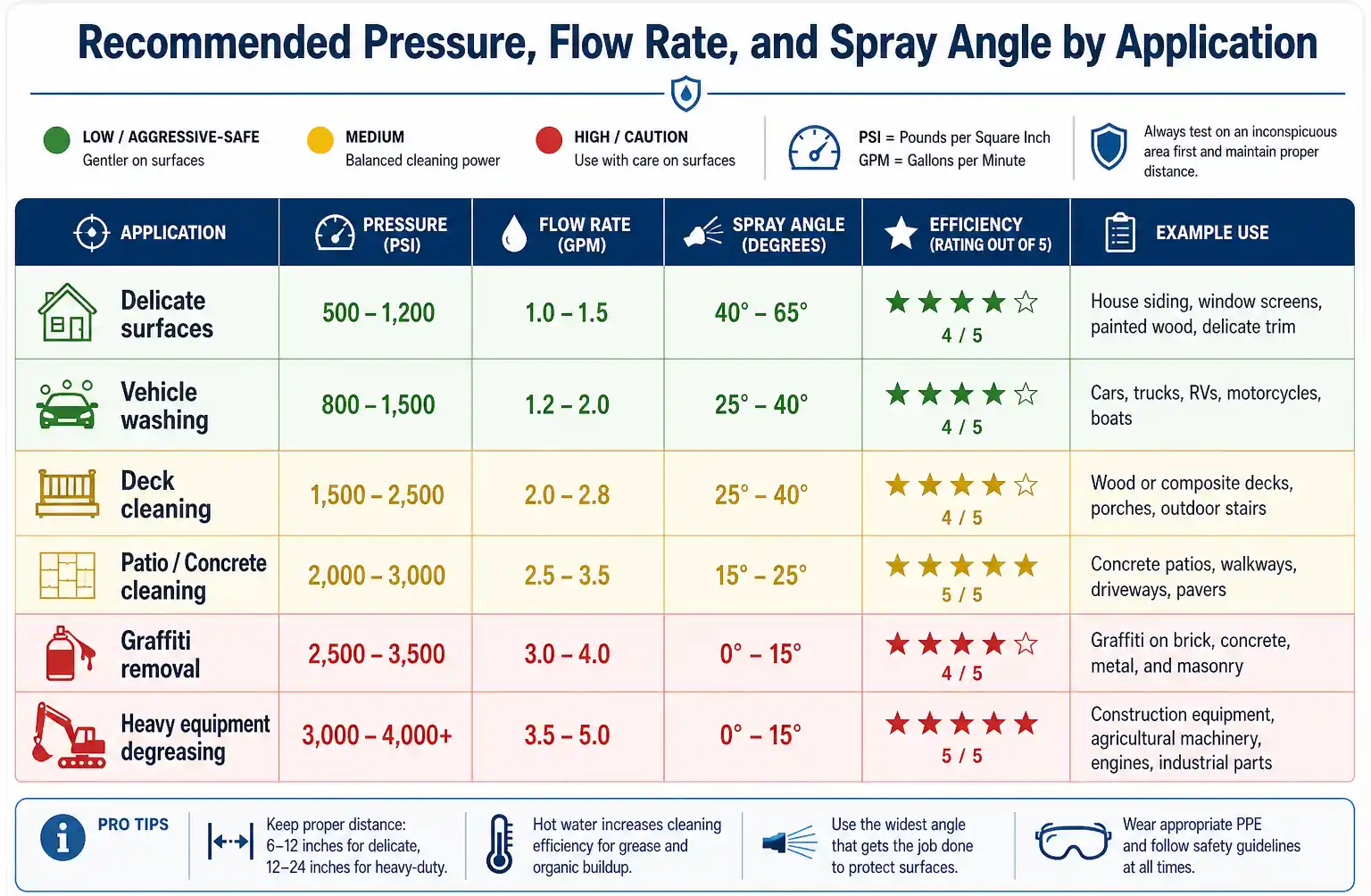
- Niederdruck (500–1.500 PSI): Empfindliche Oberflächen, Fahrzeugreinigung, leichte Reinigung
- Mitteldruck (1.500–3.000 PSI): Allgemeine industrielle Reinigung, Oberflächenvorbereitung
- Hochdruck (3.000–10.000 PSI): Schwere Reinigung, Farbentfernung, Betonaufbereitung
- Ultrahochdruck (10.000+ PSI): Spezialisierte Anwendungen wie Hydrodemolition, Schneiden
Das Druckparadoxon
Mehr Druck ist nicht immer besser. Übermäßiger Druck kann:
- Schadensempfindliche Oberflächen
- Übermäßigen Nebel und Überspray erzeugen
- Erhöhen Sie den Pumpenverschleiß und den Energieverbrauch
- Verkürzung der Lebensdauer der Düsen durch beschleunigte Erosion
- Sicherheitsgefahr für Betreiber darstellen
Der Schlüssel ist, den minimalen effektiven Druck für Ihre spezielle Anwendung zu finden – genug, um effektiv ohne Abfall oder Schäden zu reinigen.
3. Durchflussrate: Das Volumen ist wichtiger, als du denkst
Während der Druck die meiste Aufmerksamkeit erhält, ist die Durchflussrate ebenso wichtig und oft unterschätzt. Die Durchflussrate bestimmt, wie viel Wasser die Oberfläche berührt und wie schnell man ein Gebiet abdecken kann.
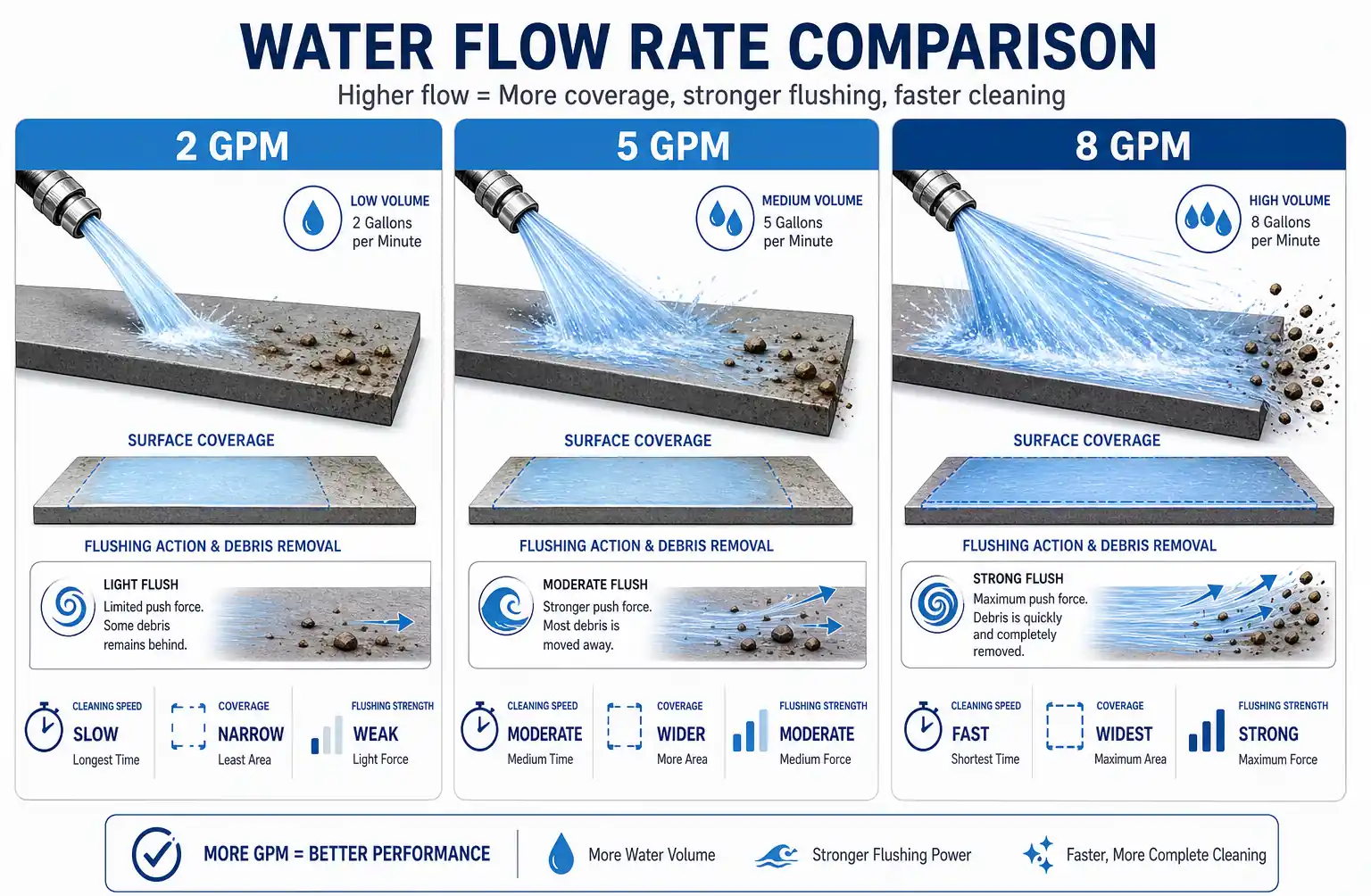
! Flussrate-Abdeckung-Visualisierung
Die Rolle der Durchflussrate bei der Reinigung
Die Durchflussrate beeinflusst die Reinigungseffizienz auf verschiedene Weise:
- Spülwirkung: Höhere Durchflussraten spülen gelöste Schadstoffe effektiver ab
- Abdeckungsgeschwindigkeit: Mehr Lautstärke bedeutet, dass Sie größere Flächen schneller reinigen können
- Verweilzeit: Ein ausreichender Durchfluss sorgt dafür, dass Reinigungsmittel lange genug auf der Oberfläche bleibt, um zu wirken
- Wärmeübertragung: In Warmwasseranwendungen beeinflusst die Durchflussrate, wie viel thermische Energie die Oberfläche erreicht
Verständnis der Druck-Fluss-Beziehung
Durchflussrate und Druck stehen mathematisch in Zusammenhang mit der Größe der Düsenöffnung:
Durchflussrate ∝ √Druck
Das bedeutet:
- Die Verdopplung des Drucks erhöht die Durchflussrate nur um 41 % (√2 = 1,41)
- Um die Durchflussrate zu verdoppeln, muss man den Druck vervierfachen
- Oder Sie können die Öffnungsgröße erhöhen, um den Durchfluss zu erhöhen, ohne den Druck zu erhöhen
Optimierung der Durchflussrate
Die ideale Durchflussrate hängt ab:
- Oberflächentyp: Poröse Oberflächen benötigen mehr Spülwirkung
- Schadstofftyp: Schwere Böden benötigen mehr Volumen zum Abspülen
- Reinigungsmethode: Stationäre vs. umziehende Anwendungen haben unterschiedliche Anforderungen
- Wasserverfügbarkeit: Einige Anlagen haben Durchflussbeschränkungen
Viele Betreiber konzentrieren sich ausschließlich auf den Druck und übersehen die Durchflussrate, was zu Situationen führt, in denen hoher Druck einen Aufprall verursacht, aber der unzureichende Durchfluss die Ablagerungen nicht effektiv abspült.
4. Sprühwinkel: Abwägungen zwischen Abdeckung und Intensität
Der Sprühwinkel ist die dritte kritische Variable und stellt einen grundlegenden Kompromiss dar: größere Abdeckung versus konzentrierte Intensität.
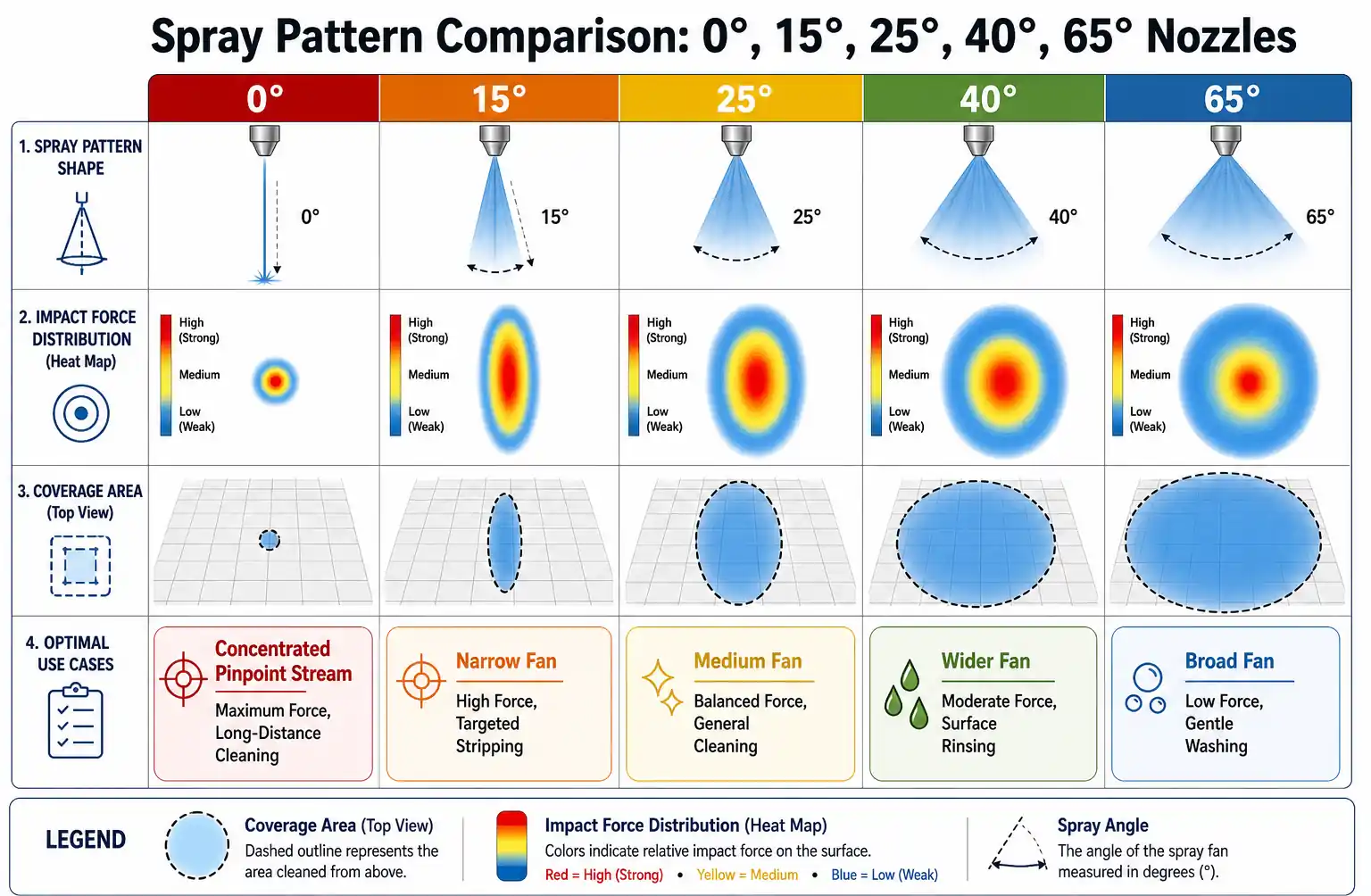
! Sprühwinkel-Vergleichsdiagramm
Wie der Sprühwinkel funktioniert
Der Sprühwinkel wird in Grad gemessen und stellt die Breite des Sprühmusters in einem bestimmten Abstand zur Düse dar. Häufige Winkel sind:
- 0° (Punkt/Düse): Konzentrierter Strom, maximale Einwirkung
- 15°: Sehr schmaler Lüfter, hohe Intensität
- 25°: Schmaler Lüfter, gut für schwierige Stellen
- 40°: Mittlerer Lüfter, ausgewogene Abdeckung und Leistung
- 65°: Breiter Lüfter, schnelle Abdeckung, geringere Intensität
Die Beziehung zwischen Berichterstattung und Intensität
Mit zunehmendem Sprühwinkel:
- Abdeckungsbereich wächst proportional
- Schlagkraft pro Flächeneinheit nimmt ab
- Reinigungsgeschwindigkeit für große Flächen verbessert sich
- Wirksamkeit bei hartnäckigen Schadstoffen nimmt ab
Dies ergibt eine grundlegende Gleichung:
Aufprallkraftdichte = Gesamtaufschlagkraft / Abdeckungsfläche
Eine 0°-Düse konzentriert die gesamte Kraft auf eine winzige Stelle, während eine 65°-Düse dieselbe Kraft auf eine viel größere Fläche verteilt.
Den richtigen Sprühwinkel auswählen
Sprühwinkel auswählen anhand von:
Schmale Winkel (0°-25°) für:
- Entfernung hartnäckiger Beschichtungen oder Ablagerungen
- Reinigung von Spalten und engen Räumen
- Schnitt durch dichte Ablagerungen
- Anwendungen mit maximaler Wirkung
Weitwinkel (40°-65°) für:
- Große, flache Flächen
- Leichte bis mittlere Verschmutzung
- Schnellere Abdeckungsanforderungen
- Situationen, in denen Oberflächenschäden ein Problem darstellen
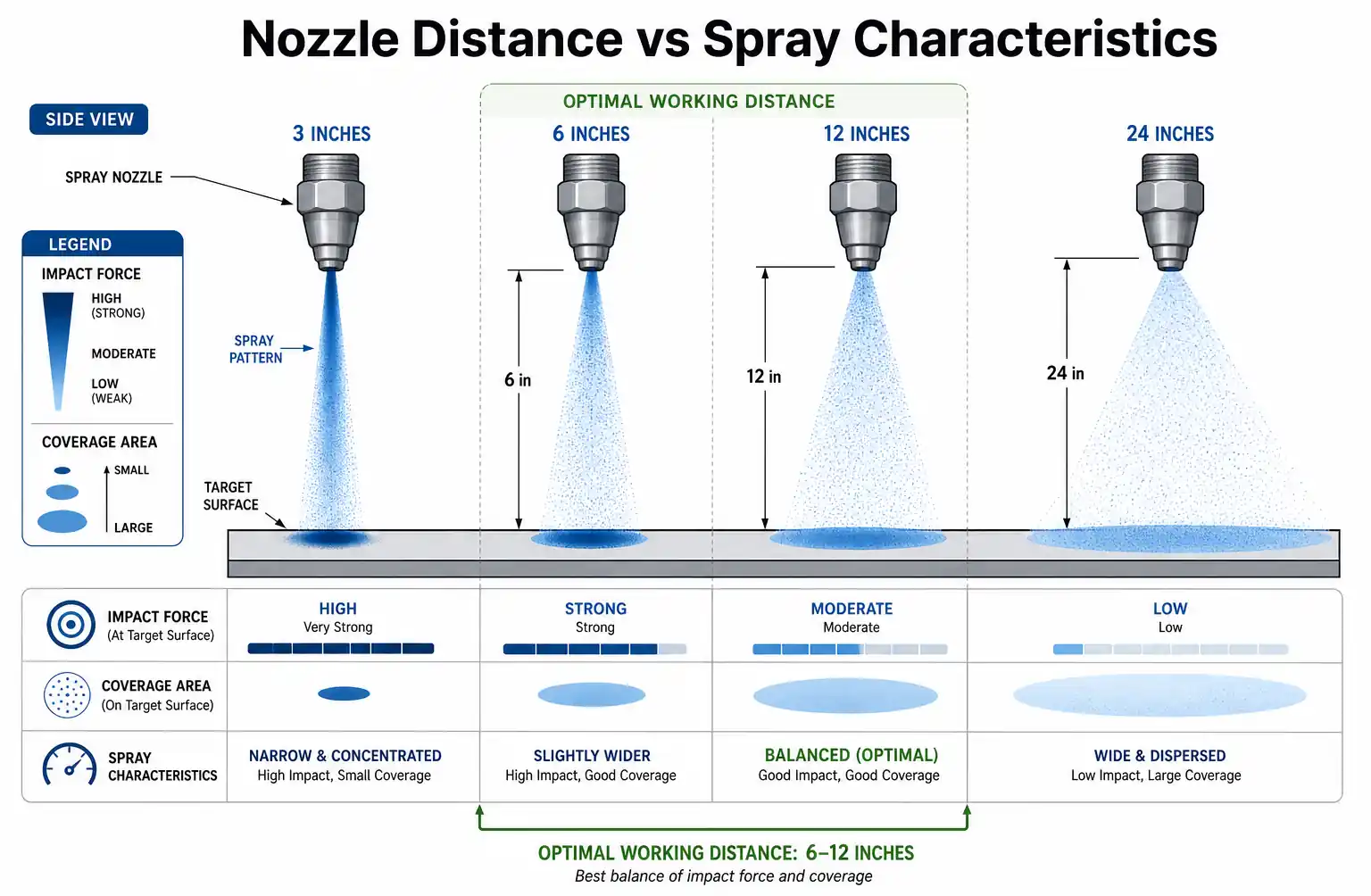
Entfernung zählt
Der effektive Sprühwinkel ändert sich mit der Entfernung zur Oberfläche. Wenn du die Düse weiter wegschiebst:
- Erweiterung der Abdeckungsfläche
- Abnahme der Aufprallkraft
- Das Sprühmuster kann weniger einheitlich werden
- Effizienz sinkt erheblich
Die meisten Düsen haben einen optimalen Arbeitsabstand von 15–30 cm für maximale Effizienz.
! Düsen-Entfernung-Effekt-Diagramm
5. Das Zusammenspiel: Wie diese Variablen zusammenarbeiten
Das Verständnis jeder einzelnen Variable ist wichtig, aber die Effizienz der Reinigung in der realen Welt ergibt sich dadurch, wie sie miteinander interagieren. Diese drei Variablen funktionieren nicht isoliert – sie bilden ein komplexes System, bei dem die Änderung einer Variablen die anderen beeinflusst.
Die Reinigungskraftformel
Obwohl vereinfacht, hilft diese Formel, die Beziehung zu visualisieren:
Reinigungsleistung = (Druck × Durchflussrate × cos(Sprühwinkel/2)) / Abstand²
Dies zeigt, dass:
- Die Reinigungsleistung steigt linear mit Druck und Durchfluss
- Größere Sprühwinkel verringern die Leistungsdichte
- Die Entfernung hat einen exponentiell negativen Effekt
Praktische Interaktionsbeispiele
Szenario 1: Hoher Druck + Niedriger Durchfluss + Enger Winkel
- Ergebnis: Intensive, fokussierte Reinigung
- Am besten für: Entfernung widerstandsfähiger Beschichtungen, punktuelle Reinigung
- Nachteil: Langsame Abdeckung, möglicher Oberflächenschaden
Szenario 2: Mittlerer Druck + hoher Durchfluss + Weitwinkel
- Ergebnis: Schnelle, sanfte Reinigung
- Am besten für: Große Flächen, leichte Verschmutzung
- Nachteil: Kann hartnäckige Schadstoffe nicht entfernen
Szenario 3: Hocher Druck + hoher Durchfluss + mittlerer Winkel
- Ergebnis: Ausgewogene, effiziente Reinigung
- Am besten für: Allgemeine industrielle Anwendungen
- Nachteil: Höherer Wasser- und Energieverbrauch
Balanceakt: Finde deinen Sweet Spot
Die optimale Kombination hängt ab von:
- Verunreinigungstyp und Haftfestigkeit
- Oberflächenmaterial und Empfindlichkeit
- Flächengröße und Zugänglichkeit
- Verfügbare Wasser- und Energieressourcen
- Zeitbeschränkung
- Umweltvorschriften
! Drei-Variablen-Interaktionsmatrix
6. Optimierung für verschiedene Reinigungsanwendungen
Verschiedene Branchen und Anwendungen erfordern unterschiedliche Ansätze zur Düsenauswahl und Parameteroptimierung.
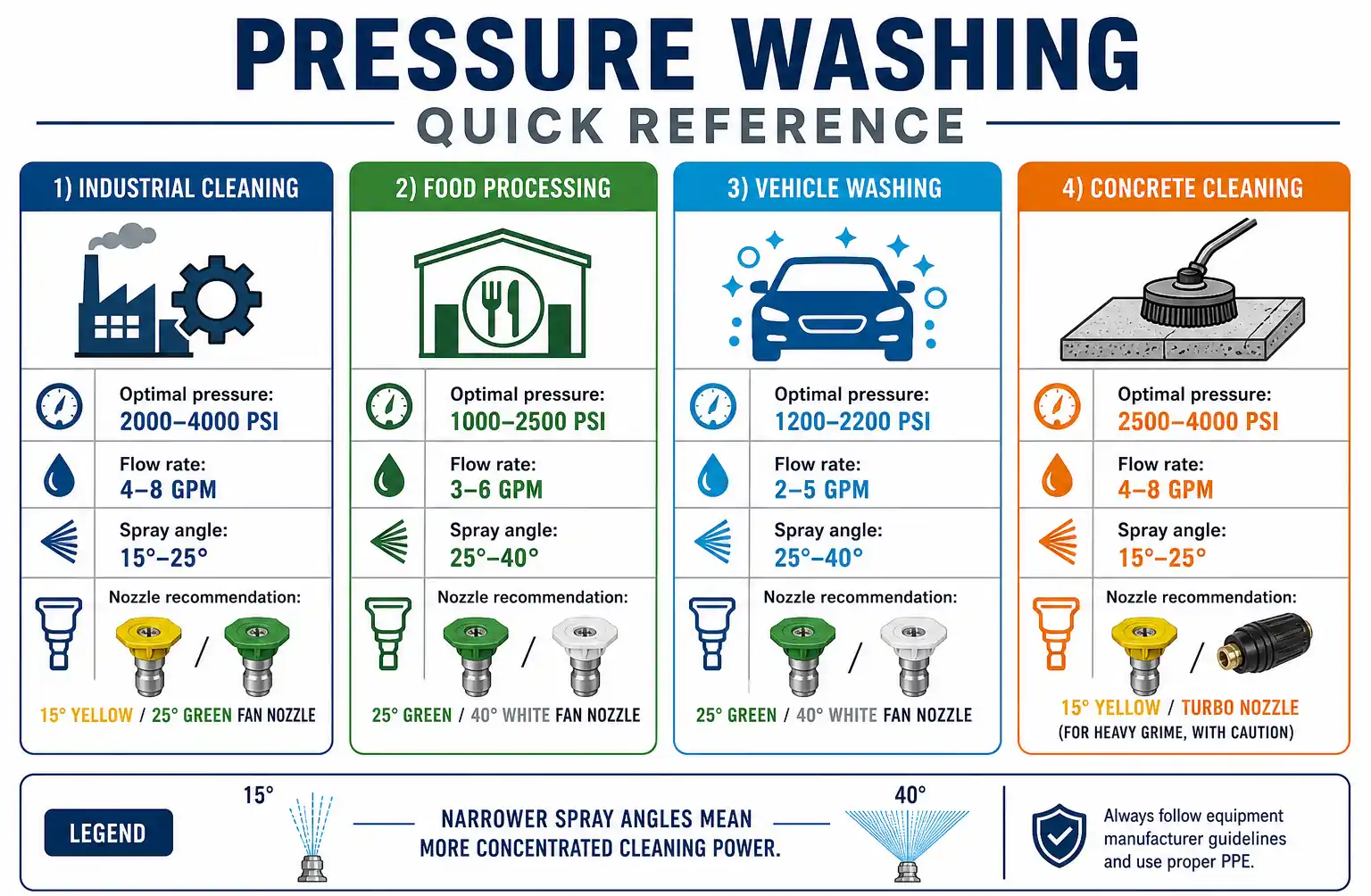
Industrielle Reinigung von Maschinen
Herausforderung: Entfernung von Fett, Öl und Produktionsrückständen Optimales Setup:
- Druck: 2.000–4.000 PSI
- Durchflussrate: 4-8 GPM
- Sprühwinkel: 25°-40°
- Zusätzlich: Warmes Wasser (140–180°F) verbessert die Effizienz erheblich
Oberflächenvorbereitung für die Beschichtung
Herausforderung: Ein korrektes Oberflächenprofil ohne Schäden erreichen Optimales Setup:
- Druck: 3.000–5.000 PSI
- Durchflussrate: 3–6 GPM
- Sprühwinkel: 15°-25°
- Schlüssel: Konsistente Distanz und Überlappungsmuster
Lebensmittelverarbeitung und Sanitäranlagen
Herausforderung: Einhaltung von Hygienestandards beim Schutz der Ausrüstung Optimales Setup:
- Druck: 500–1.500 PSI
- Durchflussrate: 5–10 GPM
- Sprühwinkel: 40°-65°
- Kritisch: Chemische Kompatibilität und vollständige Abdeckung
Fahrzeug- und Flottenwäsche
Herausforderung: Schnelle Reinigung ohne Lackschäden Optimales Setup:
- Druck: 1.200–2.000 PSI
- Durchflussrate: 3–5 GPM
- Sprühwinkel: 25°-40°
- Tipp: Verwenden Sie größere Winkel für Karosserieteile, schmalere für Räder
Beton- und Mauerwerkreinigung
Herausforderung: Entfernung von Flecken und Ablagerungen von langlebigen Oberflächen Optimales Setup:
- Druck: 3.000–4.000 PSI
- Durchflussrate: 4-6 GPM
- Sprühwinkel: 15°-25°
- Hinweis: Anpassung an das Alter und den Zustand des Betons
! anwendungsspezifische-Düsenführung
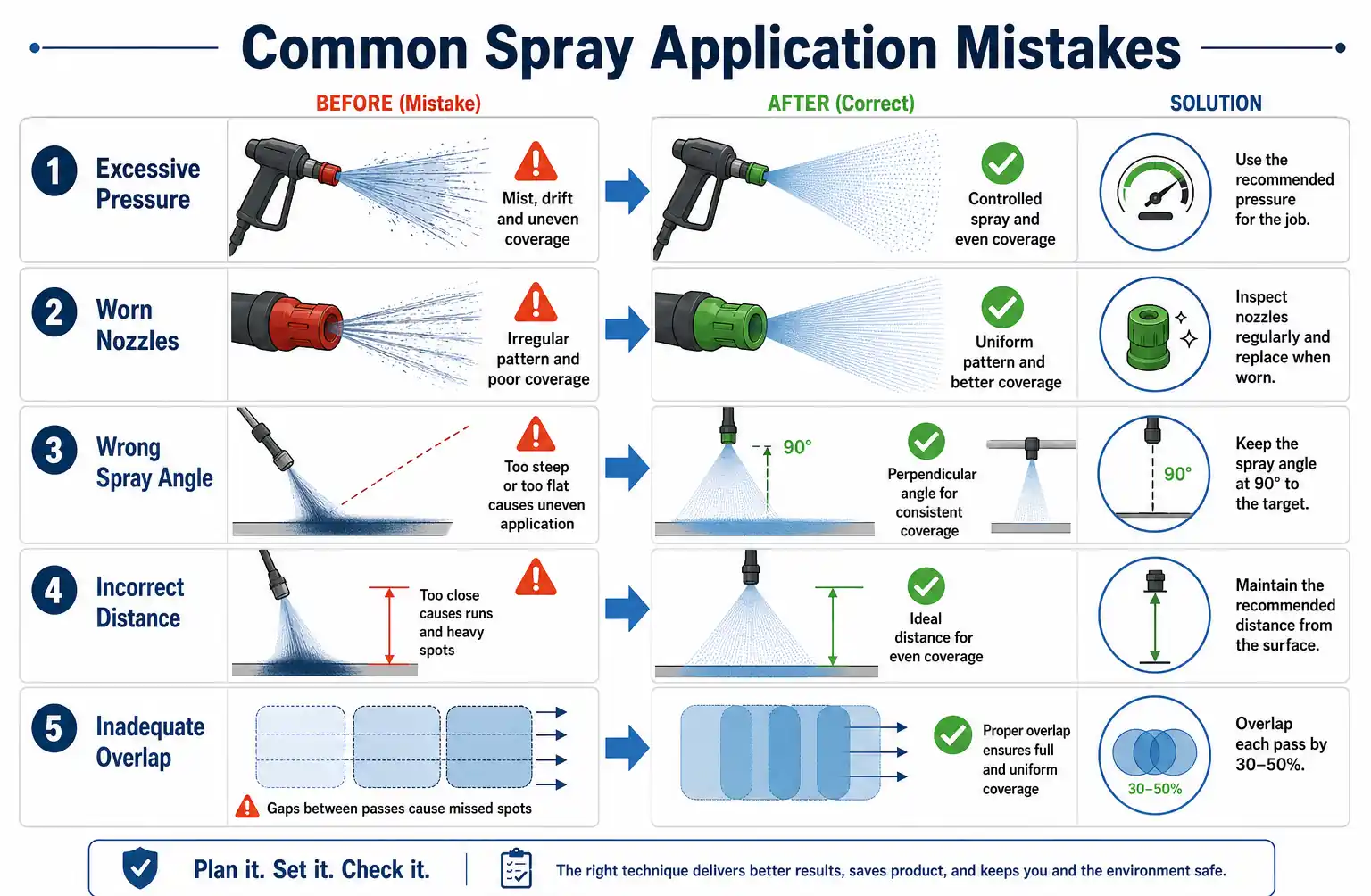
7. Häufige Fehler, die die Reinigungseffizienz verringern
Selbst mit der richtigen Ausrüstung können schlechte Praktiken die Reinigungseffizienz erheblich verringern. Hier sind die häufigsten Fehler und wie Sie sie vermeiden können.
Fehler 1: Übermäßigen Druck anwenden
Viele Betreiber gehen davon aus: "Mehr Druck = bessere Reinigung." Dies führt zu:
- Verschwendung von Energie und erhöhte Betriebskosten
- Beschleunigter Düsenverschleiß und Schäden an der Ausrüstung
- Oberflächenschäden, die kostspielige Reparaturen erfordern
- Sicherheitsgefahren durch erhöhten Rückstoß und Übersprühkraft
Lösung: Beginnen Sie mit niedrigem Druck und erhöhen Sie nur bei Bedarf mehr. Teste zuerst auf einem kleinen Bereich.
Fehler 2: Ignorieren von Düsenverschleiß
Düsen verschleißen sich mit der Zeit, besonders bei hohen Drücken. Eine abgenutzte Düse:
- Erhöht die Durchflussrate um 10–25 %
- Reduziert den Druck an der Oberfläche
- Erzeugt unregelmäßige Sprühmuster
- Verschwendet Wasser und verringert die Reinigungswirkung
Lösung: Düsen regelmäßig inspizieren und ersetzen, wenn die Durchflussrate um mehr als 10 % steigt.
Fehler 3: Falscher Sprühwinkel für den Job
Ein Weitwinkelwinkel für schwierige Reinigungen oder einen schmalen Winkel für große Flächen verschwendet Zeit und Ressourcen.
Lösung: Passe den Sprühwinkel an die Aufgabe an. Halte mehrere Düsen für verschiedene Situationen bereit.
Fehler 4: Falsche Arbeitsdistanz
Zu weit von der Oberfläche entfernt zu arbeiten, reduziert die Aufprallkraft erheblich. Zu nah zu arbeiten kann Oberflächen beschädigen und gefährliche Rückspritzungen verursachen.
Lösung: Halten Sie den vom Hersteller empfohlenen Abstand ein, typischerweise 15–30 cm.
Fehler 5: Unzureichende Überlappung
Das Überspringen von Bereichen oder unzureichende Überlappungen hinterlässt Streifen und erfordert eine Überarbeitung.
Lösung: Verwenden Sie ein konsistentes Muster mit 20-30 % Überlappung zwischen den Durchgängen.
! häufige Düsenfehler-Infografik
8. Messung und Überwachung der Düsenleistung
Um eine optimale Reinigungseffizienz zu gewährleisten, müssen Sie die Leistung Ihres Sprühsystems regelmäßig messen und überwachen.
Wichtige Leistungsindikatoren
- Messung der Durchflussrate
- Verwenden Sie einen Durchflussmesser oder einen Eimertest
- Messen in regelmäßigen Abständen (monatlich für Anwendungen mit hoher Nutzung)
- Vergleich mit den Herstellerspezifikationen
- Düsen ersetzen, wenn der Durchfluss >10 % steigt.
- Druckverifikation
- Überprüfen Sie den Druck an der Pumpe und an der Düse
- Berücksichtigen Sie Druckverluste in Schläuchen und Verschraubungen
- Überprüfen Sie jährlich die Genauigkeit des Druckmessgeräts
- Inspektion des Sprühmusters
- Visuelle Inspektion auf Gleichmäßigkeit
- Überprüfen Sie auf Streifen oder tote Stellen
- Achten Sie auf Anzeichen von Düsenschäden oder Verstopfungen
- Reinigungszeiterfassung
- Überwachen, wie lange Aufgaben dauern
- Steigende Reinigungszeiten deuten auf eine sinkende Effizienz hin,
- Vergleichen Sie mit der Ausgangsleistung
Diagnostische Werkzeuge
- Durchflussmesser: Messung der tatsächlichen Durchflussrate
- Druckmesser: Betriebsdruck überprüfen
- Düsentester: Gleichmäßigkeit des Sprühmusters prüfen
- Wärmebildgebung: Für Warmwasseranwendungen
- Wasserqualitätstest: Identifizieren Sie Probleme, die den Verschleiß der Düse verursachen
! Düse-Leistungsüberwachungs-Werkzeuge
Wartungsplan
Täglich: Visuelle Inspektion des Sprühmusters Wöchentlich: Überprüfe auf Lecks und lose Verbindungen Monatlich: Messung von Durchflussrate und Druck Vierteljährlich: Gründlich reinigen oder Filter austauschen Jährlich: Vollständiges Systemaudit und Ersatz der Düse
9. Zukünftige Trends in der Sprühdüsentechnologie
Die Sprühdüsenindustrie entwickelt sich weiterhin mit neuen Technologien weiter, die darauf abzielen, die Effizienz zu steigern, Abfall zu reduzieren und intelligentere Reinigungssysteme zu ermöglichen.
Intelligente Düsen mit Sensoren
Neue Düsendesigns umfassen:
- Druck- und Durchflusssensoren für Echtzeitüberwachung
- Drahtlose Konnektivität für Datenerfassung
- Automatische Einstellung basierend auf Rückkopplung
- Prädiktive Wartungswarnungen
Variable Sprühwinkeldüsen
Neue Designs ermöglichen es den Bedienern, den Sprühwinkel spontan anzupassen:
- Eliminiert den Bedarf an mehreren Düsen.
- Optimiert sich für sich ändernde Bedingungen
- Verringert Ausfallzeiten beim Düsenwechsel
- Verbessert die Flexibilität des Bedieners
Fortgeschrittene Materialien
Düsenhersteller entwickeln:
- Keramische und Hartmetalleinsätze für eine längere Lebensdauer
- Verbundwerkstoffe, die gegen chemische Angriffe resistent sind
- Selbstreinigende Designs, die Verstopfungen widerstehen
- Beschichtungen, die die Reibung verringern und die Effizienz verbessern
Wasserspartechnologien
Mit zunehmendem Fokus auf Nachhaltigkeit:
- Ultra-Low-Flow-Düsen, die die Reinigungsleistung erhalten
- Pulsierende Sprühmuster, die den Wasserverbrauch verringern
- Umlaufsysteme mit fortschrittlicher Filtration
- Nebel- und Nebelreduzierungstechnologien
KI-optimierte Reinigungssysteme
Zukünftige Systeme könnten Folgendes umfassen:
- Maschinelle Lernalgorithmen, die Parameter optimieren
- Computer Vision für Oberflächenbewertung
- Automatisierte Anpassung basierend auf Verunreinigungstyp
- Integration mit Facility-Management-Systemen
! Smart-Düse-Technologie-Zukunft
10. Praktische Tipps zur Maximierung der Reinigungseffizienz
Hier sind umsetzbare Tipps, die Sie sofort umsetzen können, um Ihre Reinigungseffizienz zu verbessern.
Auswahltipps
- Passe die Düse an die Aufgabe an: Verwenden Sie keinen Einheitsansatz
- Berücksichtigen Sie die Gesamtkosten des Besitzes: Günstigere Düsen können langfristig teurer sein
- Qualität kaufen: Premium-Düsen halten länger und erhalten die Leistung besser
- Halte eine Vielfalt parat: Verschiedene Jobs erfordern unterschiedliche Düsen
Operation-Tipps
- Fang niedrig an, geh langsam: Beginne mit niedrigem Druck und erhöhe bei Bedarf
- Halte konstante Distanz: Nutze eine Anleitung oder Übung, um optimale Abstände zu halten
- Verwenden Sie die richtige Technik: Überlappende Pässe um 20-30 % für vollständige Deckung
- Vorbehandeln möglich: Chemische Vorbehandlung reduziert den erforderlichen Druck und die Zeit
Wartungstipps
- Vor jeder Nutzung inspizieren: Probleme erkennen, bevor sie die Leistung beeinträchtigen
- Düsen regelmäßig reinigen: Entfernen Sie Mineralablagerungen und Ablagerungen
- Abgenutzte Düsen umgehend austauschen: Warten Sie nicht, bis die Leistung stark verschlechtert ist
- Verwendung von gefiltertem Wasser: Reduziert Verschleiß und Verstopfungen
Effizienztipps
- Wassertemperatur optimieren: Heißes Wasser reinigt sich besser bei niedrigem Druck
- Verwenden Sie geeignete Chemikalien: Das richtige Waschmittel reduziert den Bedarf an mechanischer Reinigung
- Trainiere die Fahrer richtig: Technik ist genauso wichtig wie Ausrüstung
- Dokumentieren, was funktioniert: Führe Aufzeichnungen erfolgreicher Parameterkombinationen
Sicherheitstipps
- Geeignete PSA tragen: Augenschutz, Handschuhe und Schutzkleidung
- Niemals auf Menschen oder Tiere zeigen: Hochdruckwasser kann schwere Verletzungen verursachen
- Seien Sie sich der elektrischen Gefahren bewusst: Wasser und Strom passen nicht zusammen
- Schläuche und Ausrüstung sichern: Stolpergefahren und Geräteschäden verhindern
! Düseneffizienz-Best-Practices-Checkliste
Fazit
Druck, Durchfluss und Sprühwinkel sind die drei grundlegenden Variablen, die die Reinigungseffizienz bestimmen. Obwohl jeder eine eigene Rolle spielt, erzeugt seine Interaktion die eigentliche Reinigungsleistung, die du erlebst.
Das Verständnis dieser Variablen ermöglicht es Ihnen:
- Wählen Sie für jede Anwendung die richtige Düse aus
- Wasser- und Energieverbrauch optimieren
- Reduzierung von Reinigungszeit und Arbeitskosten
- Bessere Reinigungsergebnisse erzielen
- Verlängerung der Lebensdauer der Geräte
- Verbesserung der Arbeitssicherheit
Der Schlüssel ist, das richtige Gleichgewicht für Ihre spezielle Anwendung zu finden. Beginnen Sie mit Herstellerempfehlungen, testen Sie verschiedene Kombinationen und überwachen Sie die Leistung über die Zeit. Mit richtiger Auswahl, Bedienung und Wartung können Sie die Reinigungseffizienz maximieren und gleichzeitig den Ressourcenverbrauch minimieren.
Denken Sie daran: Die teuerste Düse ist nicht immer die beste, und der höchste Druck ist nicht immer die effektivste. Eine intelligente Optimierung aller drei Variablen – Druck, Durchflussrate und Sprühwinkel – sorgt für eine überlegene Reinigungseffizienz.