



Was sind Sprühdüsen in maritimer Qualität?
Marine-Sprühdüsen sind präzisionskonstruierte Flüssigkeitskontrollgeräte, die speziell darauf ausgelegt sind, den harten Bedingungen maritimer Umgebungen standzuhalten. Im Gegensatz zu herkömmlichen Industriedüsen verwenden sie korrosionsbeständige Legierungen wie SS316L, Duplex Stainless Steel und Titan, um zuverlässige Leistung bei der Meerwasserkühlung, Marine-Tankreinigungslösungen und Brandschutzsystemen an Bord zu gewährleisten. Da die globalen Kosten für maritime Korrosion jährlich 80 Milliarden US-Dollar übersteigen (Schätzungen von NACE International), wirkt sich die Wahl der richtigen Düsentechnologie direkt auf die Sicherheit des Schiffs, die Einhaltung der IMO-Vorschriften und die Betriebsbudgets aus. Egal, ob Sie eine Tankerflotte verwalten oder Systeme für Offshore-Plattformen spezifizieren – zu verstehen, was Marine-Düsen auszeichnet, ist der erste Schritt, um vorzeitige Ausfälle und kostspielige Ausfallzeiten zu vermeiden.
Ausgewählter Ausschnitt: Marine-Sprühdüsen sind korrosionsbeständige Flüssigkeitskontrollgeräte aus Legierungen wie SS316L oder Duplex Steel, die Salzwasser standhalten und präzise Sprühmuster für Kühl-, Reinigungs- und Brandschutzsysteme an Bord liefern.
- 1. Was macht eine Sprühdüse "Marinequalität"?
- 1.1. Korrosionsbeständige Materialarchitektur
- 1.2. Interne Geometrie, optimiert für maritime Medien
- 1.3. Zertifizierte Leistung unter extremen Bedingungen
- 2. Die realen Kosten der Verwendung von Standarddüsen auf See
- 2.1. Die dreidimensionale Schmerzpunktanalyse
- 2.2. Der versteckte Downtime-Multiplikator
- 3. Marine-Qualität vs. Standarddüsen: Technischer Vergleich
- 4. Kritische Anwendungen in der gesamten maritimen Industrie
- 4.1. Fall 1: Tankreinigung von Chemikalientankern
- 4.2. Fall 2: Maschinenraumkühlung auf ultragroßen Containerschiffen
- 4.3. Fall 3: Brandbekämpfung auf LNG-Trägern und Neubauprojekten
- 5. Materialauswahlleitfaden für Meeresumgebungen
- 5.1. Legierungs-Leistungsmatrix
- 5.2. Unser Spezifikations-Empfehlungsrahmen
- 6. Die Leute fragen auch: FAQs zu maritimen Sprühdüsen
- 6.1. Wie unterscheiden sich marinefähige Sprühdüsen von normalen Edelstahldüsen?
- 6.2. Welche Druckwerte sind für Marine-Feuerlöschdüsen erforderlich?
- 6.3. Welches Sprühmuster eignet sich am besten für die Reinigung von Marinetanks?
- 6.4. Wie können Verstopfungen in Marine-Abgasreinigungssystemen (EGCS) verhindert werden?
- 6.5. Gibt es individuelle Marinedüsenspezifikationen für einzigartige Schiffsdesigns?
- 6.6. Wie oft sollten Meeressprühdüsen inspiziert oder ausgetauscht werden?
- 7. Fazit: Investieren Sie in Zuverlässigkeit
Was macht eine Sprühdüse "Marinequalität"?
Der Unterschied zwischen einer Standard-Industriedüse und einer echten Marine-Sprühdüse geht weit über das Branding hinaus. In unserer Ingenieurspraxis über 200+ Schiffsprojekte haben wir festgestellt, dass der Unterschied in drei entscheidenden Designpfeilern liegt, die zusammenarbeiten müssen, um in der Meeresumgebung zu überleben.
Korrosionsbeständige Materialarchitektur
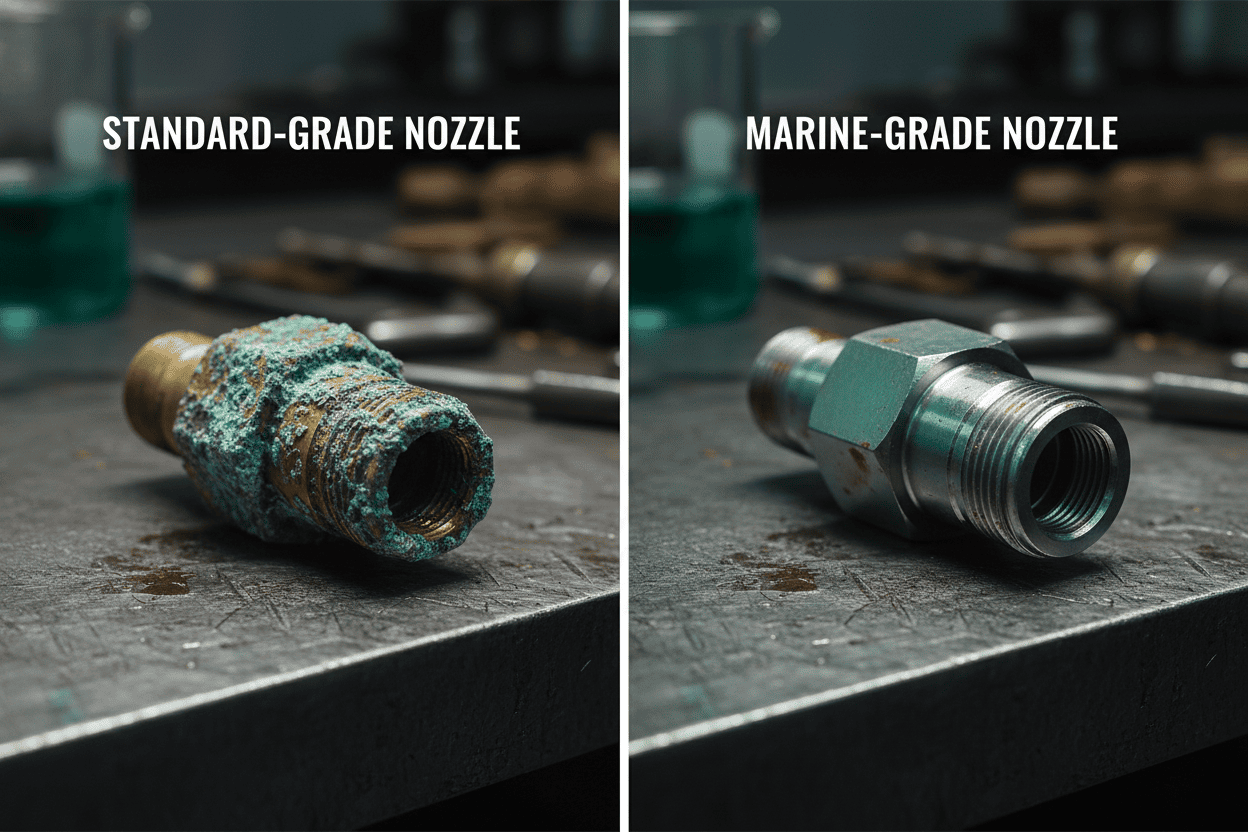
Standard-Messing- oder Kohlenstoffstahldüsen beginnen innerhalb von 6–12 Monaten nach Salzwassereinwirkung zu zerfallen. Schiffsqualitätsvarianten werden aus speziell auf Chloridbeständigkeit ausgewählten Legierungen hergestellt:
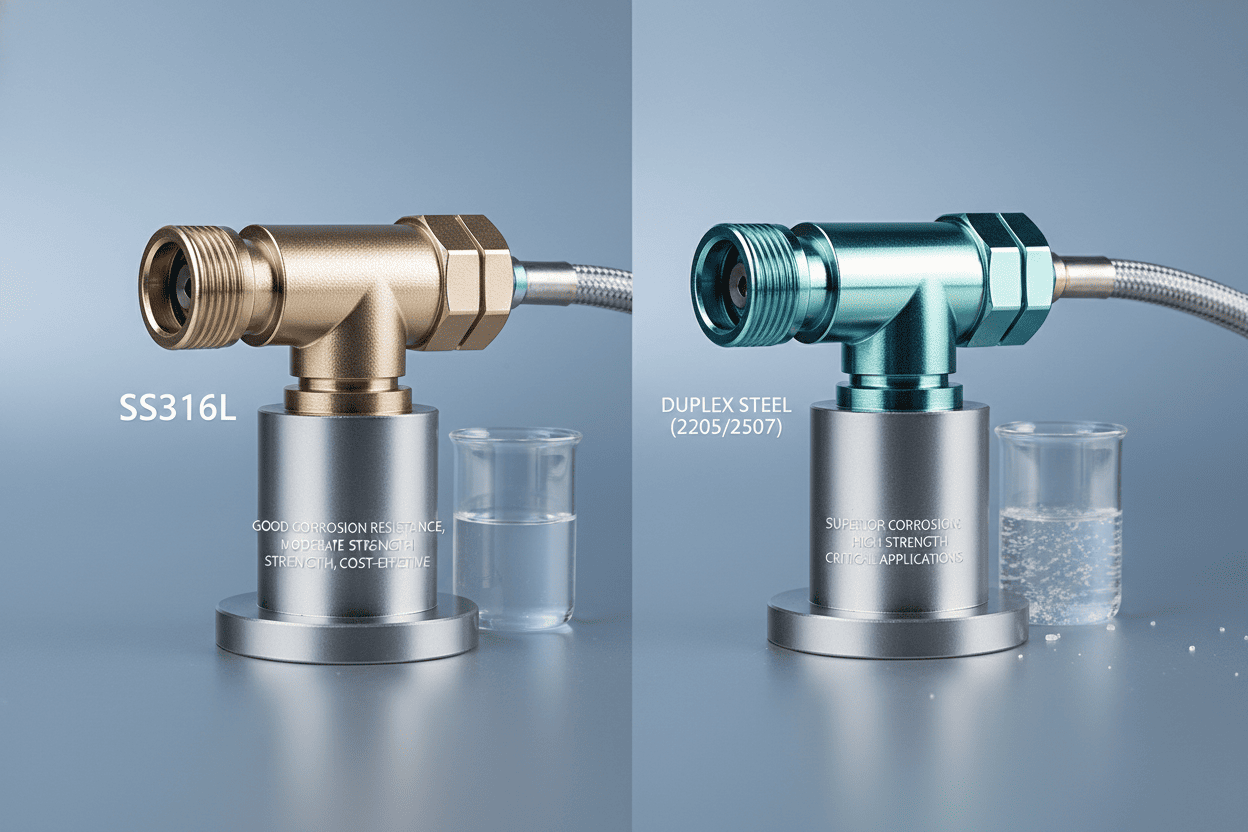
- SS316L Edelstahl — Die Branchenbasis für marine Brandbekämpfung und allgemeine Kühlung. Seine molybdänreiche Zusammensetzung (2–3 % Mo) widersteht Pitting-Korrosion in 35 g/L Natriumchlorid-Umgebungen. Die "L"-Bezeichnung (niedriger Kohlenstoff, <0,03 % C) verhindert Sensibilisierung und intergranulare Korrosion nach Schweißen oder längerer Hitzeeinwirkung in Motorräumen.
- Duplex Edelstahl (2205/2507) — Doppelte Streckgrenze von 316 L, mit überlegener Widerstandsfähigkeit gegen Spannungskorrosionsrisse (SCC). Unverzichtbar für Hochdruck-Ballastwasseraufbereitungssysteme und Offshore-Bohranwendungen, bei denen zyklische Belastung auf aggressives Material trifft. Wir spezifizieren Duplex für jede Anwendung mit einem kontinuierlichen Betriebsdruck von 100 bar.
- Titan- und Siliziumkarbidlegierungen — Nahezu vollständige Immunität gegen saure Abgasreinigungsflüssigkeiten in maritimen Sprühsystemen, die in Abgasreinigungssystemen (EGCS) eingesetzt werden. Diese Materialien können pH-Werte von bis zu 2,0 und Temperaturen über 200°C in feuchten Scrub-Umgebungen aushalten.
Wichtige Einsicht: Eine als "Edelstahl" vermarktete Düse ist nicht automatisch schiffsfähig. Ohne explizite Salzsprühtests (ASTM B117) und schiffsspezifische Durchflussvalidierung werden Standard-304SS-Düsen im Schiffsdienst vorzeitig versagen.
! Marine-Sprühdüsen-SS316L-Duplex-Stahl-Material-Vergleich
Interne Geometrie, optimiert für maritime Medien
Meeresmedien – Meerwasser, Salzlake, Schwerbrennstoffrückstände und schwefelhaltige Abgasströme – stellen einzigartige Verstopfungsprobleme dar, denen landgestützte Fluidsysteme nur selten begegnen. Durch das Testen von 500+ Düsenproben unter simulierten maritimen Bedingungen stellten wir fest, dass Marine-Qualität-Designs eine spezifische interne Architektur enthalten:
- "Max Passage" breite freie Passage-Geometrie, die es Festkörpern bis zu bestimmten Partikelgrößen erlaubt, ohne den Durchfluss zu behindern. Dies ist besonders kritisch in Ballastwasserbehandlungssystemen, bei denen Sedimente und Meeresorganismen den Betrieb der Düsen nicht behindern dürfen.
- Präzisionsbearbeitete Innenflächen mit Ra 0,8 μm oder besserer Oberfläche, die Turbulenzzonen minimieren, in denen Salzkristalle nukleieren und haften können. Raue innere Durchgänge in generischen Düsen erzeugen Salzablagerungshotspots, die den Fluss allmählich verengen.
- Durchflussoptimierte Wirbelkammern in Spiral- und Vollkegel-Designs, die trotz Druckschwankungen, die in Pumpensystemen an Schiff üblich sind, konstante Sprühwinkel beibehalten. Dies gewährleistet eine gleichmäßige Wärmeableitung bei Motorkühlanwendungen, selbst während der Schiffsmanöver, wenn die Pumpenleistung schwankt.
Zertifizierte Leistung unter extremen Bedingungen
Düsen in maritimer Qualität unterziehen sich einer rigorosen Validierung, die herkömmliche Industrieprodukte schlichtweg nicht tun. Jede von uns produzierte Charge wird mit diesen Benchmarks getestet:
| Zertifizierungsparameter | Teststandard | Anforderung für Marinequalität | Warum es wichtig ist |
|---|---|---|---|
| Druckangabe | ISO 19867 | 2 – 300 bar Einsatzreichweite | Unterstützt alles von der Niederdruckreinigung der Tanks bis zur Brandbekämpfung mit Hochdruckwassernebel |
| Temperaturtoleranz | IEC 60068-2-14 | -30°C bis 300°C Dauerbetrieb | Entwickelt für kryogene LNG-Speicherkühlung und Hochtemperatur-Abgasanwendungen |
| Konsistenz des Sprühwinkels | Intern + Drittanbieter | ±3° Abweichungstoleranz bei Nenndruck | Gewährleistet eine gleichmäßige Wärmeableitung in den Maschinenräumen und eine vollständige Tankabdeckung |
| Tröpfchengrößenverteilung | Laserbeugung (ISO 13320) | Dv(0,9) innerhalb des angegebenen Bandes | Entscheidend für die Effektivität der Brandbekämpfung von Wassernebel und IMO-Zertifizierung |
| Salzspray-Resistenz | ASTM B117 | 1.000+ Stunden ohne Lochverlust | Validiert die Langzeitkorrosionsleistung in salzhaltigen Atmosphären |
Die realen Kosten der Verwendung von Standarddüsen auf See
Die dreidimensionale Schmerzpunktanalyse
Wenn Betreiber generische Industriedüsen für maritime Anwendungen wählen, setzen sie ihre Abläufe einer Kaskade miteinander verbundener Probleme aus. Unsere Schiffsprüfungen zeigen durchweg die gleichen Ausfallmuster in drei kritischen Dimensionen:
| Schmerzpunkt-Dimension | Sofortige Auswirkungen | Langfristige Folgen |
|---|---|---|
| Kosten | 2.000–5.000 $ pro Notfall-Düsenwechselzyklus; Honorare für spezialisierte Marinetechniker | 15–20 % Effizienzverlust bei Kühl- und Reinigungssystemen; ungeplante Trockendockkosten über 50.000 US-Dollar |
| Effizienz | Durchflussdegradierung von 18–22 % innerhalb von 12 Monaten bei ungeschützten Messingdüsen | Beeinträchtigte Wärmeabgabe im Maschinenraum; reduzierte Effizienz bei der Entfernung von SOx-Schrubbern mit Risiko von Nichteinhaltung |
| Compliance | Inkonsistente Sprühmuster lösen meiner Meinung nach Inspektionsflaggen der Port State Control aus | Mögliche SOLAS-Verstöße; Haft im Hafen; Schwefel-Compliance-Strafen gemäß den IMO-Vorschriften von 2020 |
Der versteckte Downtime-Multiplikator
In Schiffbau-Sprühdüsenanwendungen gehen die tatsächlichen Kosten weit über das Teil selbst hinaus. Betrachten wir einen Kreuzfahrtlinien-EGCS-Schrubberausfall, verursacht durch korrodierte Düsen während einer Atlantiküberfahrt:
- Direktersatzkosten: 15.000–40.000 $ an Ersatzteilen und Spezialarbeit, die Zugang für Taucher oder Trockendocks erfordern
- Treibstoffwechsel-Strafe: Verbrennung von schwefelarmem MGO mit 200–400 $/MT Prämie im Vergleich zu HFO für die restliche Reisezeit
- Fahrplanstörungen: Verzögerte Hafenrotationen, die das Passagiererlebnis, die Ausflugbuchungen und die Einnahmeziele beeinträchtigen
- Regulatorische Exposition: Nichteinhaltung der MARPOL Annex VI Schwefelgrenzen, die das Risiko von Bußgeldern von 50.000+ $ pro Verstoß verursachen
Datenpunkt: Basierend auf unseren Feldbeobachtungen bei 50+ Schiffsaudits berichteten Betreiber, die von generischen Industriedüsen auf speziell gebaute Marine-Alternativen umstiegen, über einen Zeitraum von 24 Monaten eine 60%ige Reduzierung von Fluidsystemausfällen. Die Rückzahlungszeit für die Upgrade-Investition betrug im Durchschnitt 8–11 Monate.
! Marinedüse-Korrosionsschaden-Standard-vs-Marine-Qualität
Marine-Qualität vs. Standarddüsen: Technischer Vergleich
Die folgende Tabelle zeigt einen objektiven technischen Vergleich zur Orientierung von Spezifikationsentscheidungen. Wir glauben an eine transparente technische Bewertung – also das richtige Produkt an die tatsächlichen Betriebsbedingungen anzupassen, anstatt zu überverkaufen.
| Spezifikationsparameter | Standard-Industriedüse | Marine-Güte-Sprühdüse |
|---|---|---|
| Primärmaterial | Messing, 304SS, PVC, allgemeine Kunststoffe | SS316L, Duplex 2205, Titan, Siliziumkarbid |
| Korrosionsbeständigkeit (Meerwasser) | 6–18 Monate bis zur messbaren Degradierung | 5–10+ Jahre, abhängig von Legierungsqualität und Wartung, |
| Betriebsdruckbereich | Typischerweise 1–100 Bar | 2–300 bar (Hochdruckwassernebel geeignet) |
| Temperaturbereich | -10°C bis 150°C typisch | -30°C bis 300°C Dauerbetrieb |
| Max-Partikelpassage | Standardöffnung; anfällig für Verstopfungen durch marine Feststoffe | "Max Passage"-Design, das für die Handhabung von Feststofffahrzeugen entwickelt | wurde
| Typische Anwendung | Allgemeiner Wasch, korrosionsarme Landumgebungen | EGCS-Reinigung, Motorkühlung, Brandschutz, Ballastbehandlung |
| Zertifizierung | Allgemeine industrielle Qualitätsstandards | IMO/SOLAS-ausgeriicht; zertifiziert als Brandtest durch Drittanbieter |
| Einheitskosten (Referenz) | 15–80 $, je nach Art und Material, 15–80 $ | 45–350+ $, abhängig von Legierung und Spezifikationskomplexität |
| Häufigkeit des Lebenszyklus-Austauschs | Alle 1–2 Jahre im maritimen Dienst (typisch) | Alle 5–10 Jahre mit ordnungsgemäßen Wartungsprotokollen |
| Gesamtkosten (10 Jahre) | Höher wegen häufiger Austausch, Ausfallzeiten und Effizienzverlust | Typischerweise 30–50 % niedriger, wenn alle Faktoren einbezogen | werden
Analysehinweis: Obwohl der Anfangspreis für Marine-Düsen 2× bis 4× höher ist, begünstigen die Gesamtkosten (TCO) über einen 10-jährigen Schiffslebenszyklus konsequent die Schiffsqualität um 30–50 %, wenn Wartungsarbeit, Stillstand, Compliance-Risiken und Effizienzverschlechterung berücksichtigt werden. Bei kritischen Sicherheitssystemen wie der Brandbekämpfung wird das Kostenargument zweitrangig gegenüber der Zuverlässigkeit.
Kritische Anwendungen in der gesamten maritimen Industrie
Fall 1: Tankreinigung von Chemikalientankern
Anwendungsszenario: Ein 45.000-DWT-Chemikalientanker, der zwischen Rotterdam und dem Nahen Osten operiert, benötigte Tankreinigungsdüsen, die in der Lage waren, aggressive Reinigungsmittel zwischen sensiblen Ladungswechseln (von Methanol über schwere Aromastoffe bis zu lebensmitteltauglichen Chemikalien) zu verarbeiten.
Problem behoben: Die Standard-304SS-Düsen zeigten innerhalb von 8 Monaten Spalten-Korrosion starke Spaltenkorrosion, was die Wirksamkeit des CIP (Clean-In-Place) beeinträchtigte und mehrere Inspektionshinweise der Hafenbehörde auslöste. Eine unvollständige Reinigung zwischen den Ladungen birgt das Risiko einer Kontamination von Ladung in Höhe von Millionen an Schadensfällen.
Lösung eingesetzt: Duplex 2205 Vollkegel-Tankwaschköpfe mit Weitwinkel-Spritzmustern (110°–120° Abdeckung) und Flanschverbindungen für eine sichere Montage unter Druck der Tankwaschmaschine. Individuelle Durchflussraten von 80–120 L/min bei 8 bar wurden auf das feste Waschsystem des Schiffes kalibriert.
Quantifiziertes Ergebnis:
- Tankreinigungszeit um 22 % reduziert durch gleichmäßige Sprühverteilung, die Schattenzonen eliminiert, um 22 % reduziert
- Null korrosionsbedingte Ersatz über 36 Monate kontinuierlichen Betrieb
- Inspektions-Compliance-Score verbesserte sich von 78 % auf 97 % bei nachfolgenden SIRE-Inspektionen
- Ladungskontaminationsvorfälle vollständig eliminiert, wodurch eine bedeutende P&I-Exposition beseitigt wird
Fall 2: Maschinenraumkühlung auf ultragroßen Containerschiffen
Anwendungsszenario: Eine große Containerreederei hatte wiederkehrende Kühldüsenausfälle auf 14.000 TEU-Schiffen auf der Strecke Asien–Europa, wo die Umgebungstemperaturen im Maschinenraum regelmäßig 55°C überschritten und die Maschinen wochenlang ununterbrochen mit 85%+ Lasten betrieben wurden.
Problem behoben: Thermischer Kreislauf zwischen kryogenen Brennstofftemperaturen (-162°C für LNG-geeignete Behälter) und Abgaskrümmerwärme (>300°C) verschlechterte die Dichtungsintegrität generischer Fan-Spray-Düsen. Dies führte zu unregelmäßigen Sprühmustern, der Bildung von Hotspots an Wärmetauschern und alarmierend hohen Mantelwassertemperaturen, die eine Derating erforderlich machten.
Lösung eingesetzt: SS316L schmalwinkelige flache Lüfterdüsen (15°–50° Sprühwinkel, 3,9–79 L/min Bereich) mit hochauffälligen Sprüheigenschaften für gezielte Wärmetauscherkühlung. Jede Düse wurde auf eine Toleranz von ±2 % angepasst, um eine gleichmäßige Verteilung über die Kühlbank zu gewährleisten.
Quantifiziertes Ergebnis:
- Kühlsystemeffizienz stabilisiert bei 94%+ gegenüber dem vorherigen 80–85%-Schwankungsbereich
- Ungeplante Wartungsereignisse sanken von 8 auf 1 pro Jahr in der sechsschiffigen Pilotenflotte
- Geschätzte Treibstoffeinsparungen von 120.000+ $ pro Schiff jährlich aufgrund optimierter Wärmemanagement, die Deratings eliminiert
- Kohlenstoffintensitätsindikator (CII) verbessert sich um eine halbe Steigung durch anhaltende Motoreffizienz
Fall 3: Brandbekämpfung auf LNG-Trägern und Neubauprojekten
Anwendungsszenario: Ein neu gebautes LNG-Trägerprogramm (4 × 174.000 m³ große Behälter) erforderte Wassernebel-Brandschutzdüsen, die den Standards IMO MSC.1/Circ.1165 und MSC.1/Circ.1388 zum Schutz des Maschinenraums entsprechen. Das System musste eine schnelle Flammenbekämpfung mit minimalem Wasserschaden an empfindlichen elektrischen Geräten erreichen.
Problem behoben: Inkonsistente Tropfengrößenverteilung in vorläufigen generischen Düsen hat die Wassernebel-Zertifizierungsprüfung bei der gemeldeten Stelle nicht bestanden. Dv(0,9)-Messungen überschritten 1.200 Mikrometer – deutlich über der 1.000-Mikron-Schwelle für die Wassernebelklassifikation. Dies gefährdete die Zeitpläne für die Projektabgabe und die vertraglichen Verpflichtungen der Werft.
Lösung eingesetzt: Hochdruck-SS316L-Spiral- und Vollkegeldüsen, präzise getestet auf Tröpfchengröße (Dv(0,9) < 900 Mikrometer bestätigt) und Sprühwinkelkonsistenz über den 80–150 bar Betriebsbereich. Jede Produktionscharge wurde mit Laserbeugung getestet, wobei Zertifikate zur Überprüfung der Klassifikationsgesellschaften bereitgestellt wurden.
Quantifiziertes Ergebnis:
- 100 % Zertifizierungsquote bei der ersten IMO-Feuerprüfung für alle vier Schiffe
- Systemaktivierungsreaktionszeit bestätigt mit < 30 Sekunden gemäß den Anforderungen von SOLAS Kapitel II-2
- Versicherungsrisikobewertung verbessert, was zu einer durchschnittlichen 5%igen Reduzierung der H&M-Prämienangebote in der gesamten Flotte führt.
- Null wassernebelbedingte Mängel bei nachfolgenden Inspektionen der Hafenstaatkontrolle über 18 Monate verzeichnet
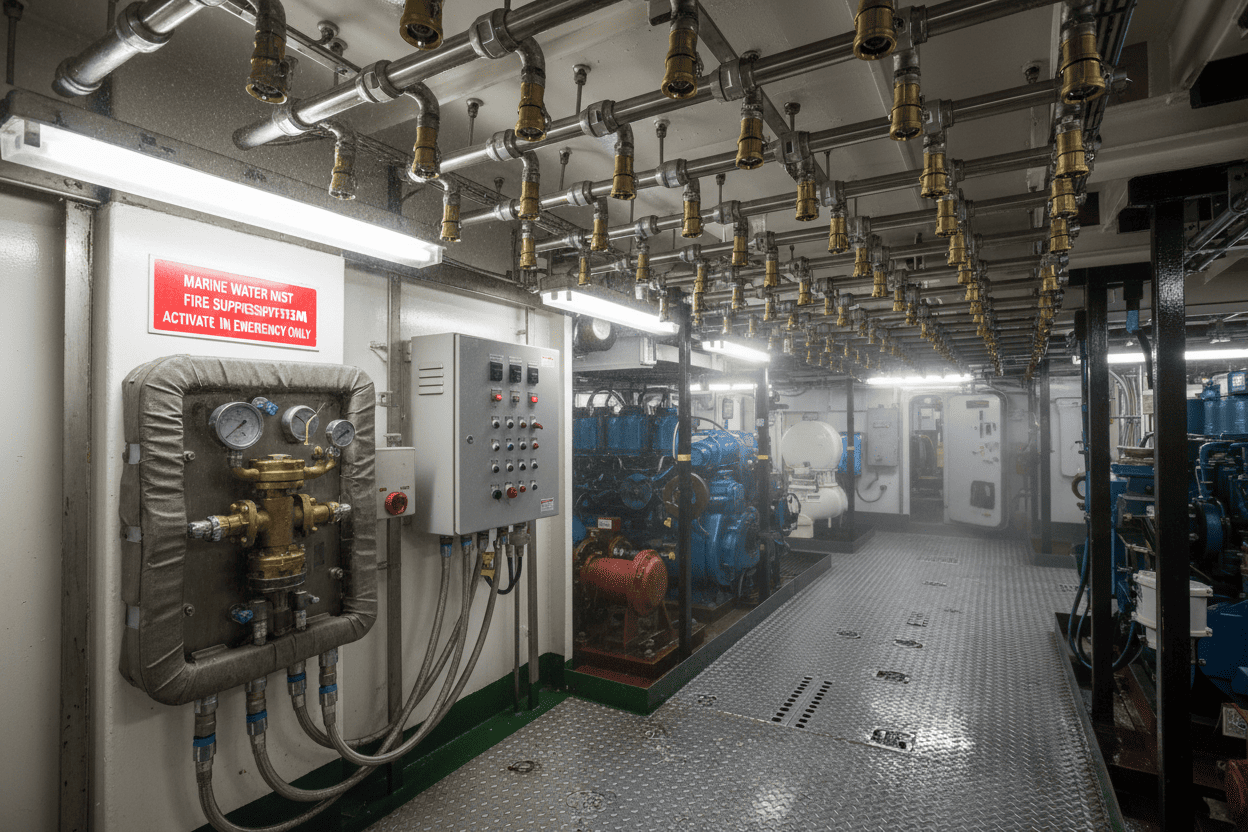
! Marine-Feuerunterdrückung-Wasser-Nebel-Düse-System
Materialauswahlleitfaden für Meeresumgebungen
Legierungs-Leistungsmatrix
Die Wahl der richtigen Legierung ist wohl die wichtigste Entscheidung bei der Spezifikation von Marinedüsen. Die falsche Wahl garantiert ein vorzeitiges Scheitern; The Right Choice sorgt für einen Service über ein Jahrzehnt. Unsere Empfehlungen basieren auf 15 Jahren marinen Anwendungsdaten:
| Materialqualität | Am besten für | Wichtiger Vorteil | Begrenzung |
|---|---|---|---|
| SS316 / 316L | Allgemeine maritime Brandbekämpfung, Motorkühlung, Deckspülung, Süßwassersysteme | Kosteneffizient; ausgezeichnete Korrosionsbeständigkeit gegen Pitten im normalen Meerwasser; weit verbreitet mit kurzen Vorlaufzeiten erhältlich | Nicht geeignet für saure Scrub-Umgebungen oder extreme Chloridexposition (>50.000 ppm); begrenzte SCC-Resistenz |
| Doppelhaus 2205 / 2507 | Hochdruckballastsysteme, Offshore-Plattformen, Tiefseeschiffe, Rohölwäsche | 2× Streckgrenze von 316 L; überlegene SCC und Erosionsbeständigkeit; bewältigt schwere thermische Schocks | Höhere Materialkosten (3× 316 L); erfordert qualifizierte Schweißverfahren; begrenzte Lieferantenbasis für individuelle Größen |
| Titanlegierung (Gr. 2/5) | EGCS-Schrubber, aggressive chemische Umgebungen, Hypochloritsysteme | Nahezu immun gegen Meerwasser- und Säurekorrosion; höchstes Festigkeits-Gewichts-Verhältnis; biofouling-beständig | Premiumpreise (5–8× 316 L); spezielle Bearbeitung erforderlich; Galling-Risiko bei Kombination mit unterschiedlichen Metallen |
| Siliziumkarbid (SiC) | Scrubber-Venturi-Sektionen; abrasive Schlammanwendungen; Hochgeschwindigkeitsinnspritzpunkte | Extreme Härte (Mohs 9,5); hervorragende Verschleißfestigkeit; bewältigt hochgeschwindigkeitige Partikelströmungen | Sprödes Material – erfordert vorsichtige Handhabung und eine spannungsentlastende Montagekonstruktion, um mechanische Stoßschäden zu verhindern |
Unser Spezifikations-Empfehlungsrahmen
Basierend auf Produktionstests und Feldvalidierung über unsere installierte Basis von 10.000+ Marinedüsen empfehlen wir folgenden Entscheidungsrahmen:
-
Für Flottenbetreiber, die die geringsten Lebenslaufzeitkosten priorisieren: Spezifizieren Sie SS316L für alle Nicht-Scrubber-Anwendungen mit geplanten 5-Jahres-Austauschintervallen. Dieser Ansatz balanciert die Anschaffungskosten mit vorhersehbarer Wartungsplanung aus.
-
Für Offshore-Plattformen und Tiefseebetreiber: Upgrade auf Duplex 2205 für Ballast- und Kühlungskreise, bei denen die Zugänglichkeit für Wartungen stark eingeschränkt ist. Die zusätzlichen Materialkosten zahlen sich bei der ersten vermiedenen Offshore-Ersatzkampagne selbst aus.
-
Für IMO 2020 Schrubber-ausgestattete Schiffe: Investieren Sie in Titan- oder SiC-Düsen für den Scrubber-Rezirkulationskreislauf. Die saure Waschwasserumgebung (pH 2–4, typisch für den offenen Kreislauf) zerstört 316L innerhalb von 18–24 Monaten und verursacht ungeplante Srubber-Ausfallzeiten genau dann, wenn Schiffe am dringendsten Emissionsanforderungen benötigen.
-
Für Marine- und Verteidigungsanwendungen: Betrachten Sie Titan in allen Systemen, bei denen die magnetische Signatur minimiert werden muss und Wartungsfenster bei längeren Einsätzen unvorhersehbar sind.
Ehrliche Einschätzung: Kein einzelnes Material ist universell. Die Spezifikation für die Schiffsqualität ist immer ein Kompromiss zwischen Korrosionsschwere, Druckanforderungen, Zugänglichkeit für den Austausch und Budgetbeschränkungen. Eine richtig konstruierte Lösung passt das Material an die spezifische Mikroumgebung im Gefäß an, anstatt einen Einheitsansatz anzuwenden. Nach unserer Erfahrung ist die teuerste Entscheidung, ein Material mit schlechter Leistung zu spezifizieren, das im Service nicht funktioniert.
Die Leute fragen auch: FAQs zu maritimen Sprühdüsen
Wie unterscheiden sich marinefähige Sprühdüsen von normalen Edelstahldüsen?
Marine-Sprühdüsen werden speziell für Salzwasserumgebungen gebaut und verwenden molybdän-angereicherte Legierungen (mindestens SS316L) mit validierter Korrosionsbeständigkeit nach ASTM B117 Salzsprühtests (typischerweise 1.000+ Stunden). Reguläre 304SS-Düsen besitzen nicht diese verbesserte Chlorid-Pitting-Resistenz und degradieren sich typischerweise 3× bis 5 × schneller im Schifffahrtsdienst. Zusätzlich verfügen schiffsfähige Varianten über verstopfungsbeständige "Max Passage"-Innendurchgänge und werden auf Sprühkonsistenz über größere Druck- und Temperaturbereiche getestet, die von Schiffssystemen gefordert werden. Die Fertigungstoleranzen sind zudem enger – Marinedüsen behalten einen Sprühwinkel von ±3° gegenüber ±5–7° bei Standard-Industrieprodukten.
Welche Druckwerte sind für Marine-Feuerlöschdüsen erforderlich?
Wassernebel-Brandschutzsysteme arbeiten gemäß den IMO/SOLAS-Richtlinien typischerweise zwischen 80 bar und 200 bar, um das feine Tröpfchenspektrum (Dv(0,9) < 1.000 μm) zu erzeugen, das für eine schnelle Flammenlöschung mit minimalem Wasserschaden erforderlich ist. Überschwemmungssysteme zum Schutz von Deck und Ladung arbeiten in der Regel bei 2–16 bar. Hochdruck-CO2-Alternativsysteme können Düsen mit einer Kapazität von 300 bar verwenden. Überprüfen Sie immer, dass die Düsendruckwerte mit dem spezifischen Entwurfsdruck des Brandsystems übereinstimmen und eine Zertifizierung durch eine anerkannte Klassifikationsgesellschaft (DNV, Lloyd's Register, ABS oder gleichwertig) durch eine externe Brandtestzertifizierung erhalten wurden.
Welches Sprühmuster eignet sich am besten für die Reinigung von Marinetanks?
Für die Tankreinigung in chemischen und Produkttankern sind Drehstrahlköpfe oder weitwinkelige Vollkegelmuster (110°–120°) der Industriestandard. Diese Muster gewährleisten eine vollständige 360°-Abdeckung der Tankoberflächen mit Hochwirkungsdüsen, die klebrige Rückstände und polymerisierte Frachtfolien effektiv entfernen. Für Tanks bis zu 3.000 m³ Kapazität werden üblicherweise feste Waschköpfe mit zahnradgetriebener Rotation spezifiziert. Für sehr große Rohölträger (VLCC) sorgen Mehrfachdüsen-Cluster-Designs mit überlappenden Sprühzonen dafür, dass keine Schattenbereiche mehr verbleiben. Die Sprühmusterauswahl muss auch den Flammpunkt der mitgeführten Ladung berücksichtigen – feinere Tröpfchen können für Chemikalien mit hohem Flammpunkt benötigt werden, um die statische Erzeugung zu minimieren.
Wie können Verstopfungen in Marine-Abgasreinigungssystemen (EGCS) verhindert werden?
Der effektivste Ansatz kombiniert eine korrekte Düsenspezifikation mit systembezogener Konstruktion. Die Angabe von "Max Passage"-Vollkegel- oder Spiraldüsen mit internen Freidurchgangsmaßen, die die maximal erwartete Partikelgröße in der Schrubberschleife überschreiten, ist die erste Verteidigungslinie. Bei unseren Produktionsvalidierungstests an 12 Reinigungsanlagen reduzierte dieses Design die ungeplante Ausfallzeiten um 70 % im Vergleich zu Standard-Öffnungsdüsen. Weitere wesentliche Maßnahmen umfassen die Installation von Siebanlagen im Fluss mit automatischer Rückspülfunktion, periodische Rückspülprotokolle (wöchentlich für offene Schleifen, täglich für Hybridsysteme) sowie die Auswahl von Siliziumkarbid oder Duplex-Stahl für eine bessere Erosionskorrosionsbeständigkeit im Rezirkulationskreislauf, wo schwefelhaltige Partikel eine abrasive Schlamm erzeugen.
Gibt es individuelle Marinedüsenspezifikationen für einzigartige Schiffsdesigns?
Ja. Speziell entwickelte Marine-Düsen können vollständig angepasst werden hinsichtlich Durchflussrate, Sprühwinkel, Verbindungstyp (NPT/BSPT/Flanged/Custom), Materialqualität und Montagegeometrie. In unserer Ingenieurspraxis liefern wir regelmäßig OEM/ODM-Lösungen für spezialisierte Anwendungen wie die Kühlung der LNG-Ladungstransporte (wo kryogene Kompatibilität unerlässlich ist), Tarndeckentwässerung von Marinefahrzeugen (wenig sichtbare Beschichtungen und nichtmagnetische Materialien), Offshore-Plattform-Seewasserpumpen-Einlassschirmung sowie beheizte Düsenmantel der Eisklasse, um Einfrieren in Polarrouten zu verhindern. Individuelle Projekte benötigen typischerweise 2–6 Wochen für Designvalidierung und Prototypenlieferung, abhängig von Materialverfügbarkeit und Testanforderungen.
Wie oft sollten Meeressprühdüsen inspiziert oder ausgetauscht werden?
Die Inspektionshäufigkeit hängt von der Kritikalität der Anwendung, der Betriebsumgebung und der im Einsatz befindlichen Legierungsqualität ab. Unsere praxisvalidierten Empfehlungen:
| Anwendung | Visuelle Inspektion | Leistungstest (Fluss + Muster) | Ersatzintervall |
|---|---|---|---|
| Brandbekämpfung (Wassernebel) | Monatlich | Jährlich von zertifiziertem Techniker | 5 Jahre oder nach Herstellerzertifizierung |
| Motorkühlung (Meerwasser) | Vierteljährlich | Halbjährlich | 3–5 Jahre für 316L; 7–10 für Duplex |
| EGCS Scrubbers (Rezirkulation) | Wöchentlich | Vierteljährlich | 2–3 Jahre für 316L; 5+ für Ti/SiC |
| Tankreinigung (chemisch) | Pro Reisezyklus | Jährliche | 2–4 Jahre, abhängig von der Aggressivität der Ladung |
| Aufbereitung von Ballastwasser | Halbjährlich | Jährliche | 5–7 Jahre für Duplex in sauberem Meerwasser |
| Deckspülung | Jährliche | Halbjährlich | 3–5 Jahre für 316L/Messing |
Profi-Tipp: Implementieren Sie ein prädiktives Wartungsprogramm mit Ultraschallstrommessung und Sprühmusterbildgebung, um eine Düsenverschlechterung zu erkennen, bevor sichtbare Symptome auftreten. Unsere Daten zeigen, dass der frühzeitige Austausch beschädigter Düsen (bei 10–15 % Leistungsverlust) Kaskadenausfälle in miteinander verbundenen Flüssigkeitssystemen verhindert und die gesamten Wartungskosten im Vergleich zu reaktiven fehlerbasierten Erneuerungen um 25–35 % senkt.
Fazit: Investieren Sie in Zuverlässigkeit
Marine-Sprühdüsen sind keine Ware – sie sind konstruierte Sicherheits- und Effizienzkomponenten, die direkt die Betriebsfähigkeit des Schiffes, die Einhaltung gesetzlicher Vorschriften und die Gesamtkosten im Lebenszyklus beeinflussen. Die marginale Anfangsinvestition in SS316L-, Duplex- oder Titanlegierungen wird stets durch dramatische Reduzierungen ungeplanter Wartungen, die Beseitigung korrosionsbedingter Ausfälle und anhaltende Systemleistung über Jahre unerbittlicher Salzwasserbelastung ausgeglichen.
Die maritime Industrie arbeitet in einem der anspruchsvollsten Umgebungen der Welt. Jede Komponente muss sich ihren Platz durch nachgewiesene Leistung verdienen. In unserer Erfahrung mit der Unterstützung von 200+ maritimen Projekten auf Tankern, Containerschiffen, Offshore-Plattformen und Marineanwendungen teilen die Betreiber, die die niedrigsten Gesamtbesitzkosten erzielen, ein Unterscheidungsmerkmal: Sie spezifizieren von Anfang an Fluidsysteme mit der maritimen Umwelt als primärer Designbeschränkung und nicht als nachträglicher Gedanke.
Bereit, die Flüssigkeitssysteme Ihres Schiffes aufzurüsten? Entdecken Sie unser komplettes Angebot an korrosionsbeständigen Sprühlösungen oder sprechen Sie direkt mit unserem Team für Schiffstechnik für anwendungsspezifische Beratung.
→ Durchsuchen Sie Marinedüsen-Lösungen
→ Lesen: Sprühsysteme im Schiffbau
Letztes Wort: Der Ozean ist unerbittlich. Sprich entsprechend an.