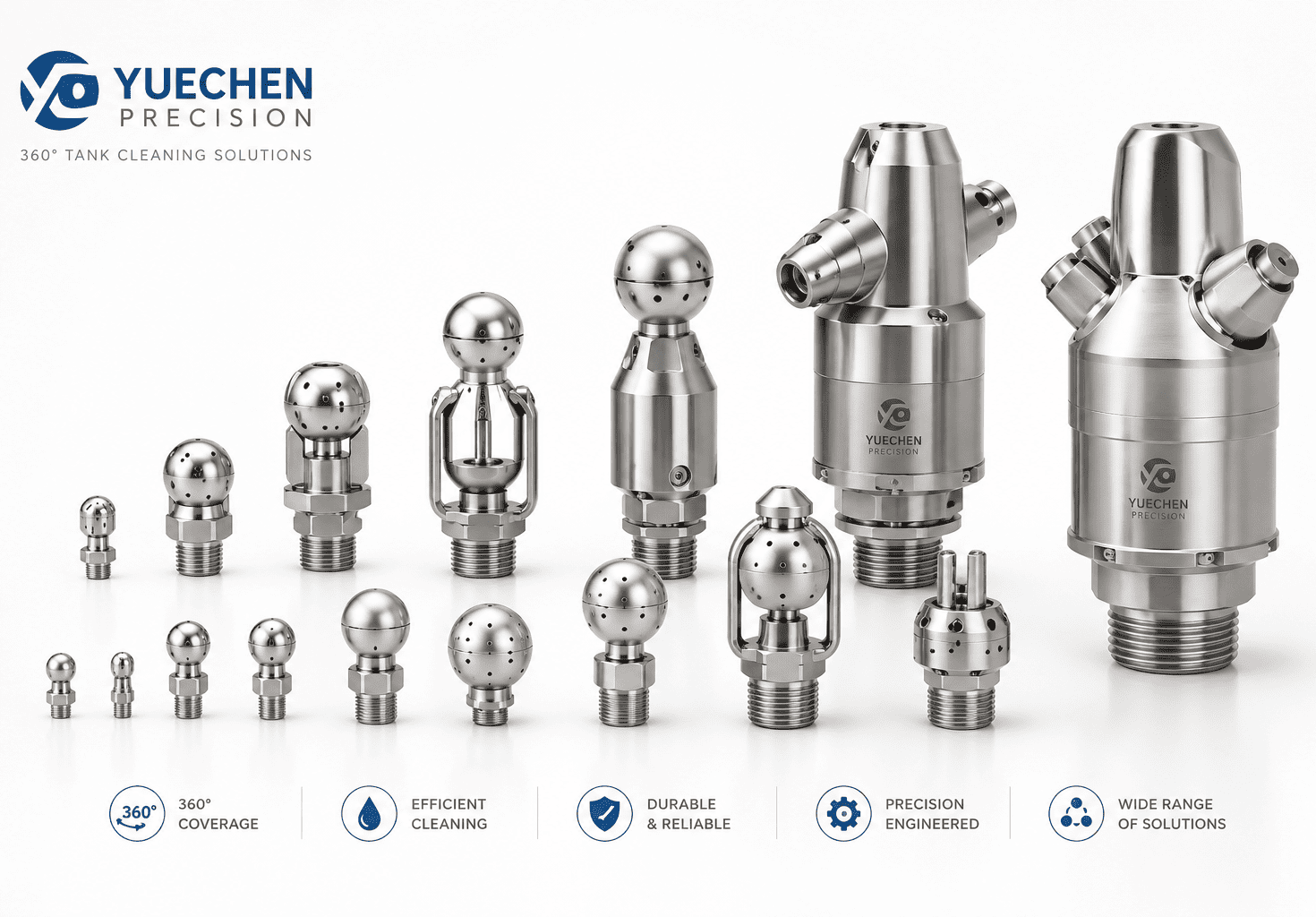




Wie 360-Grad-Sprühtechnologie die Tankreinigung verbessert: Der vollständige Leitfaden
Wenn Sie schon einmal gesehen haben, wie eine stationäre Sprühdüse Schwierigkeiten hat, jede Ecke eines großen Industrietanks zu erreichen, wissen Sie bereits, warum die 360-Grad-Sprühtechnologie ein Durchbruch in der Tankreinigung war. Traditionelle Methoden 鈥?, Tanks mit Wasser und Chemikalien zu füllen und dann 鈥?, sind langsam, verschwenderisch und hinterlassen oft Rückstände. Schlimmer noch, sie verlangen von den Arbeitern, in enge Räume zu gehen, um manuell zu schrubben.
Die 360-Grad-Sprühtechnologie löst all diese Probleme auf einmal.
In diesem Leitfaden erklären wir, wie eine 360-Grad-Tankreinigung funktioniert, analysieren die verschiedenen Düsentypen, quantifizieren die erwarteten Einsparungen und helfen Ihnen, die richtige Ausrüstung für Ihre spezielle Anwendung auszuwählen.
- 1. 1. Was ist 360-Grad-Sprühtechnologie?
- 2. 2. Wie funktioniert die 360-Grad-Tankreinigung?
- 2.1. Der Reinigungsmechanismus: Vier Kräfte am Werk
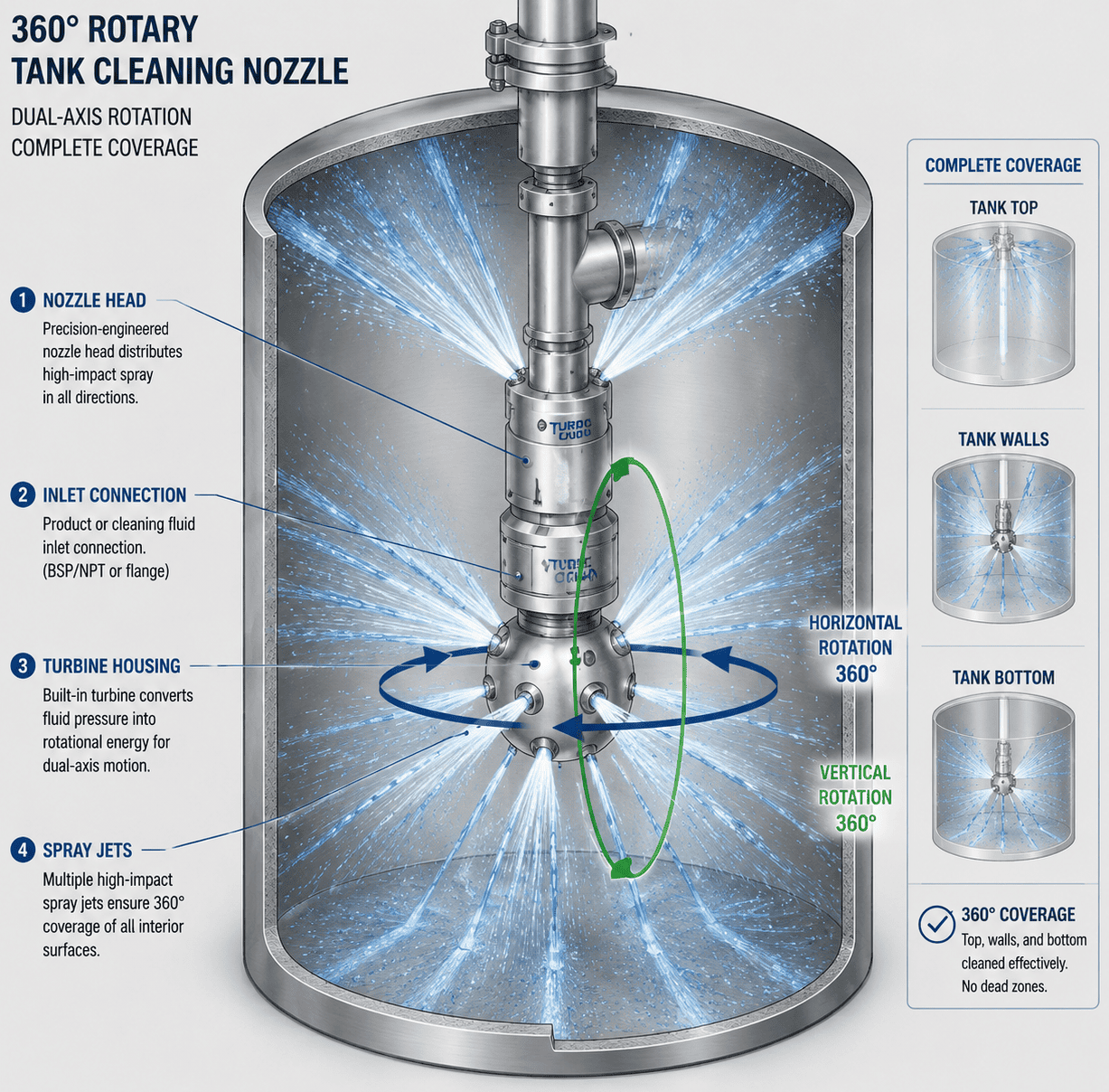
- 2.2. Dual-Achsen-Rotation: Wie vollständige Abdeckung abläuft
- 2.3. Selbstbetriebener Betrieb
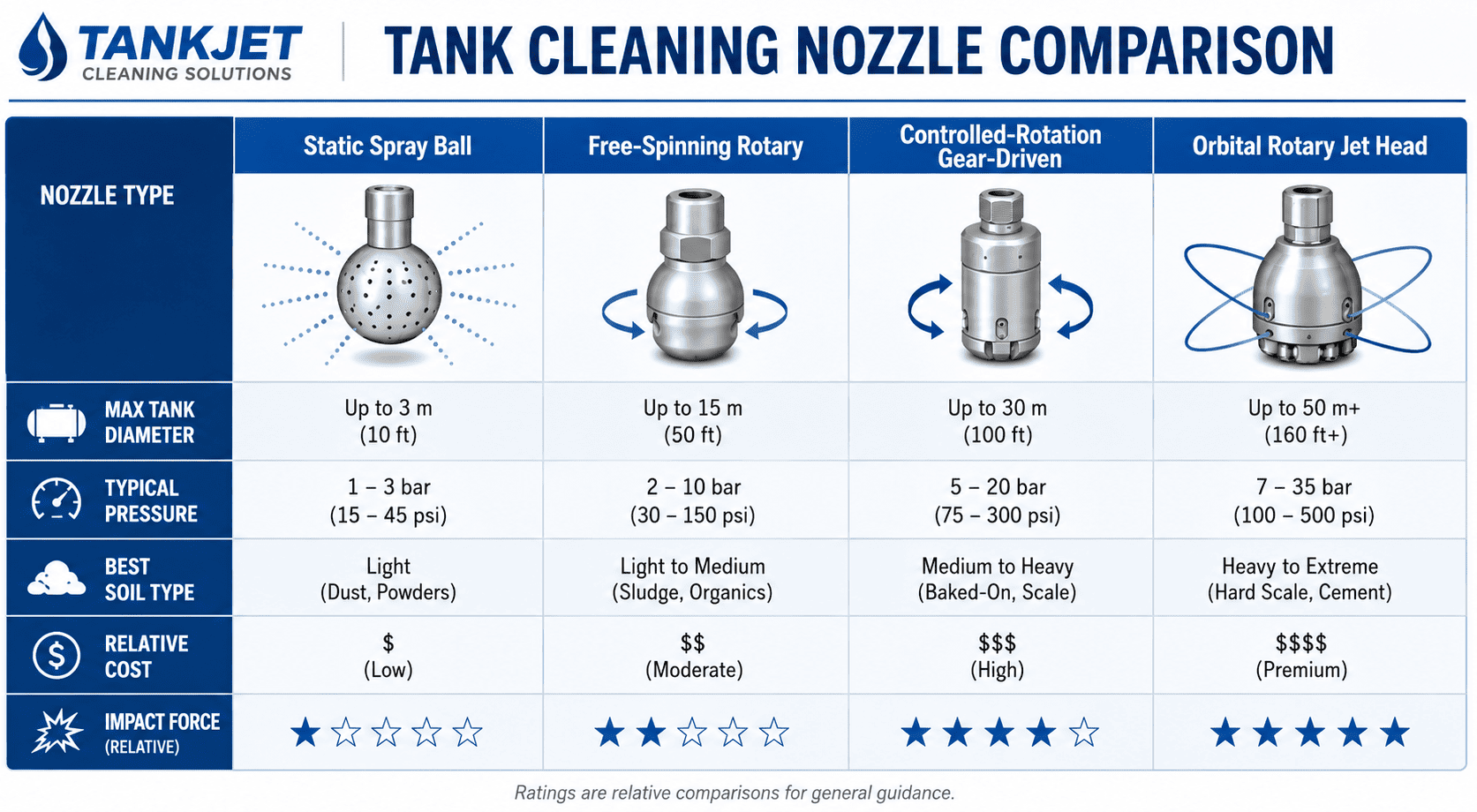
- 3. 3. Die 4 Haupttypen von Tankreinigungsdüsen
- 3.1. Typ 1: Statische Sprühkugeln
- 3.2. Typ 2: Frei drehende Drehdüsen
- 3.3. Typ 3: Kontrollierte (zahnradgetriebene) Düsen
- 3.4. Typ 4: Orbitale Rotationsstrahlköpfe (Doppelachsen)
- 4. 4. Wichtige Vorteile der 360-Grad-Sprühtechnologie
- 4.1. Vollständige Abdeckung 鈥? Keine toten Flecken
- 4.2. Dramatisch schnellere Reinigungszyklen
- 4.3. Sicherer 鈥? Kein Eintritt in den begrenzten Raum
- 4.4. Konsistente, validierbare Ergebnisse
- 4.5. Niedrigere Betriebskosten
- 5. 5. Wasser-, Chemikalien- und Energieeinsparungen: Die realen Zahlen
- 5.1. Wassersparen
- 5.2. Chemische Einsparungen
- 5.3. Energieeinsparungen
- 5.4. Arbeitseinsparungen
- 6. 6. Branchenanwendungen in verschiedenen Sektoren
- 7. 7. Wie man die richtige 360-Grad-Tankreinigungsdüse auswählt
- 7.1. Faktor 1: Bodentyp und Haftung
- 7.2. Faktor 2: Panzergröße und Geometrie
- 7.3. Faktor 3: Verfügbarer Durchfluss und Druck
- 7.4. Faktor 4: Materialkompatibilität
- 7.5. Faktor 5: Regulatorische Anforderungen
- 8. 8. Verbreitete Missverständnisse über Tankreinigungsdüsen
- 8.1. Missverständnis 1: "Höherer Druck bedeutet immer bessere Reinigung"
- 8.2. Missverständnis 2: "Ein Sprühball reicht für jeden Tank"
- 8.3. Missverständnis 3: "Einmal installiert, brauchen Düsen keine Wartung mehr"
- 8.4. Missverständnis 4: "Abdeckung ist dasselbe wie Reinigung"
- 9. 9. Installation, Wartung und Fehlerbehebung
- 9.1. Best Practices für die Installation
- 9.2. Vorbeugende Wartungsplan
- 9.3. Häufige Probleme beheben
- 10. 10. Häufig gestellte Fragen (FAQ)
- 11. 11. Fazit
1. Was ist 360-Grad-Sprühtechnologie?
360-Grad-Sprühtechnologie bezeichnet Tankreinigungssysteme, die rotierende Sprühköpfe verwenden, um Reinigungsflüssigkeit auf jede Innenfläche eines Tanks, Behälters oder Behälters zu bringen. Im Gegensatz zu festen Sprühdüsen, die in eine Richtung abfeuern, drehen sich diese Systeme auf ein oder zwei Achsen, um eine vollständige Reinigungsabdeckung zu erzeugen.
! blog-img-01-blog-illustration.png
Im Kern adressiert die Technologie ein einfaches, aber kritisches Problem: Wie reinigt man das Innere eines versiegelten Gefäßes gründlich, ohne es auseinanderzunehmen oder eine Person hineinzuschicken?
Die Antwort liegt in der Strömungsmechanik. Druckbeaufschlagsreinigungsmedien 鈥?Wasser, Lösungsmittel oder chemische Lösungen 鈥?gelangt in die Düse und treibt eine interne Turbine oder einen Zahnradmechanismus an. Dies wandelt die Energie der Flüssigkeit in kontrollierte mechanische Rotation um. Der Düsenkopf dreht sich dann mit präziser Geschwindigkeit und projiziert hochauffällige Düsen in einem vorprogrammierten 3D-Muster, das während eines Reinigungszyklus jeden Quadratzentimeter des Tankinnenraums abfucht.
Dieser Ansatz bildet die Grundlage moderner Clean-in-Place (CIP)-Systeme, die in der Lebensmittel- und Getränkeindustrie, der Pharmaindustrie, der chemischen Verarbeitung sowie der Öl- und Gasindustrie eingesetzt werden.
2. Wie funktioniert die 360-Grad-Tankreinigung?
Das Verständnis des Mechanismus hinter der 360-Grad-Sprühtechnologie hilft Ihnen zu verstehen, warum sie manuelle Reinigung und statische Alternativen so weit übertrifft.
Der Reinigungsmechanismus: Vier Kräfte am Werk
Eine effektive Tankreinigung beruht auf vier voneinander abhängigen Faktoren, die oft als Sinner Circle oder Vier-Faktor-Reinigungsmodell bezeichnet werden:
| Faktor | Was es bewirkt |
|---|---|
| Mechanische Kraft (Aufprall) | Die physikalische Kraft von Sprühtropfen oder Feststromstrahlen, die auf die Tankwand treffen, löst Erde, Rückstände und Biofilm. |
| Chemische Wirkung | Reinigungsmittel lösen sich auf, emulgieren oder suspendieren Schadstoffe, damit sie abgespült werden können. |
| Temperatur | Hitze verringert die Viskosität der Rückstände und beschleunigt chemische Reaktionen. |
| Zeit | Längere Reinigungszyklen erhöhen die Bodenentfernung, allerdings auf Kosten der Produktionszeit. |
Die wichtigste Erkenntnis ist, dass die Erhöhung der mechanischen Kraft durch bessere Düsentechnologie es ermöglicht, Zeit, Temperatur und Chemikalienverbrauch zu reduzieren 鈥?Wasser, Energie und Geld zu sparen und gleichzeitig die Produktionsbereitschaft zu maximieren.
Dual-Achsen-Rotation: Wie vollständige Abdeckung abläuft
Die fortschrittlichsten 360-Grad-Tankreinigungsdüsen drehen sich gleichzeitig auf zwei Achsen:
- Horizontale Rotation 鈥?Der Düsenkopf dreht sich um die vertikale Achse und schwenkt den Tankumfang.
- Vertikale Drehung 鈥?Der Düsenkopf dreht sich auf und ab und deckt sich vom Boden des Tanks bis zur Decke.
Zusammen ergeben diese beiden Sätze ein enges, kreuzförmiges "Mesh"-Muster. Jeder vollständige Reinigungszyklus sorgt dafür, dass jeder Bereich der Innenseite direkt von Hochaufschüttungsdüsen getroffen wird, wodurch Totzonen eliminiert werden, in denen Rückstände sich verstecken können.
Selbstbetriebener Betrieb
Einer der elegantesten Aspekte der Technologie ist, dass die Reinigungsflüssigkeit selbst die Rotation antreibt. Es gibt keinen externen Motor, keine elektrischen Leitungen in den Tank und keine komplexe mechanische Verbindung. Im Inneren des Düsengehäuses treibt die fließende Flüssigkeit ein Turbinenrad. Ein Zahnradgetriebe reduziert dann die Turbinendrehzahl auf eine kontrollierte, optimale Drehzahl 鈥 – typischerweise zwischen 2 und 30 U/min, je nach Modell.
Dieses selbstbetriebene Design bedeutet:
- Im Tank wird kein Strom benötigt (sicherer in gefährlichen Umgebungen).
- Weniger bewegliche Teile, die abgenutzt werden können.
- Einfache Installation 鈥? Einfach an Ihre bestehende CIP-Versorgungsleitung anschließen.
3. Die 4 Haupttypen von Tankreinigungsdüsen
Nicht alle 360-Grad-Tankreinigungsdüsen sind gleichwertig. Sie lassen sich in vier Kategorien einteilen, die jeweils auf unterschiedliche Beckengrößen, Bodentypen und Budgets zugeschnitten sind.
Typ 1: Statische Sprühkugeln
Sprühkugeln sind die einfachste und günstigste Option. Sie haben keine beweglichen Teile, 鈥 – nur eine hohle Kugel oder Scheibe mit präzisionsgebohrten Löchern, die Reinigungsflüssigkeit in einem festen Muster nach außen sprühen.
Wie sie reinigen: Sie verlassen sich hauptsächlich auf kaskadierende Flüssigkeit und chemische Wirkung statt auf starke Aufprallkraft. Der Sprühnebel durchtränkt die Beckenwände, und die Schwerkraft zieht die Reinigungslösung nach unten, wodurch ein Scherfilm entsteht.
Am besten für:
- Kleine Tanks (bis zu 3 Meter Durchmesser)
- Leichte, wasserlösliche Rückstände (Milch, Getränke, leichte Öle)
- Budgetbewusste Betriebe, bei denen die Verschmutzung minimal ist
Einschränkungen:
- Geringe mechanische Belastung bedeutet längere Reinigungszyklen
- Hoher Wasser- und Chemikalienverbrauch
- Kann hartnäckige oder festgebrannte Rückstände nicht entfernen
Typ 2: Frei drehende Drehdüsen
Frei drehende Düsen verwenden schräg gedrehte Düsen, um eine Reaktionskraft zu erzeugen, die den Düsenkopf dreht 鈥 – das gleiche Prinzip, das einen rotierenden Rasensprinkler zum Drehen bringt.
Wie sie reinigen: Während sich der Kopf dreht, fegen die Düsen immer wieder aus verschiedenen Winkeln über dieselben Bereiche. Dies hat eine höhere Wirkung als eine Sprühkugel, da die Flüssigkeit in fokussierten Lüftern oder Düsen konzentriert wird, anstatt in diffusen Nebel.
Eine wichtige Einschränkung: Die Rotationsgeschwindigkeit variiert mit dem Flüssigkeitsdruck. Höherer Druck lässt die Düse schneller drehen, was kleinere Tropfen erzeugt, die weniger Aufprallkraft ausüben. Dadurch entsteht ein Kompromiss zwischen Druck und Reinigungskraft.
Am besten für:
- Kleine bis mittlere Panzer (bis zu 6 Meter Durchmesser)
- Mäßige Verschmutzung
- Anwendungen, bei denen eine garantierte 360-Grad-Abdeckung unerlässlich ist
Vorteile gegenüber Sprühkugeln: Bis zu 30 % weniger Wasser- und Chemikalienverbrauch, schnellere Reinigungszyklen und besserer Wirkung. Sie können Tankreinigungs-Düsen-Optionen durchsuchen, die sowohl frei drehende als auch kontrollierte Rotationsmodelle enthalten.
Typ 3: Kontrollierte (zahnradgetriebene) Düsen
Düsen mit kontrollierter Rotation verwenden eine interne Turbine und einen Zahnrad, um die Drehzahl unabhängig vom Flüssigkeitsdruck zu regulieren. Das ist der entscheidende Unterschied zu frei drehenden Designs.
Wie sie reinigen: Da die Drehzahl durch Getriebe und nicht durch Strömungsmechanik gesteuert wird, kann man den Druck 鈥 erhöhen?oft bis zu 100鈥?50 bar 鈥?ohne dass sich die Düse schneller dreht. Das Ergebnis sind große, wirkungsstarke Tröpfchen, die deutlich mehr mechanische Reinigungskraft erzeugen.
Am besten für:
- Mittelgroße bis große Tanks (6 bis 12 Meter Durchmesser)
- Zähe, hartnäckige Rückstände (aufgebackene Lebensmittel, viskose Chemikalien, Polymerablagerungen)
- Anwendungen, die validierte, wiederholbare Reinigungszyklen erfordern
Vorteile: Konstante Drehgeschwindigkeit über einen großen Druckbereich, überlegene Aufprallkraft und vorhersehbare Reinigungsmuster.
! blog-img-02-blog-illustration
Typ 4: Orbitale Rotationsstrahlköpfe (Doppelachsen)
Orbitale Rotationsdüsenköpfe stellen die fortschrittlichste Tankreinigungstechnologie dar. Sie drehen sich gleichzeitig auf horizontalen und vertikalen Achsen mit einem präzisen internen Zahnradmechanismus.
Wie sie reinigen: Die Flüssigkeit treibt eine Turbine an, die ein Getriebe antreibt, das beide Rotationsachsen steuert. Feststromstrahlstrahlen zeichnen ein Bahnmuster, das sich im Verlauf jedes Zyklus zu einem vollständigen 3D-Netz zusammenzieht und mit konzentrierten, hochauffälligen Düsen jedes Segment der Tankoberfläche trifft.
Am besten für:
- Sehr große Tanks (8 bis 40 Meter Durchmesser)
- Stark verschmutzte Gefäße mit zähen, klebrigen oder gefährlichen Rückständen
- Petrochemische, Bergbau- und Schwerindustrieanwendungen
- Anwendungen, bei denen die Reinigungsvalidierung verpflichtend ist (pharmazeutisch, lebensmittelsicher)
Vorteile: Der größte mechanische Einfluss jeder Tankreinigungstechnologie, garantierte Volldeckung und deutlich reduzierter Wasser- und Chemikalienverbrauch.
4. Wichtige Vorteile der 360-Grad-Sprühtechnologie
Der Wechsel von manueller Reinigung oder statischen Sprühkugeln zu 360-Grad-Rotationstechnologie bietet Vorteile in allen Bereichen der Tankreinigung.
Vollständige Abdeckung 鈥? Keine toten Flecken
Der mit Abstand wichtigste Vorteil ist garantierte Abdeckung auf dem gesamten Gelände. Da die Düse in einem vorprogrammierten Muster um zwei Achsen rotiert, bleiben keine ungewaschenen Bereiche übrig. Der Indexierungsmechanismus sorgt dafür, dass jeder Reinigungszyklus jedes Segment der Tankoberfläche mit direktem Strahleinschlag trifft – nicht nur auf die Bereiche innerhalb der Sichtlinie einer festen Düse.
Dies ist besonders kritisch in Tanks mit internen Strukturen wie Rührblättern, Baffles, Heizspiralen oder Pegelsensoren. Traditionelle Sprühkugeln können diese Schattenzonen nicht durchdringen. Kontrollierte Dreh- und Orbitalstrahlköpfe hingegen sprühen während des Zyklus aus mehreren Winkeln und erreichen Oberflächen, die eine statische Düse komplett übersehen würde.
Dramatisch schnellere Reinigungszyklen
Zeit ist Geld in industriellen Betrieben. Jede Minute, die ein Aquarium gereinigt wird, ist eine Minute, die es nicht produziert. 360-Grad-Drehdüsen können die Reinigungszeit im Vergleich zu statischen Sprühkugeln um 40 % bis 60 % verkürzen. In Branchen wie der chemischen Tollfertigung und Lebensmittelverarbeitung, wo die Umstellungszeit direkt den Umsatz beeinflusst, führt dies zu erheblichen jährlichen Produktionszuwächsen.
Sicherer 鈥? Kein Eintritt in den begrenzten Raum
Eine automatisierte 360-Grad-Tankreinigung eliminiert oder reduziert drastisch den Bedarf, dass Arbeiter enge Räume betreten müssen. Der Eintritt in den Raum in geschlossene Räume birgt gut dokumentierte Risiken: Exposition gegenüber giftigen Rückständen, sauerstoffarmen Atmosphären, Gefahren durch Einschließung und körperliche Verletzungen durch Ausrutschen oder Stürze.
Indem die Arbeiter außerhalb des Tanks bleiben, entspricht die rotierende Reinigungstechnologie Sicherheitsstandards, die die Beseitigung der Gefahr statt deren Bewältigung in den Mittelpunkt stellen. Das ist nicht nur eine Sicherheitsverbesserung 鈥 – es senkt die Versicherungskosten, beseitigt die Papierbelastung durch Genehmigungen für geschlossene Räume und beseitigt eine erhebliche Haftungsquelle.
Konsistente, validierbare Ergebnisse
Für regulierte Branchen ist 鈥?pharmazeutische Fertigung, Lebensmittelverarbeitung, Molkerei-鈥?Reinigungsprüfung verpflichtend. Die Regulierungsbehörden verlangen dokumentierte Beweise, dass Reinigungsverfahren Produktrückstände konsequent auf akzeptable Werte entfernen.
Zahnradgetriebene 360-Grad-Düsen liefern vorhersehbare, wiederholbare Reinigungsmuster. Da Rotationsgeschwindigkeit und Abdeckung mechanisch gesteuert werden und nicht von variablen Flüssigkeitsbedingungen abhängig sind, ist das Reinigungsergebnis von Charge zu Charge konsistent. Das macht die Dokumentation der Validierung deutlich einfacher.
Niedrigere Betriebskosten
Die kombinierte Reduzierung von Wasser, Chemikalien, Energie und Arbeitskräften führt zu einer überzeugenden Rendite 鈥 – oft innerhalb von 6 bis 18 Monaten für Anlagen, die täglich Tanks reinigen. Im nächsten Abschnitt betrachten wir die konkreten Sparzahlen.
5. Wasser-, Chemikalien- und Energieeinsparungen: Die realen Zahlen
Die Effizienzgewinne durch die 360-Grad-Sprühtechnologie sind nicht theoretisch. Sie wurden über Jahrzehnte industrieller Nutzung hinweg gemessen und dokumentiert.
Wassersparen
Statische Sprühkugeln verbrauchen typischerweise große Wassermengen, da sie auf kontinuierliche Überflutung und Kaskaden angewiesen sind, um eine Abdeckung zu erreichen. Rotationsdüsenköpfe hingegen verwenden genau gezielte Düsen, wo der Aufprall die Arbeit verrichtet.
Typische Einsparungen:
- Frei drehende Drehdüsen: 20 % bis 30 % weniger Wasser als statische Sprühkugeln
- Düsen mit kontrollierter Drehung: 40 % bis 50 % weniger Wasser
- Orbitale Drehstrahlköpfe: bis zu 70 % weniger Wasser
Um das ins Verhältnis zu setzen: Ein landwirtschaftlicher Sprühtank von 1.500 Litern kann mit nur 50 Litern Wasser und einem 360-Grad-Dispersionskopf – nur 3 % des Tankvolumens – effektiv gespült werden. Die traditionelle Füll- und Entladungsmethode würde um Größenordnungen mehr erfordern.
Chemische Einsparungen
Da der mechanische Einfluss bei der Bodenentfernung eine größere Rolle spielt, können Sie oft die Konzentration und das Volumen der Reinigungsmittel reduzieren. Dies spart Geld bei den Anschaffungen von Waschmittel und Ätzmitteln und senkt gleichzeitig die Kosten für die Abwasserbehandlung.
Typische Einsparungen: 30 % bis 50 % Reduktion des Chemikalienverbrauchs.
Energieeinsparungen
Geringere Wassermengen bedeuten weniger Energieverbrauch für das Heizen 鈥?, und das Heizen von Reinigungswasser ist oft der größte Energieaufwand in CIP-Systemen. Außerdem benötigen selbstversorgende Düsen keinen externen Strom.
Typische Einsparungen: 25 % bis 35 % Senkung der Energiekosten für Tankreinigungsarbeiten.
Arbeitseinsparungen
Automatisierung eliminiert die Stunden, die für manuelles Schrubben und die Vorbereitung für begrenzte Räume verbracht werden. Bei täglich gereinigten Tanks kann allein die Arbeitseinsparung die Investition in Ausrüstung rechtfertigen.
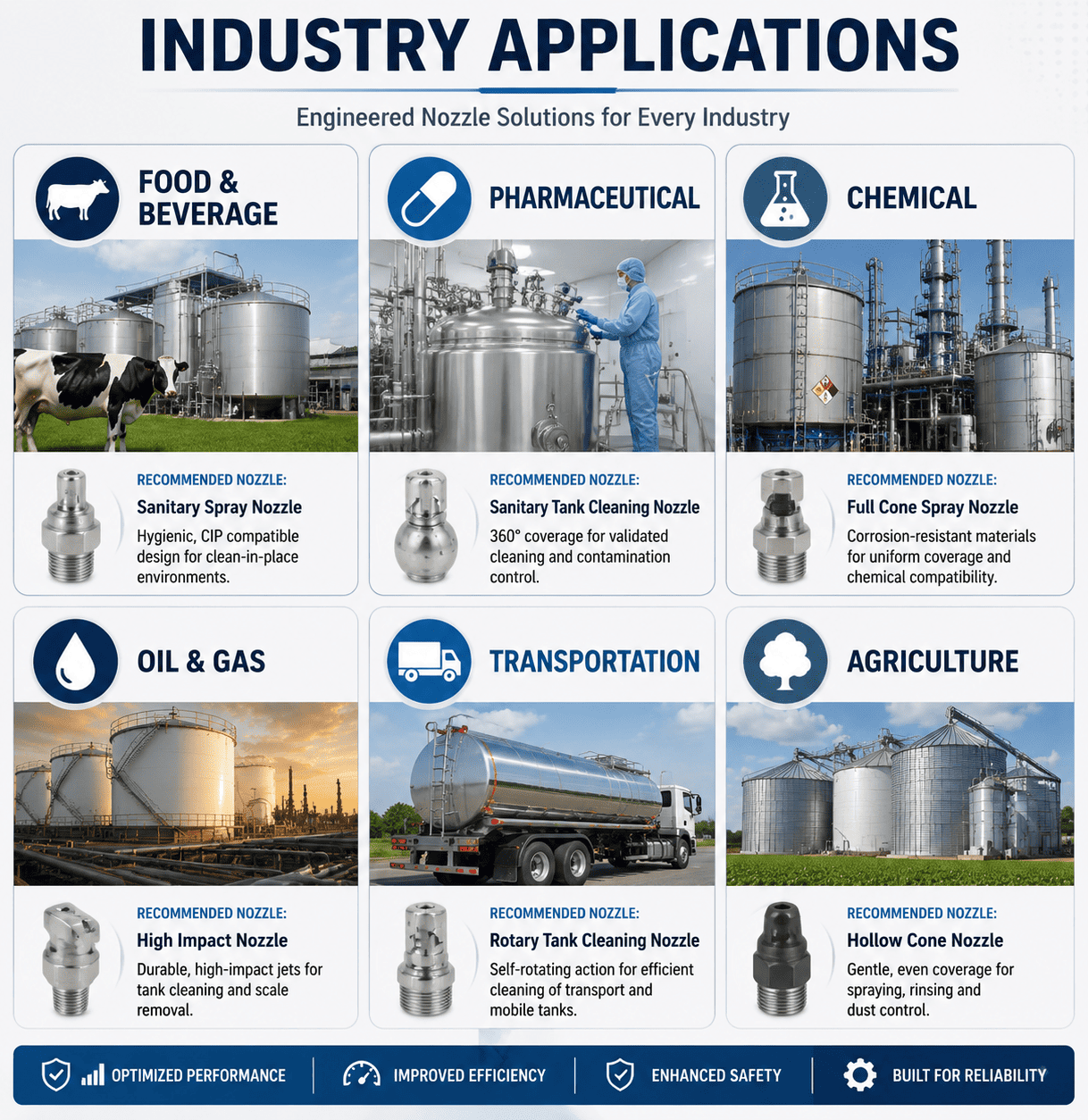
6. Branchenanwendungen in verschiedenen Sektoren
Die 360-Grad-Sprühtechnologie ist nicht auf eine Branche beschränkt. Ihre Einführung umfasst praktisch jeden Sektor, der Tanks, Schiffe oder Container in der Produktion verwendet.
| Industrie | Typische Anwendungen | Häufige Bodentypen |
|---|---|---|
| Essen & Getränke | Molkereitanks, Braufermenter, Weintanks, Siruplager, essbare Ölbehälter | Milchrückstände, Bierstein, Zucker, Hefe, Biofilm |
| Pharmazeutisch | Reaktorbehälter, WFI-Speicher, sterile Verarbeitungstanks | Pulver, Wirkstoffe, Sterilitätsanforderungen |
| Chemische Verarbeitung | Lösungsmitteltanks, Säure-/Alkalispeicher, Harzreaktoren, Farbgefäße | Polymere, Harze, korrosive Chemikalien, gehärtete Ablagerungen |
| Öl & Gas | Rohöltanks, Treibstofflager, Ethanoltanks, Raffineriebehälter | Schwerkohlenwasserstoffe, Schlamm, Paraffinwachs |
| Massentransport | Tankanhänger, ISO-Container, Eisenbahnwagen, IBC-Container | Variable 鈥?hängt von der vorherigen Ladung ab |
| Zellstoff & Papier | Schwarze Schnapstanks, Stärketanks, Beschichtungsmischer | Faserablagerungen, Mineralablagerungen, Beschichtungsrückstände |
| Landwirtschaft | Sprühtanks, Dünger-/Pestizidbehälter | Chemische Rückstände, Sediment |
Für Hinweise zur Auswahl von Düsen für bestimmte chemische Umgebungen konsultieren Sie unsere Anwendungsunterstützungsseite. Wenn Ihre Einrichtung komplementäre Sprühtechnologien wie Full Cone Nozzles oder Flat Fan Nozzles für andere Prozesse verwendet, finden Sie vielleicht Möglichkeiten, sich auf einen einzigen Lieferanten zu standardisieren und die Beschaffung zu vereinfachen.
! blog-img-03-blog-illustration
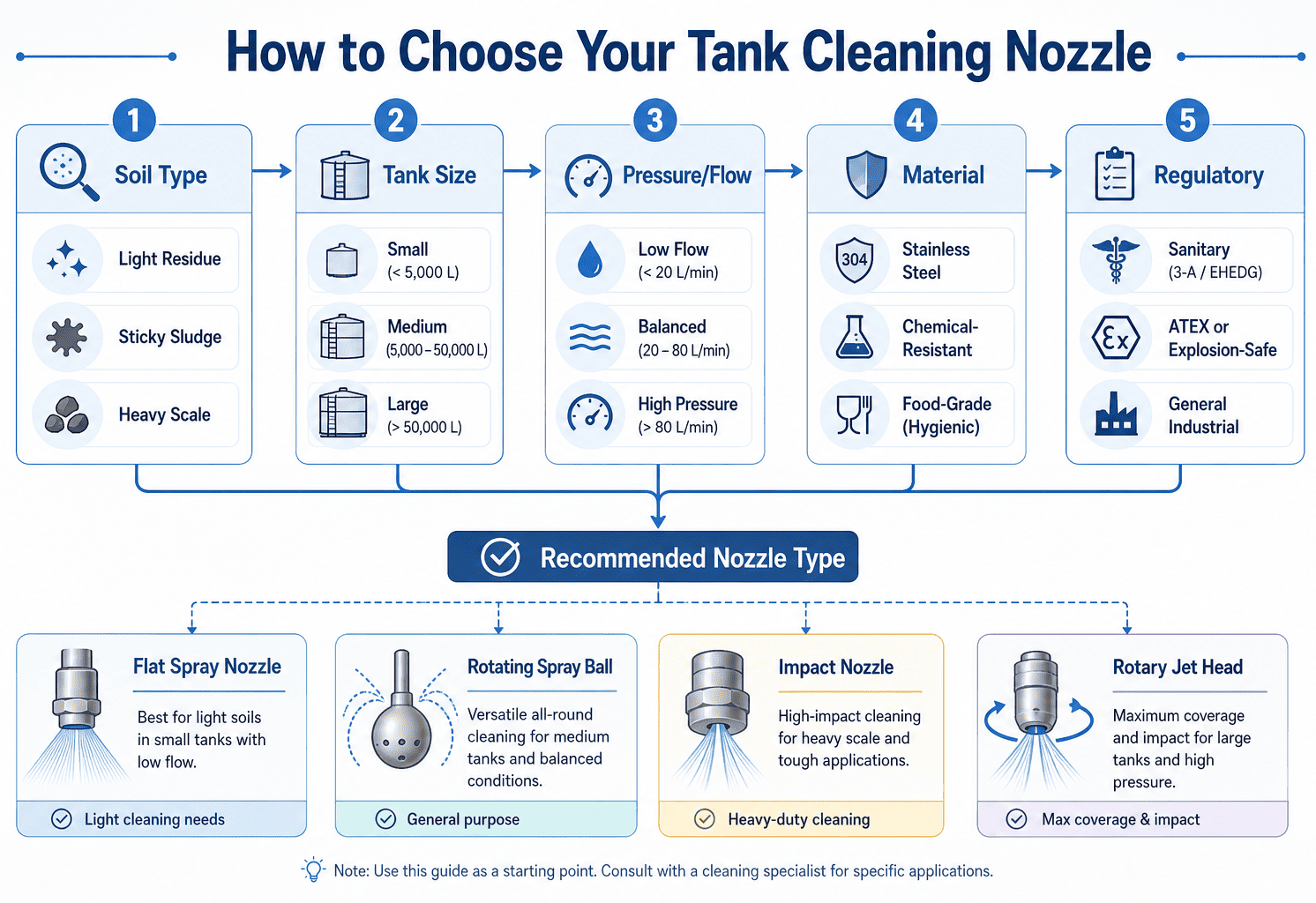
7. Wie man die richtige 360-Grad-Tankreinigungsdüse auswählt
Die Wahl der richtigen Düse ist eine Fünf-Faktor-Entscheidung. Ein überstürzter Schritt führt zu Unterreinigung, verschwendung von Ressourcen oder vorzeitigem Geräteausfall.
Faktor 1: Bodentyp und Haftung
Ist dein Rückstand wasserlöslich oder aufgebrannt? Löst es sich mit mildem Waschmittel auf, oder erfordert es eine aggressive mechanische Entfernung?
- Für leichte, lösliche Rückstände (Milch, Bier, Wein): Eine statische Sprühkugel oder eine frei drehende Drehdüse kann ausreichen.
- Bei mittlerer Verschmutzung (Öle, Soßen, Pulvers): Eine kontrolliert drehbare, zahnradgetriebene Düse sorgt für die benötigte Wirkung.
- Für schwere, hartnäckige Rückstände (Polymere, aufgebackene Lebensmittel, Rohölschlamm): Ein orbitaler Rotationsstrahlkopf ist die richtige Wahl.
Faktor 2: Panzergröße und Geometrie
Tankdurchmesser, Höhe und das Vorhandensein interner Strukturen sind alle wichtig. Eine Düse, die in einem 2-Meter-Milchtank hervorragend funktioniert, versagt in einem 20-Meter-Chemielagerbehälter komplett.
- Unter 3 Metern: Statische Sprühkugeln oder frei drehende Drehkugeln
- 3 bis 6 Meter: Freidrehende oder kontrolliert drehbare Düsen
- 6 bis 12 Meter: Getriebegetriebene Düsen mit kontrollierter Drehung
- Über 12 Meter: Orbitale Drehstrahlköpfe
Berücksichtigen Sie auch die Form des Aquariums. Vertikale zylindrische Tanks sind am einfachsten zu reinigen. Horizontale Tanks, quadratische Tanks und Behälter mit Rührer, Baffeln oder Heizspiralen erfordern ausgefeiltere Abdeckungsmuster. Wenn Ihr Becken bedeutende Innenstrukturen hat, sollten Sie eine oben montierte Düse mit wandmontierten Einheiten für Schattenzonen ergänzen 鈥?Durchsuchen Sie unsere Hohlkegeldüse und Spiraldüse Optionen für zusätzliche Abdeckung.
Faktor 3: Verfügbarer Durchfluss und Druck
Jede Düse hat einen festgelegten Durchfluss- und Druckbereich. Ihr Pumpen- und Rohrleitungssystem muss innerhalb dieses Zeitfensters liefern. Das klingt offensichtlich, aber Druckverluste bei langen Rohrleitungen, Bögen und Ventilen werden häufig unterschätzt.
Ein häufiger Fehler ist der Kauf einer Düse, die für 10 bar ausgelegt ist, obwohl die Pumpe 10 bar 鈥 liefern kann, aber wenn die Flüssigkeit nach dem Durchqueren des Rohrleitungsnetzes die Düse erreicht, beträgt der tatsächliche Druck am Düseneinlass möglicherweise nur noch 6 oder 7 bar.
Faktor 4: Materialkompatibilität
Die benetzten Materialien der Düse müssen mit Ihrem Reinigungsmedium und der Umgebung des Tanks kompatibel sein.
| Umwelt | Empfohlenes Material |
|---|---|
| Allgemein industriell / lebensmitteltauglich | 304 Edelstahl |
| Sanitäres CIP / Pharmazeutik | 316L Edelstahl (poliert, 3-A-konform) |
| Hochgradig korrosive Chemikalien | PTFE + PVDF Verbundwerkstoff |
| Offshore / extreme Chemikalien | Duplex Edelstahl (250 BAR bewertet) |
| Hochtemperatur (>95掳C) | 316 Edelstahl |
Faktor 5: Regulatorische Anforderungen
Wenn Sie in der Lebensmittel-, Getränke- oder pharmazeutischen Produktion tätig sind, muss Ihre Düsenauswahl den gesetzlichen Anforderungen entsprechen. Achten Sie auf:
- 3-A Hygienestandards Einhaltung für Milchprodukte und Lebensmittelverarbeitung
- FDA-konforme Materialien für Lebensmittelkontaktflächen
- Oberflächenvergütungsanforderungen (typischerweise Ra 鈮?0,8 渭m für hygienische Anwendungen)
- EHEDG-Zertifizierung (European Hygienic Engineering & Design Group)
Für Hinweise zur Erfüllung dieser Anforderungen wenden Sie sich an unser Support-Team oder informieren Sie sich über unsere Qualitätsstandards.
! blog-img-04-blog-illustration
8. Verbreitete Missverständnisse über Tankreinigungsdüsen
Die Branchenerfahrung zeigt mehrere anhaltende Missverständnisse, die zu schlechter Düsenauswahl und suboptimalen Ergebnissen führen.
Missverständnis 1: "Höherer Druck bedeutet immer bessere Reinigung"
Mehr Druck erzeugt zwar mehr Aufprallkraft 鈥 – aber nur bis zu einem gewissen Punkt. Bei frei rotierenden Düsen erhöht der höhere Druck auch die Drehzahl, wodurch der Sprühstrahl in kleinere Tröpfchen zersplittert wird, die durch Luftwiderstand Energie verlieren. Das Endergebnis kann tatsächlich eine weniger effektive Reinigung sein.
Genau deshalb gibt es Düsen mit kontrollierter Rotation: Sie entkoppeln den Druck von der Rotationsgeschwindigkeit, sodass man von höherem Druck profitiert, ohne den Nachteil einer übermäßigen Atomisierung.
Missverständnis 2: "Ein Sprühball reicht für jeden Tank"
Sprühkugeln funktionieren gut für kleine Aquarien mit leichter Verschmutzung. Sie sind einfach, kostengünstig und haben keine beweglichen Teile zu warten. Aber bei Panzern mit einem Durchmesser von mehr als 3 Metern oder solchen mit mehr als den leichtesten Rückständen leisten sie jedoch deutlich schlechter. Das Fehlen mechanischer Auswirkungen bedeutet, dass man mit mehr Chemikalien, höheren Temperaturen und längeren Zykluszeiten 鈥 ausgleichen muss – was auf lange Sicht meist teurer ist als ein Upgrade auf eine Rotationsdüse.
Missverständnis 3: "Einmal installiert, brauchen Düsen keine Wartung mehr"
Tankreinigungsdüsen arbeiten in anspruchsvollen Umgebungen mit ätzenden Chemikalien, extremen Temperaturen und abrasiven Partikeln. Im Laufe der Zeit verschleißen und vergrößern sich Öffnungen, Dichtungen verschlechtern sich, und Lager sammeln Ablagerungen an. Eine abgenutzte Düse kann äußerlich gut aussehen und gleichzeitig eine deutlich geringere Reinigungsleistung erzielen.
Vorbeugende Wartung 鈥 – einschließlich regelmäßiger Demontage, Inspektion und Dichtungsaustausch 鈥 – verlängert die Lebensdauer der Düse und erhält die Reinigungsqualität. Viele gut gestaltete Modelle können in weniger als 5 Minuten mit einfachen Handwerkzeugen auseinandergebaut, inspiziert und wieder aufgebaut werden.
Missverständnis 4: "Abdeckung ist dasselbe wie Reinigung"
Eine Düse, die Wasser auf jede Oberfläche sprüht, hat Abdeckung, aber nicht unbedingt Reinigung. Eine effektive Reinigung erfordert ausreichende Aufprallkraft an der Kontaktstelle, um den spezifischen Bodentyp zu lösen. Wasser, das an einer Tankwand hinabläuft, entfernt loses Material, löst aber keine eingebrannten Polymerrückstände. Man sollte immer die Aufprallenergie an die Bodenhaftung anpassen 鈥 – nicht nur das Sprühmuster auf die Tankgeometrie.
9. Installation, Wartung und Fehlerbehebung
Best Practices für die Installation
Eine 360-Grad-Tankreinigungsdüse ist nur so effektiv wie ihre Installation. Wichtige Überlegungen sind:
- Montageposition: Typischerweise mittig oben auf dem Tank. Bei horizontalen Tanks sorgt eine zentrale obere Position dafür, dass das Sprühen beide Endkappen erreicht.
- Freiraum: Stellen Sie sicher, dass der Düsenkopf frei drehen kann, ohne auf Rührwerker, Baffles oder Niveausensoren zu stoßen.
- Länge des Fallrohrs: Für Tanks mit verdeckten oder konischen Boden kann ein verlängertes Drop-Rohr erforderlich sein, um die Düse in der optimalen Höhe zu positionieren.
- Versorgungsleitungsgröße: Unterdimensionierte Zuleitungen verursachen Druckverluste. Dimensionieren Sie Ihre Rohrleitungen so, dass sie den Nenndurchfluss der Düse bei dem erforderlichen Druck liefern, wobei vertikale Kopf- und Reibungsverluste berücksichtigt werden.
Für komplexe Installationen kann unser technisches Support-Team Ihnen helfen, Ihre Panzerkonfiguration zu überprüfen und die optimale Montageanordnung zu empfehlen.
Vorbeugende Wartungsplan
| Intervall | Aktion |
|---|---|
| Wöchentlich | Visuelle Inspektion auf Lecks, ungewöhnliche Geräusche oder vermindertes Spritzmuster |
| Monatlich | Drehzahl prüfen (Umdrehungen über 30 Sekunden zählen, im Vergleich zur Spezifikation) |
| Vierteljährlich | Zerlegen, innere Bauteile reinigen, Dichtungen und Lager auf Verschleiß inspizieren |
| Jährlich | Komplettüberholung mit neuen Dichtungen, Dichtungen und abgenutzten Lagern |
Häufige Probleme beheben
Problem: Die Düse dreht sich nicht. Wahrscheinliche Ursachen: Schmutz, der die Turbine blockiert, unzureichender Durchfluss/Druck oder festgefahrene Lager. Aktion: Zerlegen, Turbine und Zahnradkammer reinigen, den Pumpendruck am Düseneinlass überprüfen.
Problem: Ungleichmäßige Reinigung 鈥? Einige Stellen sind nach dem Zyklus noch verschmutzt. Wahrscheinliche Ursachen: Falsche Düsengröße für den Tankdurchmesser, Schattenzonen durch innere Strukturen oder abgenutzte Öffnungen. Aktion: Überprüfen Sie, ob die Düse für den Durchmesser Ihres Aquariums ausgelegt ist. Erwägen Sie, wandmontierte feine Besprühdüsen hinzuzufügen, um zusätzliche Abdeckung in Schattenzonen zu gewährleisten.
Problem: Übermäßiger Wasser- oder Chemikalienkonsum. Wahrscheinliche Ursachen: Zu lange Zykluszeit, Überspezifikation der Chemikalien oder Verwendung einer Sprühkugel, bei der eine Rotationsdüse effizienter wäre. Aktion: Überprüfe deine Zyklusparameter anhand des Bodentyps. Überlegen Sie, von einer statischen auf eine Rotationsdüse umzusteigen 鈥 – die Einsparungen zahlen sich in der Regel innerhalb von weniger als 18 Monaten zurück.
10. Häufig gestellte Fragen (FAQ)
F: Was ist der Unterschied zwischen einer Sprühkugel und einem rotierenden Düsenkopf?
Eine Sprühkugel ist ein statisches Gerät ohne bewegliche Teile. Es sprüht Reinigungsflüssigkeit durch feste Löcher in einem vordefinierten Muster. Ein Rotationsstrahlkopf nutzt eine flüssigkeitsgetriebene, zahnradgesteuerte Rotation auf ein oder zwei Achsen, um hochauffällige Feststromdüsen in einem 3D-Muster zu projizieren, das das gesamte Tankinnere durchzieht. Rotationsstrahlköpfe erzeugen deutlich mehr mechanische Wirkung und verbrauchen weniger Wasser und Chemikalien.
F: Wie viel Wasser kann eine 360-Grad-Tankreinigungsdüse sparen?
Je nach Düsentyp und dem Basiswert, den sie ersetzt, liegen die Einsparungen zwischen 20 % und 70 %. Der Wechsel von einer statischen Sprühkugel zu einem orbitalen Rotationsstrahlkopf in einem großen Industrietank kann den Wasserverbrauch um mehr als die Hälfte senken und die Reinigungszeit um 40–60 % verkürzen.
F: Benötigen 360-Grad-Tankreinigungsdüsen eine externe Stromquelle?
Nein. Die meisten Modelle sind selbstbetrieben 鈥 – der Druck und Fluss der Reinigungsflüssigkeit selbst treiben eine interne Turbine oder einen Reaktionsmechanismus an, der die Düse dreht. Es sind weder Strom, Druckluft noch externer Motor erforderlich, was sie für den Einsatz in gefährlichen Umgebungen sicher macht.
F: Kann eine Düse einen Tank mit internen Rührwerken oder Baffeln reinigen?
Eine einzelne Düse kann Schattenzonen hinter großen inneren Strukturen hinterlassen. Der effektivste Ansatz ist die Verwendung eines orbitalen Rotationsstrahlkopfs, der während des Zyklus aus mehreren Winkeln sprüht, ergänzt durch wandmontierte Düsen oder bei Bedarf einen zweiten Reinigungskopf.
F: Aus welchem Material sollte meine Tankreinigungsdüse bestehen?
Für allgemeine lebensmitteltaugliche und industrielle Anwendungen 304 Edelstahl. Für sanitäre ZIP-Systeme in der Milch-, Getränke- und pharmazeutischen Produktion verwendet 316L Edelstahl mit elektropolierter Oberfläche (Ra 鈮?0,8 渭m). Für stark korrosive chemische Umgebungen bieten PTFE/PVDF-Verbundwerkstoffe eine überlegene chemische Beständigkeit.
F: Wie lange halten Tankreinigungsdüsen?
Mit ordnungsgemäßer Wartung kann eine hochwertige 316-Liter-Edelstahldüse mit kontrollierter Rotation im normalen Betrieb 8 bis 10 Jahre oder länger halten. Frei drehende Düsen haben aufgrund weniger kontrollierter Rotationsmechanik eine kürzere Lebensdauer auf, während PTFE-Modelle in abrasiven Umgebungen möglicherweise früher ausgetauscht werden müssen.
F: Kann ich eine 360-Grad-Düse zum Reinigen eines IBC-Behälters oder kleinen Behälters verwenden?
Ja. Kompakte, frei drehende Drehdüsen und Mini-Sprühkugeln sind speziell für kleine Behälter wie IBC-Behälter, Fässer und kleine Mischtanks erhältlich. Überprüfen Sie die Spezifikation des Mindesttankdurchmessers der Düse, um sicherzustellen, dass sie passt und eine angemessene Abdeckung erreicht.
11. Fazit
Die 360-Grad-Sprühtechnologie hat die Art und Weise, wie industrielle Tankreinigungen durchgeführt werden, grundlegend verändert. Was einst eine langsame, gefährliche und ressourcenintensive Aufgabe war 鈥 – das Überfluten von Tanks, das manuelle Schrubben und das Aussetzen der Arbeiter für Gefahren in engen Räumen 鈥 – ist heute ein schneller, automatisierter und messbarer Prozess.
Die wichtigsten Vorteile sind eindeutig:
- Vollständige Abdeckung ohne tote Winkel
- 40 % bis 70 % weniger Wasserverbrauch
- 30 % bis 50 % weniger Chemikalienverbrauch
- Beseitigung des Einstiegs in begrenzten Räumen
- Konsistente, validierbare Reinigungsergebnisse
Die richtige Düse für Ihren Betrieb hängt von der Größe Ihres Tanks, Ihrem Bodentyp, verfügbarem Druck und Durchfluss, Materialkompatibilitätsanforderungen und regulatorischen Verpflichtungen ab. Die Zeit in die richtige Auswahl zu investieren, zahlt sich vielfach aus – durch geringere Betriebskosten und erhöhte Produktionsbereitschaft.
Wenn Sie Tankreinigungsausrüstung für eine neue Einrichtung bewerten oder ein leistungsschwaches SIP-System aufrüsten möchten, bietet Yuechen Precision ein vollständiges Sortiment an Tankreinigungsdüsen und -maschinen 鈥?, von kompakten Sprühkugeln für kleine Milchtanks bis hin zu schweren orbitalen Rotationsstrahlköpfen für die größten Industrieschiffe. Um Ihre spezifische Anwendung zu besprechen oder ein Angebot anzufordern, kontaktieren Sie unser Engineering-Team.
! blog-img-05-blog-illustration
Tankreinigungsdüsen entdecken | Alle Produkte anzeigen | Kontakt